Блог

  • Solon Is A New Bioplastics Brand

    Solon Is A New Bioplastics Brand

    PRESS RELEASE — RWDC Industries Ltd., the winner of The Liveability Challenge 2018, presented by Temasek Foundation, launches its Solon brand at Ecosperity Week 2019 in Singapore in June.

    This revolutionary, sustainable material solution has hundreds of possible applications for everyday life. Solon is an ideal material for replacing petrol-based single-use plastic articles, including cutlery, cups, bags, plates, and bowls. Solon will be introduced in Singapore, as a drinking straw product first.

    Solon drinking straws will be available at Ecosperity Week 2019 at the RDWC/Solon booth, next to the Bettr Barista coffee stand. The straws will also be available from a number of leading food and beverage partners in Singapore, who are supporting the launch.

    Solon is a type of PHA (or polyhydroxylalkanoate) — a biopolymer naturally produced and optimised by RWDC Industries to enable a global solution to today’s plastic waste management challenge.

    Since winning The Liveability Challenge 2018, RWDC has had an exciting year, which included not only some highly promising product trials in a number of applications with its clients and this exciting product launch, but also US$22 million of new funding in April and its first US-based institutional investor.

    “We believe that it is our duty as stewards of the planet to use our talents, energy and time to leave a legacy of a sustainable future,” said Dr Daniel Carraway, RWDC’s Co-founder and Chief Executive Officer.

    “There are a number of ‘compostable’ single-use plastic alternatives on the market; however, these materials can only be composted in well managed, commercial composting facilities that are equipped to operate with precise control systems,” he added.

    “We would like to congratulate RWDC for the successful launch of its first PHA product within a short span after winning The Liveability Challenge in 2018. Temasek Foundation champions liveability and sustainability, and hopes to reduce the damaging impact from plastic waste. We look forward to RWDC developing and commercialising many more Solon products.

    This will benefit end-users who will be able to make ecologically responsible choices, and collectively make a big difference to our living environment,” said Mr Lim Hock Chuan, Chief Executive of Temasek Foundation Ecosperity.

    Governments around the world are beginning to legislate aggressively on plastic waste. RWDC supports the initiatives of ‘Reduce, Reuse and Recycle’ but notes these steps are not enough to alter the growth trajectory of plastic waste, risking serious consequences.

    RWDC believes a better solution is to ‘replace’ single-use plastics with the right material, PHA – an unmodified, naturally occurring polymer that offers many of the benefits, versatility and functionality of petroleum plastic materials, while enabling a safe outcome in all potential post-consumer end of life scenarios.

    Solon is certified by European certification authority TUV Austria to safely biodegrade in natural environments, leaving absolutely no harmful remains or by-products. It is made from sustainably produced, renewable feedstock, is incredibly versatile, and available at a commercially viable price.

    [su_button url=»https://bioplasticsnews.com/2019/06/08/solon-is-a-new-bioplastics-brand/» target=»blank» size=»5″]Source[/su_button]
     

  • PolyOne Launches Translucent Color Series for PET Bottles

    PolyOne Launches Translucent Color Series for PET Bottles

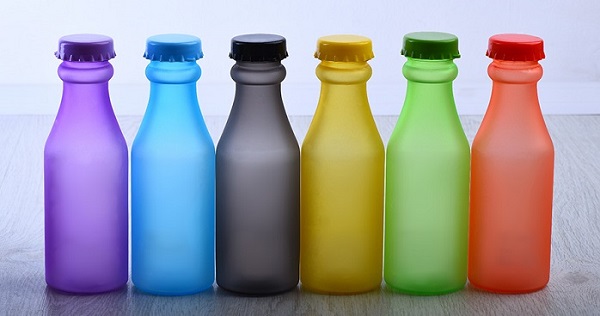
    PolyOne has announced the launch of its new Smartbatch™ Frost Collection, a translucent color series for PET bottle. Developed in response to increasing demand from regional brands in China for greater product differentiation, this collection of color and additive formulations also offers to streamline production and reduce manufacturing cost.

    Smartbatch™ Frost Collection


    Frost-Collection

    “Brand owners in Asia continually seek to increase consumer engagement by visually differentiating their PET packaging,” said Say Eng Lee, general manager, Color & Additives Asia at PolyOne. “We’ve developed the Frost Collection to enable brands to create high-end, sophisticated, and engaging bottles in a wide range of color options that also expand design freedom and cost effectiveness.”

    Better Slip-Resistant Performance

    When added to PET resins during the injection stretch-blow molding (ISBM) process, Smartbatch Frost Collection provides a soft, cool, and icy look with better slip-resistant performance than typical PET bottles. The new masterbatch can be used in all PET bottles, including those for water, beverage and personal care packaging.

    [su_button url=»https://polymer-additives.specialchem.com/news/product-news/polyone-new-translucent-color-series-pet-bottles-000218513?lr=ppa1906490&li=70111412&utm_source=NL&utm_medium=EML&utm_campaign=ppa1906490&m_i=9%2BDj7VVW%2BVvkdVx40ngyXc2OivhjAXXwsfu0qiLzu05fs_NcOC21CTheK1BPiRXCGAijzlMsKHiFGeY4DdF3aNCajgDr9D» target=»blank» size=»5″]Source[/su_button]

  • Ampacet’s Carbon Black-free Masterbatch Receives Plastics Recycling Award

    Ampacet’s Carbon Black-free Masterbatch Receives Plastics Recycling Award

    Reducing the Carbon Footprint with NIR Technology

    «We are honored to receive the Plastics Recycling Award, says Philippe Hugele, Ampacet Strategic Business Manager, Europe.

    «These carbon black-free solutions are part of our sustainable development program and can help to significantly reduce the carbon footprint by giving black plastic packaging a second life.» 

    While most black packaging cannot be sorted by recycling companies and can only be disposed of in a landfill or used for energy recovery, packaging using Ampacet’s REC-NIR-BLACK carbon black-free masterbatch is near-infrared (NIR) transparent to allow scanning by NIR technology for automated sorting at recovery facilities.

    [su_button url=»https://polymer-additives.specialchem.com/news/product-news/ampacet-carbon-blackfree-masterbatch-award-000218202?lr=ppa1905487&li=70111412&utm_source=NL&utm_medium=EML&utm_campaign=ppa1905487&m_i=6BJaA5WGvuNEtjgyVuIgAm8Y74AdDDI4RfkGFHtAwcvIA3VilF11_%2B4UtJ0djepCfj4IpTUDft880CTy_6oIUtjHt_ws66″ target=»blank» size=»5″]Source[/su_button]
  • Shepherd Color Launches NTP Yellow 10G155 with Outstanding Color and Durability

    Shepherd Color Launches NTP Yellow 10G155 with Outstanding Color and Durability

    Color Matches without Compromising Weathering or Heat Stability

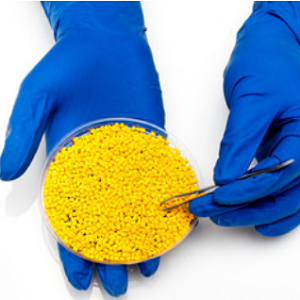
    The yellow color space has a wide range of pigment options that have a balance of chromaticity, opacity and durability. The new NTP Yellow (PY227) brings bright chromatic color, high opacity, and excellent durability all at the same time. This has lead a plastics engineer to call it ‘bullet-proof” colorant. To complement the NTP Yellow, improvements of the RTZ Orange (PY216) yield a true orange color unto itself, but also allows the addition of “a value” or redness to color matches without compromising weathering or heat stability.

    Pigment Chemistries

    Paint and coatings chemists, formulators, and color matchers face many challenges and options for coloring in the yellow color space. A wide range of pigment chemistries are available with different levels of opacity, durability, chromaticity, and economics. These four properties are often antagonistic to each other, forcing a compromise on two or more of these key properties. At the same time, historical pigments like lead chromate are facing increasing regulatory pressure and are being formulated out of products.

    Color matches that used to depend on blends of organic and inorganic pigments can now be matched with all inorganic pigments for the ultimate in durability and a true expansion of the durable color envelope.

    The NTP Yellow and RTZ Orange are compatible with a wide range of polymers in coatings and plastics for use in a wide range of applications, such as:

    • Engineering polymers
    • Laminates and co-extrusions
    • Pre-painted coil and extrusion
    • Powder coatings
    • Architectural and façade coatings

    Shepherd Color’s newest addition to their NTP Yellow product portfolio, NTP Yellow 10G155, brings the outstanding color, opacity, and durability that people have seen in NTP Yellow, but in a color shade closer to red-shade bismuth vanadate (PY184) pigments. It has higher heat stability and excellent weathering properties.

    Other key features of Yellow 10G155 include: inertness to acids, bases, solvent and UV, no chromium or lead in the formulation, halogen-free, and non-warping in polyolefins.

    [su_button url=»https://polymer-additives.specialchem.com/news/product-news/shepherd-color-new-ntp-yellow-10g155-000218017?lr=ppa1904484&li=70111412&utm_source=NL&utm_medium=EML&utm_campaign=ppa1904484&m_i=ImrkxB5xTLos%2BiHrHumRI%2BAxPtHM5LAzwNbqyaBSRLn1U8qAD1wJ4_xX3rnR9ev_BVA%2BLBXRn88tHlMQGNuytSD_C2k9IS» target=»blank» size=»5″]Source[/su_button]

    Read also: Bioplastics Blending and Compounding in Practice

  • INEOS to Acquire Cristal’s North American TiO2 Business from Tronox

    INEOS to Acquire Cristal’s North American TiO2 Business from Tronox

    Transaction of USD 700 Million

    Cristal’s North American business includes two-plants located at the Ashtabula Ohio (US) complex. The deal forms the proposed remedy package submitted to the US Federal Trade Commission (FTC) by Tronox ahead of its proposed acquisition of Cristal’s global titanium dioxide business.

    The proposed sale of the North American business to INEOS, has received support from Cristal and Tronox’s North American customers and will make INEOS the second largest producer of this essential product in the country. The wider transaction and remedy proposal is subject to clearance by the Federal Trade Commission (FTC).

    Opportunity for INEOS to Enter Pigments Market

    Ashley Reed, CEO of INEOS Enterprises said, “This is a great opportunity for INEOS to enter the pigments market, by acquiring a competitive business, with excellent people and assets. INEOS has a strong track record of manufacturing excellence, running its businesses safely and reliably and working closely with customers to meet their growth aspirations.”

    Titanium dioxide is a white pigment found in a wide range of applications from plastics and paper as well as paints and varnishes. It is the most widely used white pigment because of its brightness. Pigment applications include printing inks, fibres, rubber, cosmetic products, glass and ceramics. The global titanium dioxide market is highly competitive, with players competing based on price, quality or product, technical service, and the availability of high-performance pigments.

    [su_button url=»https://polymer-additives.specialchem.com/news/industry-news/ineos-cristals-tio2-tronox-000217695?lr=ipa1903492&li=70111412&utm_source=NL&utm_medium=EML&utm_campaign=ipa1903492&m_i=rEIP0mTBrQMesbNdAP57lXdusCK7kx8dNvxvSt__g7du%2BGYzIVi43Z3jUXDSktAV3T2onqfmPDXgUFzPmL%2BvnCGPfDHCri» target=»blank» size=»5″]Source[/su_button]
  • Bioplastics Blending and Compounding in Practice

    Bioplastics Blending and Compounding in Practice

    Why should you view this course?

    The main problems of bioplastics, especially biodegradable ones (PHA/PHB, PLA, PVOH, PBS…) are mechanical properties (especially toughness) & thermal resistance. While mechanical properties are relatively easier to achieve, thermal ones continue to be a challenge. And with new bioplastic chemistries available today, you need to understand the problems to foresee solutions.

    Join this course to learn how to improve the properties of your biopolymers:

    1. Select the right polymer to blend with your bioplastic by mapping the various possibilities depending on your material

    2. Formulate bioplastics with enhanced properties (impact, chemical resistance, processability, product uniformity…) by determining confidently the right formulation conditions (use of compatibilizers…)

    3. Mix properly your bioplastics with a structured method to process your compound

    Who should view this course?

    R&D professionals & Compounders needing help to improve their bioplastics performance (at par with or better than traditional plastics)

    Course Outline

    The following sections will be covered in this session:

      1. Bioplastic (biodegradable) blending
        • Bioplastics introduction
        • Polymer selection (PP, PLA/PLB, PHA, PBS, PBAT, PVOH & many more)
        • Properties identification
      1. Bioplastic additivation
        • Impact modification
        • Compatibilizers
        • Plasticizers
        • Cross linkers (Peroxides)
        • Nucleating agents
        • Chain extenders
      1. Bioplastic compounding
        • Micro-rheology
        • Blend Morphology
        • Processing conditions
        • Bioplastic compounds
    1. 30 Mins Q&A session— ask your questions directly to the expert !

    [su_button url=»https://polymer-additives.specialchem.com/online-course/10057-bioplastics-blending-compounding-processing-biopolymers?lr=MC_Mar_19&li=&utm_source=MKG&utm_medium=EML&utm_campaign=MC_Mar_19?lr=MC_Mar_19&li=&utm_source=MKG&utm_medium=EML&utm_campaign=MC_Mar_19&m_i=B6i2baxZu7E%2BsLniPIxXy6H6G7Fp4Yg%2BMyYVYOqmoDmodnoJfHQr_Q%2BAB8TK1lTGYvNcJUJ9rR2YeU15LSL5ofgjyCaNBi» target=»blank» size=»5″]Source[/su_button]
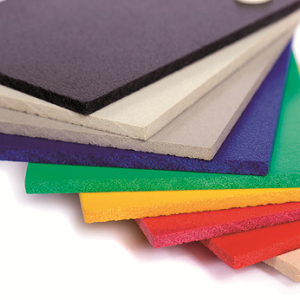
  • Emery Oleochemicals at PVC Formulations 2019: to Showcase Green Polymer Additives

    Emery Oleochemicals at PVC Formulations 2019: to Showcase Green Polymer Additives

    Deliver Outstanding Technical Performance

    This PVC Formulation Conference offers the perfect opportunity for you to discover why Emery Oleochemicals should be your First Choice in Sustainable Polymer Additives.

    Meet with Emery’s technical and industry experts at BOOTH 7 to learn about our best-in-class EDENOL® and LOXIOL® brand renewable solutions recognized for their ability to improve processing efficiencies, deliver outstanding technical performance and enhance environmental safety.

    Plan to attend Emery’s technical presentation by Dr. Sascha Simon, Head Technical Development Center, entitled “Recent developments in natural-based lubricants for PVC processing”, on Wednesday, February 27 at 11:50 am in the Tailoring Properties Session.

    [su_button url=»https://polymer-additives.specialchem.com/news/product-news/emery-oleochemicals-polymer-additives-pvc-formulations-000217215?lr=ppa1902475&li=70111412&utm_source=NL&utm_medium=EML&utm_campaign=ppa1902475&m_i=WXNWVj9fFOsntKp8CYNXQwg0HQeApBSoYIXEjpQDoI1jYzD_tnD2VzO7h37yvbLpElsAWXNJnJOUBcmHNwRxntrUrSr8Wh» target=»blank» size=»5″]Source[/su_button]

  • BASF Inaugurates Antioxidants Manufacturing Plant in Shanghai

    BASF Inaugurates Antioxidants Manufacturing Plant in Shanghai

    World-scale Plant with a Capacity of 42,000 Tons p.a.


    inauguration-BASF

    With this investment, we strengthen our position as the leading global supplier of antioxidants,” said Dr. Markus Kamieth, Member of the Board of Directors, BASF SE. “Asia is the world’s largest antioxidants market and China accounts for almost 65% of the market in Asia. We expect the market will show attractive growth rates in the medium to long term.”

    Unique Expertise in the Chemical Industry

    BASF wants to be the leading chemicals supplier for our customers,” said Dr. Stephan Kothrade, President, Functions Asia Pacific, President and Chairman Greater China, BASF. “By investing in advanced production plants in China, we want to anticipate and fulfill our customers’ needs even better. We will combine our unique expertise in the chemical industry with our customers’ competencies, and jointly develop solutions that are both profitable and responsible.”

    Located at BASF’s Caojing site in the Shanghai Chemical Industry Park, the new plant will benefit from its proximity to BASF’s regional research and development center in Shanghai; a hub that provides technical support to polymer producers across the region.

    Importance of Antioxidants

    • Antioxidants help prevent thermal oxidation reactions when plastics are processed at high temperatures.
    • Oxidation can cause the loss of impact strength, elongation, surface cracks and discoloration of the material.
    • Almost all polymer materials undergo oxidative degradation reactions at one or all of the manufacturing, processing and end-use stages.

    BASF runs a global production network and is the only supplier of plastic additives with production sites in Asia, Europe, North America and the Middle East.

    [su_button url=»https://polymer-additives.specialchem.com/news/industry-news/basf-antioxidants-manufacturing-plant-shanghai-000217113?lr=ipa1901485&li=70111412&utm_source=NL&utm_medium=EML&utm_campaign=ipa1901485&m_i=iJBhVHaBJkAGRafaDPPTZBj4Xo0ZS4nKJ7LTv70ubknf53Z6jYAsrNFJjNsrvzBUmkpKthK4zcIfmWshF%2BoQU1F2Ux4QiP» target=»blank» size=»5″]Source[/su_button]

  • DCC LANSCO Unveils Bismuth Vanadate Pigment for Polymer Market

    DCC LANSCO Unveils Bismuth Vanadate Pigment for Polymer Market

    Bright Lemon Shade Yellow Pigment

    DCClansco-yellow-pigment

    DCC® Yellow RMXS is a bright lemon shade yellow pigment that was designed to have the highest color strength of any Bismuth Vanadate pigment in the market with outstanding hiding power, exceptional durability and superior dispersibility that can be incorporated into a multitude of coatings systems.

    Because of these key features, this pigment offers maximum value in use requiring less pigment in formulations creating significant cost savings for customers and providing a lower impact on the environment.

    DCC LANSCO is constantly striving to improve pigment technologies to satisfy customer’s needs.

    [su_button url=»https://polymer-additives.specialchem.com/news/product-news/dcc-lansco-bismuth-vanadate-pigment-000217055?lr=ppa1901471&li=70111412&utm_source=NL&utm_medium=EML&utm_campaign=ppa1901471&m_i=ehGf4pxKKohmk7DLD4P%2BacbZMyNhTE8foeZSUukk9AoUbI13%2Bcet9hVhrdDQftSOulxJWTOSQPw9aZIx0DIjxpRqHDnzes» target=»blank» size=»5″]Source[/su_button]

  • New Method to Prevent Clumping of BNNTs Using Common Surfactants

    New Method to Prevent Clumping of BNNTs Using Common Surfactants

    BNNTs with “Super Cool Properties”

    A dispersion of BNNTs as seen through a microscope shows 
    individual tubes and small bundles separated by a surfactant

    The research led by Rice chemist Angel Martí appears this month in the Royal Society of Chemistry journal Nanoscale Advances.

    BNNTs are like their better-known cousins, carbon nanotubes, because both are hydrophobic – that is, they avoid water if at all possible. So in a solution, the nanotubes will seek each other out and stick together to minimize their exposure to water.

    But unlike carbon nanotubes, which can be either metallic conductors or semiconducting, BNNTs are pure insulators: Current shall not pass.

    They have super cool properties,” said lead author Ashleigh Smith McWilliams, a Rice graduate student. “They’re thermally and chemically stable and they’re a great fit for a bunch of different applications, but they’re inert and difficult to disperse in any solvent or solution.»

    “That makes it really difficult to make macroscopic materials out of them, which is what we would eventually like to do,”
     she said.

    Surfactants Separating BNNTs Effectively

    Surfactants are amphiphilic molecules, with parts that are attracted to water and parts repelled by it. BNNTs are hydrophobic, so they attract the similar part of the surfactant molecule, which wraps around the nanotube. The surfactant’s other half is hydrophilic and keeps the wrapped nanotubes separated and dispersed in solution.

    Of the range of surfactants they tried, cetyl trimethyl ammonium bromide (CTAB) was best at separating BNNTs from each other completely, while Pluronic F108 put the most nanotubes – about 10 percent of the bulk – into solution.

    Once separated, they can be turned into films or fibers through processes like those developed by co-author Matteo Pasquali and his Rice lab, or mixed into composites to add strength without increasing conductivity, McWilliams said. The surfactant itself can be washed or burned off when no longer needed, she said.

    A side benefit is that cationic surfactants like CTAB are particularly good at eliminating impurities like flakes of hexagonal boron-nitride (aka white graphene) from BNNTs. “That was a benefit we didn’t expect to see, but it will be useful for future applications,” McWilliams said.

    Boron Nitride Nanotubes: The Great Building Block

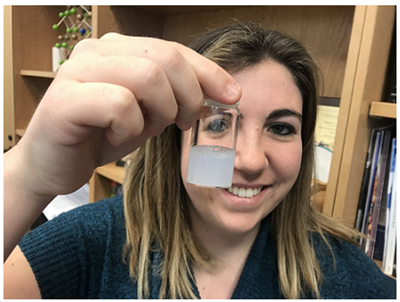
    Rice University graduate student Ashleigh Smith McWilliams 
    holds a vial of boron nitride nanotubes in solution

    “Boron nitride nanotubes are a great building block, but when you buy them, they come all clumped together,” Martí said. “You have to separate them before you can make something usable. This is what Ashleigh has achieved.”

    He envisions not only ultrathin coaxial cables with carbon nanotube fibers like those from Pasquali’s lab surrounded by BNNT shells, but also capacitors of sandwiched carbon and BNNT films.

    Enhanced Electronics with Insulating BNNTs

    We’ve had metallic and semiconducting carbon nanotubes for a long time, but insulating BNNTs have been like the missing link,” Martí said. “Now we can combine them to make some interesting electronics. It’s remarkable that a common surfactant found in everyday products like detergents and shampoo can also be used for advanced nanotechnology.”

    Co-authors of the paper are Rice graduate student Carlos de los Reyes and undergraduate student Selin Ergülen; graduate student Lucy Liberman and Yeshayahu Talmon, professor emeritus of chemical engineering, at Technion – Israel Institute of Technology; and Pasquali, a Rice professor of chemical and biomolecular engineering, of materials science and nanoengineering and of chemistry. Martí is an associate professor of chemistry, of bioengineering and of materials science and nanoengineering. 

    The National Science Foundation, the Air Force Office of Scientific Research, the U.S.-Israel Binational Science Foundation and the Welch Foundation supported the research.

    [su_button url=»https://polymer-additives.specialchem.com/news/industry-news/separate-bnnts-composites-surfactants-000216925?lr=ipa1901482&li=70111412&utm_source=NL&utm_medium=EML&utm_campaign=ipa1901482&m_i=he3hM0eOVtnZC4G8bMS5n8bmAW8wIo1DaiEozBU7NO4zDcMGeBmiajfaHlcsj8TGxi4jqvj7pmsbuDNwU4Z6EkoeTrDxh5″ target=»blank» size=»5″]Source[/su_button]