Блог

  • FDA Approves Full Recycled HDPE and PET Food Packaging

    FDA Approves Full Recycled HDPE and PET Food Packaging

    Erema Group got the go-ahead to use its technology to recycle HDPE into food and drink packaging and foodservice wares. Meanwhile, other companies got federal green lights for PET recycling.

    Over the past seven months, the U.S. Food and Drug Administration (FDA) issued three letters of no objection (LNOs) to companies involved in plastics recycling. The letters allow reclaimers to use their recycling technologies to produce recycled resin for use in food and drink packaging.

    In issuing the letters, the FDA was convinced the recycling processes would result in contaminant concentrations of 0.5 parts per billion or less in the food, below its “threshold of regulatory concern.”

    This edition of the twice-yearly LNO roundup from Plastics Recycling Update looks at applications from three companies: Erema Group, LPET and REPET. The prior roundup was published in early September and included LNOs issues issued in May and June 2019.

    On Aug. 29, the FDA issued a letter for the recycling of HDPE scrap into milk and juice bottles, meat trays, and disposable tableware and cutlery. The LNO, which was issued to recycling equipment company Erema Group, covers the use of post-consumer HDPE at up to 100% in new products.

    The feedstock is limited to HDPE food-grade containers, and the packaging made with the recycled plastic could only be filled or used at room temperature or refrigerated temperatures, with no hot filling or heated pasteurization in the container allowed.

    On Sept. 18, the FDA issued a letter to a company called LPET for the recycling of PET into thermoformed trays to hold fresh produce and shell eggs. The feedstock consists of clear beverage containers. The post-consumer PET could be used at up to 100% in the new packaging; however, use of the new packaging would be limited to temperatures ranging from frozen to room temperature.

    Finally, on Sept. 20, California PET reclaimer REPET was issued an LNO to recycle post-consumer PET beverage containers into 100% recycled food packaging. The letter says the new packaging would consist of trays, clamshells and other containers for holding raw fruits, vegetables and shell eggs. Use of the new packaging would be limited to temperatures ranging from frozen to room temperature. REPET runs a facility in Chino, Calif. with a flake production capacity of 80 million pounds per year.

    REFS

    Published on resource-recycling.com

    FDA issues letters for HDPE and PET recycling

  • Lidl Goes Ocean Plastic Packaging

    Lidl Goes Ocean Plastic Packaging

    Lidl has become the first supermarket in the UK to launch new packaging made from “ocean bound plastic”.

    The plastic will be collected from beaches in South East Asia, which – according to the retailer’s research – is where 80-90% of plastic packaging enters the ocean.

    The plan will see discarded plastic picked up, recycled and turned into resin.

    The plastic the retailer collects would have otherwise ended up in the ocean.

    The supermarket chain will launch the new initiative with 13 fresh fish products from 30 March.

    The new packaging will be available in all stores UK wide from this date with plans to extend it across the whole range by the end of 2020.

    According to Lidl, the plan will eliminate 60 tonnes of plastic from the ocean each year. To put that in perspective, it’s the equivalent of 2.5 million water bottles.

    This forms part of a larger sustainability plan from the company. Its plan is to ensure half of its packaging is made from recycled materials by 2025.

    It also aims to reduce plastic by 20% by 2022.

    The brand’s accelerated initiative has been backed by strong research in the area.

    Georgina Hall, Lidl’s head of corporate social responsibility, said that research had found there would be more plastic than fish in the sea by 2050.

    She said: “We are proud to be the first UK supermarket introducing packaging incorporating plastic that would have otherwise ended up in the ocean, helping to tackle the problem directly as part of our commitment to prevent plastics ending up as waste.

    “We are actively looking to extend this innovative solution to other product lines to help reduce the amount of plastic ending up in our oceans and keep our environments healthy.”

    Lidl isn’t the only brand looking to make more sustainable changes.

    Boots has recently launched a pair of tights made entirely by plastic bottles, 68,000 plastic bottles to be exact.

    The impressive initiative is a first of its kind from any high-street retailer.

    In the sustainable period wear realms, Sainsbury’s recently launched a range of reusable period underwear.

    Despite brands making sustainable changes, there have been debates online about whether the changes are coming quickly enough.

    With worrying statistics – like the more plastic than fish by 2050 one – emerging every day, only time will tell.


    REFS

    Published on sports.yahoo.com

    Lidl to launch packaging from plastic collected from beaches


    RELATED

  • Mealworms Can Eat Plastic Waste

    Mealworms Can Eat Plastic Waste

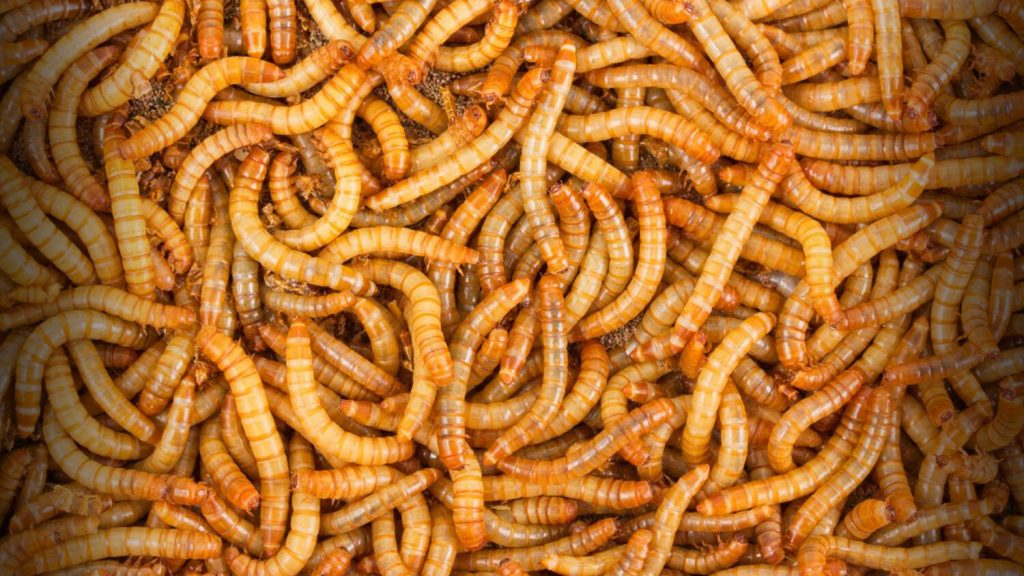
    The latest research published in Environmental Science & Technology showed that tiny mealworms are not only able to eat and digest various forms of chemical-laden plastic waste, but they also remain safe as a protein-rich food source for other animals.

    As the world seeks to curb the use of single-use plastics, Stanford University researchers may have found a way to create value from plastic food packaging waste.

    The latest research published in Environmental Science & Technology showed that tiny mealworms are not only able to eat and digest various forms of chemical-laden plastic waste, but they also remain safe as a protein-rich food source for other animals.

    “Previous research had shown that [the mealworms] could eat polystyrene,” said Anja Malawi Brandon, PhD candidate in environmental engineering and science at Stanford. “In our lab, we then discovered that they could eat polyethylene as well.” This discovery is significant because polyethylene is a plastic that is chemically dissimilar from polystyrene, meaning that these insects could break down multiple types of plastic.

    “When thinking about how these discoveries can be used, we learned that mealworms are already widely used as a feed supplement for agriculture and aquaculture,” Brandon said.

    Her team sought to test whether plastic-fed mealworms could safely be used as a food supplement for other animals, such as shrimp.

    Many of the chemicals added to plastics, such as the flame retardant hexabromocyclododecane (HBCD), are known to be persistent and bioaccumulative, which makes them toxic.

    After consuming the polyethylene containing HBCD, the mealworms excreted about 90% of the HBCD within 24 hours and almost all of it within 48 hours. All that was left of the polyethylene was partially degraded fragments and carbon dioxide.

    The researchers then fed the mealworm biomass to Pacific white shrimp and found no evidence of bioaccumulation or toxicity in the shrimp.

    Mealworms’ ability to digest these plastics without becoming toxic means they can still be used as safe food for other animals and they can be used to help break down plastic.

    “It was very surprising that these chemicals passed through the mealworms without bioaccumulating, meaning that the mealworm biomass remained free of chemicals,” Brandon said.

    This research may be a positive step towards recovering value from plastic waste. However, the researchers noted that further studies are needed to evaluate the possibility of nanoscale toxicity.

    Additionally, the researchers acknowledged that the excreted fragments of polyethylene and carbon dioxide still pose an environmental hazard that requires further efforts to solve.


    REFS

    Published on ift.org

    Mealworms make a meal of plastic before becoming animal feed


  • Biodegradable Bracelet to Visit Sardinian Beach

    Biodegradable Bracelet to Visit Sardinian Beach

    Visitors to stunning Sardinian beach will need a ticket — and a biodegradable bracelet — this summer.

    Visitors will be given biodegradable bracelets which they will have to wear to show they have paid the charge

    Holidaymakers heading to one of Sardinia’s most celebrated beaches will have to get up early this summer after the local authorities announced that visitor numbers will be capped at 1,500 each day.

    In the latest response to the growing problem of over-tourism, visitors wanting to spend the day on the stunning white sands of Pelosa beach will have to pay a €3.50 entrance fee.

    They will be given biodegradable bracelets which they will have to wear to show they have paid to access the beach, famed for its turquoise shallows and views of nearby islands. Children under the age of 12 will be exempt.

    Read more:

    Visitors to stunning Sardinian beach will need a ticket – and a biodegradable bracelet – this summer

  • Biodegradable Packaging from Fruit Waste Polymers

    Biodegradable Packaging from Fruit Waste Polymers

    High performance biomass extracted functional hybrid polymer coatings for food, cosmetic and medical device packaging.

    Today, fresh as well as convenience food is sold in packages and the hygienic conditions, long shelf life and easy availability of these packaged products are part of our modern lifestyle.

    However, the result is significant environmental impacts and pollution due to the plastic materials associated with the packaging.

    One answer to plastics in packaging are biodegradable materials, on the market for many years and their market share continues to grow.

    But there are severe restrictions preventing their wider application in food packaging, as these materials do not provide a sufficient barrier against water vapour, oxygen or flavours.

    The EU-funded HyperBioCoat project addressed this challenge by developing and testing new biodegradable hybrid organic-inorganic coatings for use in food, cosmetics and medical device packaging.

    “We developed a coating material based on biopolymers extracted from lignocellulosic biomass by combining them with the material class of bioORMOCER®s,” says project coordinator Stefan Hanstein from Fraunhofer IWKS.

    The bioORMOCER®s are biobased, biodegradable coatings developed by the Fraunhofer Institute for Silicate Research.

    Biopolymers from apple residues

    Consortium members investigated biodegradable barrier coatings for plastic packaging materials in which the biopolymers are derived from fibrous fruit residues (lignocellulose).

    According to Hanstein: “One of the project’s greatest challenges involved finding the correct fruit residue for the extraction of lignocellulose and the modification of the hemicellulose to create the desired properties.”

    De-pectinised apple pomace (the main solid waste generated in cider and apple juice making factories) performed well as a raw material.

    “The process developed is a combination of extraction and partial hydrolysis (intensified extraction).

    It provides 1 kg carbohydrate polymer from 25 kg dry pomace, with the potential for doubling the yield,” Hanstein explains.

    Researchers also investigated possible industrial applications for other types of fruit residues, like berry pomace and cocoa shells for novel food production systems and the biotech industry.

    They demonstrated a route for the chemical modification of carbohydrate polymers that achieves the required compatibility with the lacquer.

    “This showed how the new bio-based and bio-degradable polymer coating can be easily applied and at industrial scale, paves the way for further application in the industry,” comments Hanstein.

    The next step was to adapt the barrier coating to the different carrier materials, which involve flexible and rigid biopolymer substrates, and testing for the packaging applications.

    According to Hanstein: “This approach improves the properties of packaging materials and of bio-based recyclable materials by using a biodegradable barrier coating.”

    Reduced environmental impacts

    Cosmetic bottles production based on fibre-enforced wax was taken to the industrial level by making the material compatible with injection moulding.

    Hanstein notes: “Project partner Stefanski Design has begun using a slush casting, hand-crafted manufacturing approach producing prototypes for a leading luxury bio resort in Spain.

    Within the Hyperbiocoat project the basic material has been further developed and is now compatible with large scale injection molding production.”

    Project partners also demonstrated a new lean biomass extraction facility which can be installed in small agrobiorefineries.

    The facility covers a range of applications from providing tailored feedstock for fermentation processes (for example, biogas) and for novel food production systems, like insect culture, to delivering herbal extracts with bioactive compounds such as natural antimicrobials.

    HYPERBIOCOAT benefits the environment due to its lower CO2 footprint and conservation of natural resources: The supply chain does not require additional plant cultivation area, additional supply with water, fertiliser and pesticides.

    Furthermore, the food processing industry will benefit from a new value chain for their fibrous resources.

    “The advantage of these residues is that they are not competing with animal feed or food production and provide an abundant feedstock for compostable as well as recyclable plastic packaging materials,” notes Hanstein.


    REFS

    Published on cordis.europa.eu

    High performance biomass extracted functional hybrid polymer coatings for food, cosmetic and medical device packaging

  • Cocona Launches Biodegradable Textiles

    Cocona Launches Biodegradable Textiles

    Cocona, Inc. has announced that all of its 37.5® staple fibers and filament yarns will include a new biodegradable additive.

    This announcement comes after more than three years of research and testing of the sustainable technologies available to textile manufacturing, and specifically testing 37.5 products containing this new biodegradable additive.

    “Starting July 1, 2020 Cocona is adding a biodegradable additive to all 37.5 polyester and polyamide staple fibers and filament yarns,” said Jeff Bowman, CEO. “Importantly, we have confirmed that the additive does not affect the ability of products to be recycled and will not add any manufacturing cost or complexity. Because of this, we will be providing this new additive at no additional cost to 37.5 fiber and yarn spinners.”

    Dr. Gregory Haggquist, Cocona’s CTO, stated that, “After years of research we were unable to identify any unintended consequences and are confident this decision is in the direction of goodness.”

    Third-party testing using the industry standard for biodegradation, ASTM D-5511, has shown that 37.5 products containing the new biodegradation additive decompose by 54% in 341 days reducing to methane, carbon dioxide and a biomass in an estimated 3.35 years if disposed of in a landfill that simulates the conditions found in this standardized test. This is significantly faster than untreated polyester products that are not expected to biodegrade in less than 450 years.

    “While there’s little doubt about the need for an answer to end-of-life biodegradation, we also recognize this is not the final solution. Our commitment is to continually evaluate and develop better and more sustainable ways to bring the benefits of 37.5 Technology to the marketplace,” explains Bowman. “We also intend to transparently provide consumers with information regarding the benefits and limitations of the technology.”

    “37.5 Technology will continue to be marketed on the basis of comfort and performance. Products containing the biodegradable additive will be sold with a modified hangtag that calls out the presence of the biodegradable additive and includes a scannable QR code that takes consumers to a detailed section on the thirtysevenfive.com website where they can get more information on the additive and others sustainable technologies,” stated Cocona’s Director or Marketing, Preston Brin.

    About 37.5® Technology

    37.5 Technology is synonymous with Temperature Regulation and has been scientifically proven to significantly reduce the heat index (the mix of temperature and humidity) under garments, thereby increasing the wearer’s performance and comfort.

    The Technology is not a chemical finish, but rather permanently infused into fibers and filaments, meaning it will never wash out and last the lifetime of the garment. 37.5® Technology is used in outdoor gear, sports apparel, designer clothing, workwear, police and military uniforms, footwear and sleep systems designed to help the body manage and maintain the optimal core temperature. It was created by Cocona Inc., a world leader in the development, commercialization and marketing of active particle technologies.

    The company is headquartered in Boulder, Colorado.


    REFS

    Published on pr.com

    37.5® Technology Announces New Biodegradable Offering


  • Edible Biodegradable Coatings and Films by Italians

    Edible Biodegradable Coatings and Films by Italians

    IUV Srl is an innovative start-up that was set up in May 2019 focusing on the research, development, production and commercialization of modern, sustainable and natural packaging. The idea behind it, however, dates back to 2011.

    “I was in high school in 2011 and, during a Business English lesson, the teacher talked about food waste by analyzing the data released by FAO. I found myself thinking: why not use waste to make something good? My course of studies provided me with the tools necessary to come up with formulas with a practical use thanks to the Columbus’ Egg technology,” explains Cosimo Maria Palopoli,CEO and founder of IUV (in the photo above with Maria Lucia Gaetani, Cto and nutritionist).

    “There were also experiments with essential oils on fresh produce as post-harvest agents. The research focused on apples, pears and strawberries. But it was not enough, so we shifted to biopolymers, a class of molecules that derive from matrices connected to life, i.e. vegetable, animal or of fungoid and fossil origin.”

    Columbus’ egg is a basic formula featuring biobased biodegradable-compostable natural biopolymers that preserves or improves the freshness, stability, shelf-life, appearance, flavor, color and aroma of food. The solutions offered include edible-biodegradable coatings and biodegradable films.

    With the Columbus’ egg system, IUV aims at replacing plastic packaging within the Food&Beverage sector and to fight against food waste.

    “What makes us stand out is the fact that we have a single formula that can be used in multiple aspects and that can be applied to food and non-food products. When it comes to food, the technology has been applied to fresh and dried products. On the former, the formula was applied as edible coating which is solid, colorless, flavorless and clear. In specific cases, natural pigments can provide color but remain nonetheless odorless and flavorless.”

    Application of edible coating

    Edible-biodegradable coatings are solid-elastic multi-layer systems that can be obtained from liquid formulas by way of repeated dipping.

    Technical specifications such as layer number, size, thickness, color, aroma and flavor can be modified by using subproducts and waste from the food industry.

    They are not a form of packaging per se, but rather natural replacement to additives of synthesis.

    “The Columbus’ egg technology, enriched with extract and waste that can be included in the formula, can therefore be strategically personalized and becomes particularly advantageous for final users (i.e. industry and consumers). Shelf-life can be improved further by including natural or synthetic antimicrobials in line with current regulations. In addition, the coating can include functional products for the well-being of consumers such as probiotics and prebiotics.”

    In the case of fruit, for example, we can have strawberries placed in their primary packaging but with edible coating. The same can work for fresh fruit salads: coated fresh-cut or ready-to-eat fruit can be placed in its packaging.

    The Columbus’ egg™ brand is mostly aimed at companies in the fresh produce, dairy, flour and bakery, meat and fish, beverage and cream industries as well as the retail and H&R channels. “In the future, we are looking to reach the cosmetic and pharmaceutical markets.”

    Case study: la mozzarella

    “Edible coating is not just used to preserve the quality of a product, but it also represents an economic-financial advantage. Especially when it comes to exports.”

    “With this coating, for example, we manage to preserve mozzarella without needing brine or freezing the product, which would usually be necessary with dairy products. Experiments are still being carried out when it comes to fresh produce, but the first results in terms of shelf-life report double values.”

    edible biodegradable coatings films columbus egg


    REFS

    Published on freshplaza.com

    IUV’s objective is to replace plastic packaging with coating to reduce food waste

  • Industrial Production of Textile from Coconut Waste

    Industrial Production of Textile from Coconut Waste

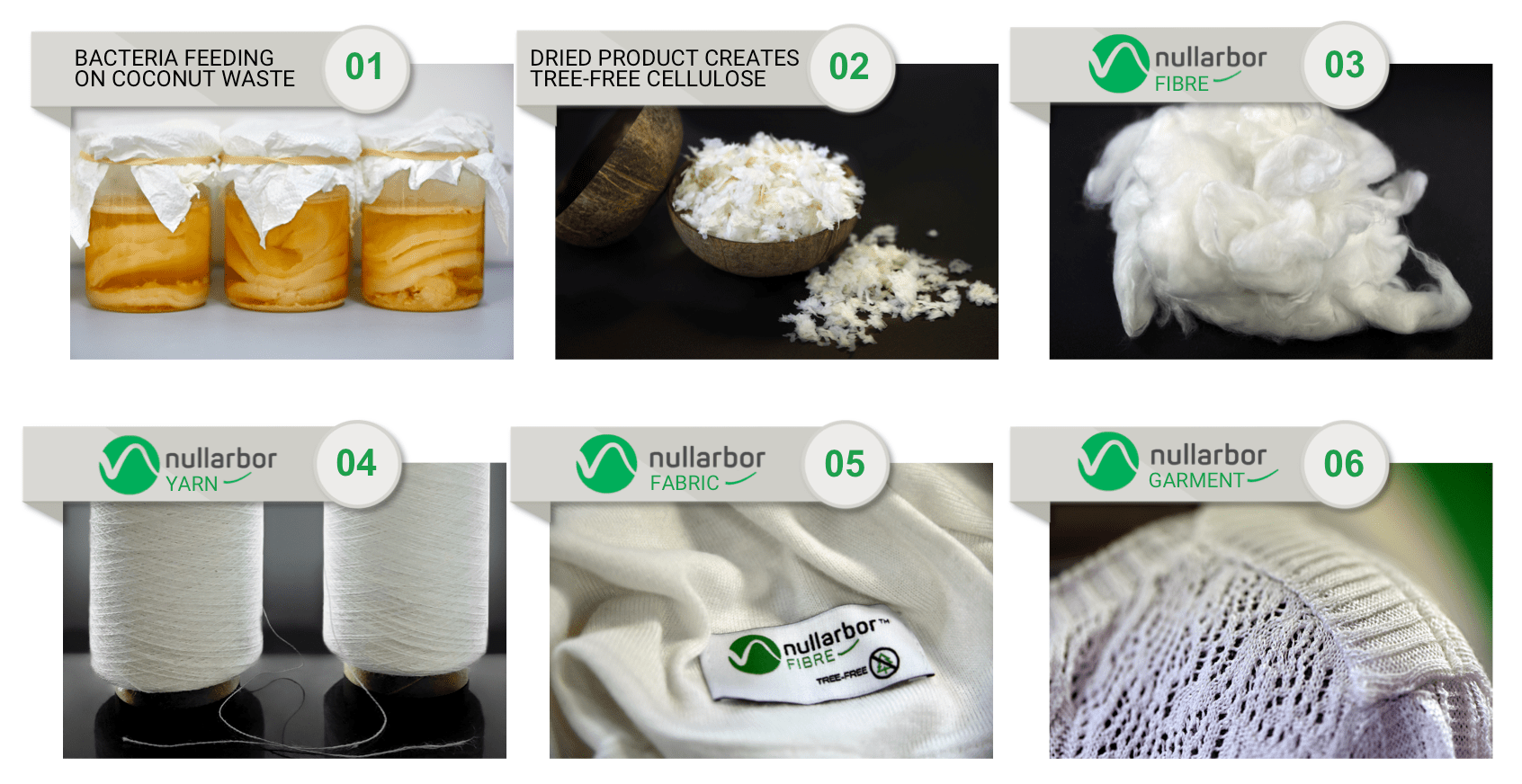
    Australian-based biomaterial technology company Nanollose Ltd has created the world’s first wearable garment using the company’s eco-friendly Tree-Free Rayon fibre (NullarborTM), sourced from sustainable coconut waste.

    The sweater is the first of its kind and marks a breakthrough for an industry that is urgently seeking sustainable alternatives to clothing made from traditional rayon and cotton, both of which cause significant environmental issues.

    Nanollose Managing Director Alfie Germano said; “We have successfully taken waste and created clothing, and we have done it following industrial protocol. Our fibre was spun into yarn and made into fabric, then manufactured into this garment using existing industrial equipment. It validates our entire process.”

    150 million trees are cut down each year, then chipped and treated with hazardous chemicals to extract the raw material used to make Viscose Rayon fibres for clothing. By contrast, Nanollose’s Nullarbor fibre is made without harming a single tree.

    “We didn’t have to cut down any trees to create this sweater, and we have now demonstrated that our Tree-Free Rayon fibre can be used in the same way as other commonly-used fibres to make clothing and textiles, without the hefty environmental footprint.” Mr Germano said

    Nanollose’s innovative biomaterial technology process begins in a facility where microbes naturally ferment liquid waste products from food industries into cellulose, a cotton-like a raw material that then is transformed into their Nullarbor fibre.

    Their process to produce cellulose requires very little land, water or energy and a production cycle is just 18 days, compared to the eight months seen in the cotton industry.

    “We believe that we are the only company producing Tree-Free Rayon fibres from waste, and we have now reached a point where our technology is moving out of the laboratory and into the factory. Once we achieve this increased scale, manufactures will have an alternative eco-friendly option available to them.” said Mr Germano.

    As more and more headlines revealing the environmental impact of the textile industry emerge, there is an increasing urgency among consumers, brands, retailers and manufacturers to seek and cultivate alternative fibre resources.

    “Progressive brands and companies are starting to facilitate this new shift by involving themselves deeper in the supply chain and searching for feasible, sustainable long-term alternatives. This is evident in the increasing number of enquires we have received over the past six months.” Mr Germano said.

    This urgency for cleaner alternatives saw retail juggernaut H&M release a sustainability report in April 2017, highlighting their commitment to use 100% sustainably sourced materials by 2030. Similarly, Zara joined the movement with the launch of their new sustainable line ‘Join Life’ modelled by Sasha Pivovrova.

    To ensure Nanollose can supply future partners with commercial qualities of fibre, the company is developing a supply chain within an ecosystem around waste from the Indonesian coconut industry (along with waste streams from other industries), and aims to significantly increase fibre production over the next 3-6 months.

    “We are a technology company, that has also become a steward in facilitating a new raw material supply chain. The goal is to work with key partners who will simply take waste (instead of trees), produce our Nularbor fibre, and seamlessly integrate them into their clothing supply chain with no retrofitting to existing machinery or processes required”


    coconut waste textile


    textile coconut waste


    REFS

    Published on nanollose.com

    Nanollose creates the world’s first wearable fashion garment made from liquid waste


    RELATED ARTICLES

  • Dow is Cleaning up The Beaches

    Dow is Cleaning up The Beaches

    Waste is a fact, but it doesn’t have to be feared. We can tackle this through collection, sorting and processing; and by understanding where and why trash is finding its way into the environment, so we can stop it.

    In November, I joined more than 300 volunteers in São Paulo, Brazil, as part of Dow’s #PullingOurWeight clean-up initiative — which brings together employees, partners, customers and local organizations to not only clean-up litter, but to educate “by doing” on the importance of proper disposal of waste and the value of recycling.

    Arriving at our clean-up site, which was near a beautiful reservoir, it was surprising to see that a seemingly clean area at first glance was in fact polluted with an abundance of waste. In a short amount of time, our team rallied together to clean up plastic bottles, caps, straws, metal cans, paper wrappers and pieces of wood.

    Our local partner, Coopercaps Cooperative, supported our efforts by sorting the collected waste that would later be sold to the appropriate recycling streams.

    Why spend a day cleaning and sorting?

    Because the world has a trash problem.

    There’s too much waste and not enough effective waste-management systems to deal with it, especially in emerging economies such as Asia and Africa.

    A lot of it finds its way into rivers or the ocean, washed up on beaches; or littering parks and natural areas, as well as our urban communities … and a seemingly pristine water reservoir.

    The #PullingOurWeight event in São Paulo was just one of 175 Dow-hosted clean-ups over the last six months around the world.

    Now in its second year, this initiative resulted in 18,000 volunteers cleaning up more than 175,000 pounds of waste — far exceeding 2018’s efforts, which rounded up 5,600 Dow volunteers and 52,500 pounds of trash in 55 cleanups.

    A direct reflection of society’s growing concern about this issue and a desire to help on needed solutions.

    In growing this program since its launch in 2018, we have identified several key learnings that have enabled us to deliver more impact and help our local communities succeed:

    • Leverage global volunteer events to raise awareness: Over the past two years, Dow has leveraged the #PullingOurWeight events as an opportunity to educate employees on the magnitude of the plastic waste problem and the actions they can take to be a part of the solution. Global platform efforts allow employees to convene and not only give back, but learn more about initiatives that deliver positive social impact.


    • Engage outside partners that align to a common sense of purpose: Bringing together industry partners provides the opportunity for a wider dialogue on key issues. These clean-ups have not only engaged employees, but sparked a dialog with external leaders — such as former Olympic athlete Lars Grael; and Valdemar de Oliveira Neto, Impact Business Director at Fundación AVINA, to reflect on the importance of private-sector engagement with initiatives to advance recycling, discuss new business models, new partnerships and new ways of thinking to solve this pressing global issue.


    • Align efforts to a larger goal, inspiring employees to come together: Demonstrating to employees that their efforts will ladder up to a larger goal demonstrates that their contributions will be realized on a grander scale. #PullingOurWeight is part of Dow’s 2025 objective to positively impact the lives of 1 billion people; give 600,000 hours to support students and teachers in science, technology, engineering and math (STEM) education; and complete 700 volunteer sustainability projects around the world.

    Waste is a fact, but it doesn’t have to be feared. We can tackle this through collection, sorting and processing; and by understanding where and why trash is finding its way into the environment, so we can stop it.

    Dow is globally committed to the task.

    However, for the world to ultimately be rid of litter in the environment, we must all help do our part to properly dispose of waste, practice recycling and pick up litter wherever you see it.


    REFS

    Published on sustainablebrands.com

    Dow: Intent on #PullingOurWeight Around Cleaning Up Plastic Waste


    RELATED ARTICLES


    PERSONAL REMARKS

    Well done Dow!

    Dow seems to be hitting the ball straight when it comes to taking their responsibilities.

  • Colgate Goes for Recyclable Tube

    Colgate Goes for Recyclable Tube