
BGUSA, INC announced today that they have solved the much-disputed argument of ridding the Earth of single-use plastic bags. All-natural food waste ingredients and organic starches are the derivatives of these bags. No added chemicals altar the composition of these bags.
Рубрика: Uncategorized
-

Covestro Launches Bio Polycarbonate Film
Now more than ever before, OEMs and designers are looking for sustainable alternatives to the traditional materials used in their applications. Recognizing that sustainable thinking and action are key to a brighter future, we’re expanding our materials portfolio with a novel polycarbonate film.Sustainable innovation: the benefits of partly bio-based Makrofol® EC
As part of our long-term commitment to the circular economy, we’re bringing sustainability and innovation together with the launch of our first partly bio-based polycarbonate film: Makrofol® EC.
More than 50% of this material’s carbon content is sourced from plant-based biomass.
When compared to standard films made from petrochemicals, a portion of the oil-based primary products used have been replaced with plant-based raw materials.
First Plastic to Kill Corona Virus

Reducing the use of raw materials based on fossil resources slashes the film’s carbon footprint by approximately 20%.
With Makrofol® EC polycarbonate film, our customers can benefit from a more sustainable alternative to standard polycarbonate films that exhibits comparable or even better properties, including improved chemical and weather resistance.
This partly bio-based film also offers excellent mechanical properties and impact strength, high abrasion resistance and surface hardness, and good optical properties.
Banana Republic, Why Turn Plastic into CO2 and Plastic Waste from Ships
Makrofol® EC polycarbonate films can be processed by a variety of technologies, including printing, thermoforming, high-pressure forming (HPF), coating (hardcoat, adhesive), cutting and lamination.
Polycarbonate film in action
Similar to conventional polycarbonate films, Makrofol® EC polycarbonate film can be used a variety of applications spanning several industries, including:
- Automotive: Speedometers, decorative trim parts and instrument clusters
- Electrical, electronics & appliances: Electrical insulation, electronic housing and decorative control panels
- Graphics: Labels, tags, overlays and signage
- Packaging: Thermoformed packaging for sensitive goods
More and more customers are supporting sustainable products. This is why research on bio-based products is an important priority for us.
Wieland Hovestadt Head of Research and Development in the Specialty Films division, Covestro
Key benefits
- High strength Features excellent mechanical properties and impact strength
- Excellent weather and chemical resistance Offers improved resistance to UV rays and chemicals
- High durability Provides high abrasion resistance and surface hardness
-

Oimo Creates Starch Based Water-Soluble Packaging for Food, Drinks and Cosmetics
Spanish startup Oimo is set to revolutionise the packaging industry with a biodegradable and water-soluble material with the same properties as traditional plastic.
The material is created from algae, natural sugars and vegetable oils and is non- toxic to marine life. Currently, Oimo is focusing on adapting it for the production of disposable packaging in the food sector, beverage canholder’s and cosmetic packaging.
Oimo has received a grant of 75,000 euros from ACCIÓ from the Startup Capital line funded by the Generalitat of Catalunya, The grant is aimed at promising new technology companies.
The startup is now based in Spain but is a spin-off from Brunel University London and was founded in 2019. It has already applied for a patent for this material and will begin marketing it next year.
Friday 10 July 2020 — The Spanish startup Oimo has created a sustainable material similar to plastic from algae extracts, natural sugars and vegetable oils that is non-toxic for marine life. It is a project based on the circular economy that allows the production of a biodegradable material in a marine environment, from natural sources and with the same properties of many types of traditional plastic minus the negative effects on the environment. The company has already applied for a patent for this material, designed to produce disposable packaging for the food sector, canholders for beverage cans and cosmetic packaging.
Oimo is one of the companies that benefited from the Startup Capital grant from ACCIÓ, the agency for company’s competitiveness in the Department of Business and Knowledge.
According to the CEO of Oimo, Albert Marfà, “until recently people did not realize the great impact that plastic generates for our planet, but now all companies are aware of the need to reduce it and the legislation also works in this regard, because every year more than 8 million tons of plastic ends up in the sea ”. “We have developed a type of sustainable packaging that weighs little
and is easy to work with to achieve the necessary flexibility or rigidity according to the needs of the different possible applications,” says Marfà.
For the company’s CEO, “it is more relevant than ever to work from the circular economy, considering the exponential increase in single-use plastics during the health crisis caused by covid-19.” The biomaterial “is biodegradable both on land and in salt or fresh water and is non-toxic to marine life, often a victim of waste that cannot be recycled,” says Marfà.
The emerging company does not manufacture final products, but formulates and designs this new biodegradable raw material that can be adapted to all types of applications and that can be used in the machinery to work the plastic that is currently used. To achieve this material, the company heats the natural molecules present in the algae extracts or vegetable oils to produce a chemical reaction that allows them to obtain a series of molecular chains that adhere to create this bioplastic. Among the uses of the biomaterial developed by Oimo are disposable food containers, canholders for beverage cans or packaging for the cosmetics sector. The startup also offers consulting services to end companies that want to understand how they can adapt the products they used to make with traditional plastic and thus contribute to “promoting sustainable innovation in the packaging sector,” explains Marfà.
Oimo, founded in early 2019 and based in Barcelona, plans to bring the new material to market with clients (manufacturers of plastic products or end customers, for example, in the food or cosmetics industry) in 2021.
The startup currently has a team of four people, a team that includes engineers, chemists, business development experts, as well as external collaborators and consultants.
-

New Pyrolysis Plant in Virginia
Company to invest $31.7 million to establish first-of-its-kind waste plastics facility and manufacturing operation.
Governor Ralph Northam today announced that Braven Environmental, a leader in deriving fuel from landfill-bound plastic, will invest $31.7 million to establish a manufacturing operation in Cumberland County’s shell building. Virginia successfully competed with North Carolina and South Carolina for the project, which will create 52 new jobs. This is the first economic development announcement for Cumberland County since 2009.
“Braven Environmental will bring well-paid job opportunities to the citizens of Cumberland County while lessening our overall environmental footprint in the years to come,” said Governor Northam. “Providing the business environment and infrastructure to attract operations of this kind to rural Virginia is critical to our efforts to generate economic growth in all corners of the Commonwealth. Our economy is hurting right now, and these new jobs will have a great impact in the region.”
Braven Environmental uses the science of pyrolysis, not incineration, to break down waste plastics with minimal emissions. The output can be used to create new plastics or as fuel produced with much lower carbon emissions than traditional oil or gas production. Braven Environmental’s new plant will stop waste plastics from entering landfills, oceans, and waterways, while also reducing Virginia’s greenhouse gas emissions by ending the impact of long distance transportation used in current waste plastic solutions. Braven Environmental is committed to hiring locally and providing good jobs in the Cumberland County community. The company plans to create a total of over 80 new jobs within 18 months of the first phase of this project.
“Job creation announcements are especially important as we work to repair the economic impacts of COVID-19,” said Secretary of Commerce and Trade Brian Ball. “Braven Environmental’s decision to establish its new fuel manufacturing operation in Cumberland County is an exciting win for the Commonwealth, and it underscores the competitive advantages available to industry-leading companies in the Southside Virginia. We welcome Braven to the Commonwealth, and we look forward to working together to ensure Virginia is proactively reducing its carbon footprint.”
“Braven’s decision to develop its next site in Virginia as part of its planned U.S. expansions was driven by the state’s pro-business and innovation economy, and the fact that Virginia sees an enormous amount of waste that is either transported long distance for processing or ends up in local landfills,” said Nick Canosa, President and CEO of Braven Environmental. “With this facility, we’re looking forward to working hand-in-hand with Cumberland County to address the existing plastic waste issue with proven technology, while bringing long-term jobs to the community.”
The Virginia Economic Development Partnership worked with Cumberland County and Virginia’s Growth Alliance to secure the project for Virginia. Governor Northam approved a $150,000 grant from the Commonwealth’s Opportunity Fund to assist Cumberland County with the project. The Virginia Tobacco Region Revitalization Commission approved $65,000 in Tobacco Region Opportunity Funds for the project, and funding and services to support the company’s employee training activities will be provided through the Virginia Jobs Investment Program.
“Cumberland County’s Board of Supervisors is proud to welcome Braven Environmental to the County,” said Chairman of the Cumberland County Board of Supervisors Brian Stanley. “Through the diligent work of our Economic Development Authority, opportunity and prosperity has been delivered.”
“Braven’s investment and development of technology to transform a global problem into a clean fuel solution is revolutionary,” said Chairman of the Cumberland County Economic Development Authority Fred Shumaker. “This type of forward thinking not only reduces the use of traditional fuels, therefore lowering the state’s carbon footprint, but also reduces the volume of waste in the environment. This is a great win for Virginia and her environment, but specifically for Cumberland County.”
“Braven Environmental’s investment is a gamechanger for Cumberland County and these new jobs will change lives in Southside Virginia,” said Congressman Denver Riggleman. “I am very excited about this announcement and the potential of the project. Braven brings an innovative technology project that will increase prosperity in Cumberland and reduce carbon emissions in Virginia.”
“This reaffirms that Virginia’s current policies toward business and growth are attractive to commercial interests,” said Senator Mark Peake. “Beyond the much-needed jobs that Braven Environmental will provide, the total impact on Cumberland is almost unimaginable. I am very excited about how this project will bolster local government, generate growth in area businesses, and offer new educational opportunities in Cumberland County Public Schools. I welcome Braven Environmental and offer my support in my capacity in the Senate of Virginia.”
“We are always looking for innovative businesses to join our community here in Cumberland County and Southern Virginia, and Braven Environmental is exactly that,” said Delegate Thomas Wright. “I am pleased that Virginia was able to successfully compete against other states for this project, and I believe that our strong business climate and more-than-capable workforce will play a strong role in the success of this new venture.”
-

Americans Start Ocean Clean Up
Ocean Voyages Institute’s marine plastic recovery vessel, S/V KWAI, docked at the port of Honolulu today, after a 48-day expedition, successfully removing 103 tons (206,000 lbs.) of fishing nets and consumer plastics from the North Pacific Subtropical Convergence Zone, more commonly known as the Great Pacific Garbage Patch or Gyre.
Establishing its lead in open ocean clean-up, Ocean Voyages Institute has set a new record with the largest at sea clean-up in the Gyre to date, more than doubling its own results from last year.
“I am so proud of our hard working crew,” says Mary Crowley, founder and executive director of Ocean Voyages Institute. “We exceeded our goal of capturing 100 tons of toxic consumer plastics and derelict ‘ghost’ nets, and in these challenging times, we are continuing to help restore the health of our ocean, which influences our own health and the health of the planet.”
Crowley adds: “The oceans can’t wait for these nets and debris to break down into microplastics which impair the ocean’s ability to store carbon and toxify the fragile ocean food web.”
Known as the “Ghost Net Buster,” Crowley is renowned for developing effective methods to remove significant amounts of plastics out of the ocean, including 48 tons (96,000 lbs.) of toxic plastics during two ocean clean-ups in 2019, one from the Gyre and one from the waters surrounding the Hawaiian islands.
“There is no cure-all solution to ocean clean-up: It is the long days at sea, with dedicated crew scanning the horizon, grappling nets, and retrieving huge amounts of trash, that makes it happen,” says Locky MacLean, a former director at Sea Shepherd and ocean campaigner in marine conservation for two decades.
The GPS satellite trackers used by Ocean Voyages Institute since 2018 are proving Crowley’s theory that one tracker can lead to many nets. The ocean frequently sorts debris so that a tagged fishing net can lead to other nets and a density of debris within a 15 mile radius.
The Pacific Gyre, located halfway between Hawaii and California, is the largest area with the most plastic, of the five major open ocean plastic accumulation regions, or Gyres, in the world’s oceans.
“We are utilizing proven nautical equipment to effectively clean-up the oceans while innovating with new technologies,” says Crowley. “Ocean Voyages Institute has been a leader in researching and accomplishing ocean clean-up for over a decade, granted with less fanfare and attention than others, but with passion and commitment and making meaningful impacts.”
Ocean Voyages Institute will be unloading the record-breaking haul of ocean plastic debris while docked alongside Pier 29 thanks to the support of Honolulu-based Matson, in preparation for upcycling and proper disposal.
“In keeping with our commitment to environmental stewardship, Matson has been searching for a way to get involved in cleaning up the Pacific Gyre,” said Matt Cox, chairman and CEO. “We’ve been impressed with the groundbreaking efforts of Ocean Voyages Institute and the progress they’ve made with such a small organization, and we hope our support will help them continue this important work.”
An Expanded 2020 Expedition
When the sailing cargo ship, S/V KWAI, arrived in Honolulu today, it completed a 48-day at sea clean-up mission that began at the Hawaiian port of Hilo on May 4, after a three week self- imposed quarantine period to ensure the health of crew members and safety of the mission, in the face of the COVID-19 pandemic.
During the expedition, the KWAI’s multinational crew collected marine plastic pollution with the help of GPS satellite trackers that Ocean Voyages Institute designed with engineer Andy Sybrandy, of Pacific Gyre, Inc. These beacons are placed on nets by volunteer yachts and ships. Drones, as well as lookouts up the mast, enable the ship’s crew to hone in on the debris. They then recover the litter, place it in industrial bags, and store it in the ship’s cargo hold for proper recycling and repurposing at the end of the voyage.
S/V KWAI, led by Captain Brad Ives, and Ocean Voyages Institute are planning a second voyage to the Gyre departing the end of June to continue clean-up of this area, which is so besieged by toxic debris. The length of a second summer leg will be determined by how successful Ocean Voyages Institute is in securing additional donations.
“Our solutions are scalable, and next year, we could have three vessels operating in the North Pacific Gyre for three months all bringing in large cargos of debris,” says Crowley. “We are aiming to expand to other parts of the world desperately needing efficient clean-up technologies.”
Crowley adds: “There is no doubt in my mind that our work is making the oceans healthier for the planet and safer for marine wildlife, as these nets will never again entangle or harm a whale, dolphin, turtle or reefs.”
-

Who is Kaneka?
Who is Kaneka and Kaneka Biopolymers? The complete history and all you need to know about Kaneka including their circular economy and bioplastics portfolio.
In Short
Kaneka is a Japanese chemical company with a wide range of business activities such as chemicals, functional plastics, expandable plastics & products, foodstuffs products, life-science products, electronic products and synthetic fibers.
History
- 1949 – Kaneka is created in Osaka as a spin off from the Kanegafuchi Spinning Company.
- 1950 – Mass production of PVC (Kanevinyl).
- 1953 – Large scale production of margarine.
- 1965 – Production of expandable polystyrene (Kanepearl).
- 1968 – Europe office and New York office. Production of chlorinated PVC.
- 1970 – Production of extruded polystyrene foam board (Kanelite Foam).
- 1973 – Production of polyethylene foam.
- 1985 – Production of polypropylene foam.
- 2011 – Production of bio-based polymer with soft and heat-resistant properties.
- 2017 – Granted a certificate of biodegradability in marine environment for biodegradable plastics.
Kaneka Biopolymers
Kaneka Biopolymers is a division of Kaneka Corporation and was created out of the need to provide an alternative solution to single-use plastics. The Kaneka Biopolymers brand is Kaneka PHBH™. It’s a plant-based biopolymer.
Kaneka PHBH
Kaneka PHBH are biopolymers in the family of PHAs or Polyhydroxyalkanoates.
Kaneka PHBH grades are polyesters produced by microorganisms. Kaneka PHBH grades are produced via the fermentation of plants. Kaneka’s PHBH is made from plant oil and fat, and other ingredients. Kaneka uses Cupriavidus necator bacteria to produce their PHBH.
Kaneka PHBH combines 2 monomers together: 3-Hydroxyhexanoate with 3-Hydroxybutyrate to make different types of PHBH.

The concentration of each monomer during the polymerization process will create a different type of copolymer that can lead to different types of applications. This technique allows the creation of multiple PHBH grades that will mimic a wide variety of plastic shapes.
Kaneka PHBH is marine biodegradable, soil biodegradable and compostable.
Kaneka PHBH has superior advantages compared with other biopolymers.

Biodegradability of PHBH™ 60m film in soil @ 30°c 
Kaneka PHBH production
Kaneka started producing PHBH at their Takasago headquarters in Japan in 2011. The production capacity was 1.000 metric tonnes per year.
They scaled up their Takasago plant to an annual capacity of 5.000 tonnes / year in December 2019 and they’re considering increasing PHBH production to 20.000 tons in the future.
Read more: Kaneka Builds 5.000 tons PHBH Plant
Kaneka PHBH Applications
PHBH bioplastics is exported to Europe to make bags. PHBH is also used to make agricultural mulch films, straws, cutlery, food containers and packaging materials.
Kaneka and Shiseido are working together to develop cosmetic containers.
In the future, Kaneka may want to explore the production of bottles and containers, auto interiors and electrical equipment.
Kaneka Today
- 2018 Annual Sales: 5.4 billion USD
- 2019 Employees: 10,571
- HQ: Tokyo, Japan
-

Half Year Bioplastics Ranking 2020
Here’s the Brands and Companies Ranking for the period January to June 2020. There’s a bonus today: we’ve given the absolute numbers, no percentages.Column “Jan to Jun” represent the number of pages viewed that have been tagged with the company or brand name. Example: your company issues 3 press releases. The first press releases is read 600 times, the second 500 times and the third 400 times in the period January to June 2020; well then the number in the column would be 1500 (addition of 600 + 500 + 400). The numbers were very low due to the corona crisis.
Conclusion
I’m not gonna discuss everything in details; but to make a long story short … with the top 10 you’ve got the deal makers … the champions … the guys who have resisted the storm… the kings of the bioplastics industry.
Bioplastics Ranking Half Year 2020
NAMES Ranking JAN to JUN NOVAMONT 1 5666 BASF 2 5596 BIO-ON 3 5424 DUPONT 4 4816 AVANTIUM 5 4787 SYMPHONY ENVIRONMENTAL 6 3846 NATUREWORKS 7 3368 BRASKEM 8 3288 DANIMER SCIENTIFIC 9 3096 STORA ENSO 10 2918 NESTE 11 2882 CLARIANT 12 2536 MITSUBISHI CHEMICAL 13 2220 METABOLIX 14 1915 ALPLA 15 1846 COVESTRO 16 1789 SULAPAC 17 1719 ARKEMA 18 1698 LYONDELLBASELL 19 1691 CORBION 20 1689 TOTAL CORBION 21 1665 MITSUI CHEMICALS 22 1652 VERSALIS 23 1471 BIOAMBER 24 1283 API 25 1281 MATER-BI 26 1260 CELLOPHANE 27 1212 NODAX 28 1200 I’M GREEN 29 1194 KANEKA 30 1101 SOLVAY 31 1068 GENOMATICA 32 1066 FUTAMURA 33 997 TIPA 34 960 DSM 35 958 SYNVINA 36 924 SK CHEMICALS 37 917 CARGILL 38 915 FLOREON 39 910 VERDEZYNE 40 889 NOVOZYMES 41 888 REVERDIA 42 832 EASTMAN 43 768 MYRIANT 44 743 GC INNOVATION AMERICA 45 710 ARCTIC BIOMATERIALS 46 706 DOWDUPONT 47 680 AVANTIUM RENEWABLE POLYMERS 48 665 YIELD10 BIOSCIENCE 49 639 WOODLY 50 637 BIOME BIOPLASTICS 51 630 LACTIPS 52 621 SULZER 53 619 GOOD NATURED 54 619 TRIFILON 55 559 FKuR 56 548 TAGHLEEF INDUSTRIES 57 528 LANZATECH 58 511 SWEETFOAM 59 492 AVA BIOCHEM 60 489 BIOSPHERE PLASTIC 61 483 ECHO INSTRUMENTS 62 482 ARBOBLEND 63 476 METGEN 64 470 EVONIK 65 462 NATUREFLEX 66 453 TECNARO 67 409 VINMAR 68 408 ECOZEN 69 403 GREEN DOT BIOPLASTICS 70 402 ROQUETTE 71 395 TEIJIN 72 388 CORNWARE 73 381 INNOVIA FILMS 74 380 PLA-NET 75 371 INGEO 76 362 BIOCHEMTEX 77 359 TORAY 78 354 MYKAI 79 334 DURASENSE 80 334 ALGOPACK 81 327 ANELLOTECH 82 295 URTHPACT 83 295 RILSAN 84 267 ARBOFORM 85 261 LUMINY 86 253 TERRAVERDAE 87 244 CARDIA BIOPLASTICS 88 225 MINERV 89 224 DURABIO 90 220 VIRENT 91 211 DEINOVE 92 207 BIOLOGIQ 93 204 ECOFLEX 94 200 NATIVIA 95 195 BEYOND GREEN 96 186 ARCHER DANIELS MIDLAND (ADM) 97 183 BIORGANI 98 163 TREVA 99 162 CIMV 100 149 GUALAPACK GROUP 101 148 RENMATIX 102 141 RADICI GROUP 103 135 POLYSORB 104 127 BIO4PACK 105 125 MOBIUS 106 117 METEX 107 108 NAFIGATE 108 75 BIOBATCH 109 74 NUREL 110 72 ARBOFILL 111 64 CELUS-BI 112 55 SOLON 113 53 DOMTAR 114 42 LIGNOBOOST 115 42 CARBIOLICE 116 33 GLYCOSBIO 117 28 ABM COMPOSITE 118 15 BIOMER N/A BIOTEC N/A BIO-FLEX N/A YULEX N/A TEREOS SYRAL N/A DO GREEN N/A TEKNOR APEX N/A BIOSUCCINIUM N/A ARNITEL ECO N/A GLOBAL BIOPOLYMERS N/A BIOHYBRID N/A METSO N/A TERRALOY N/A RADILON N/A SUCCINITY N/A BIO-SA N/A NUPLASTIQ N/A BIOPLAST N/A DYADIC N/A BIOCHOICE N/A BIODOGRADABLE N/A GOGLIO N/A KINGFA N/A MHG N/A POLYONE N/A PSM N/A TREEMERA N/A TRELLIS BIOPLASTICS N/A ZHEJIANG HISUN BIOMATERIALS N/A MAISTIC N/A BIO-PDO N/A BIOAPPLY N/A BIOBENT N/A BIOFORM N/A BIOFRONT N/A BIOGEM N/A BIOGRADE N/A BIOLITE N/A BIOPAR N/A BIOPLASTICS INTERNATIONAL N/A BIOSTEEL N/A BRONTIDE N/A CHENQI N/A CUPFORMA NATURA N/A ECOPEXX N/A ECOSPRAY N/A EPICEROL N/A FIBROLON N/A HOFFMANN NEOPAC N/A MIREL N/A NEOPAC N/A PERSTOP N/A PLANEXT N/A PLANTIC ECO PLASTIC N/A PLANTRO N/A RADELAST N/A RODENBURG BIOPOLYMERS N/A SOLANYL N/A SPECTALITE N/A STARCHPAK N/A TECHNYL N/A TERRALENE N/A TERRAPRENE N/A TETRA REX N/A TORAYCA N/A FRX POLYMERS N/A NOFIA N/A XINHUARUN N/A GRABIO N/A Notes
This ranking is based on website statistics of BioplasticsNews.com for the period 1 January – 30 June 2020.
-
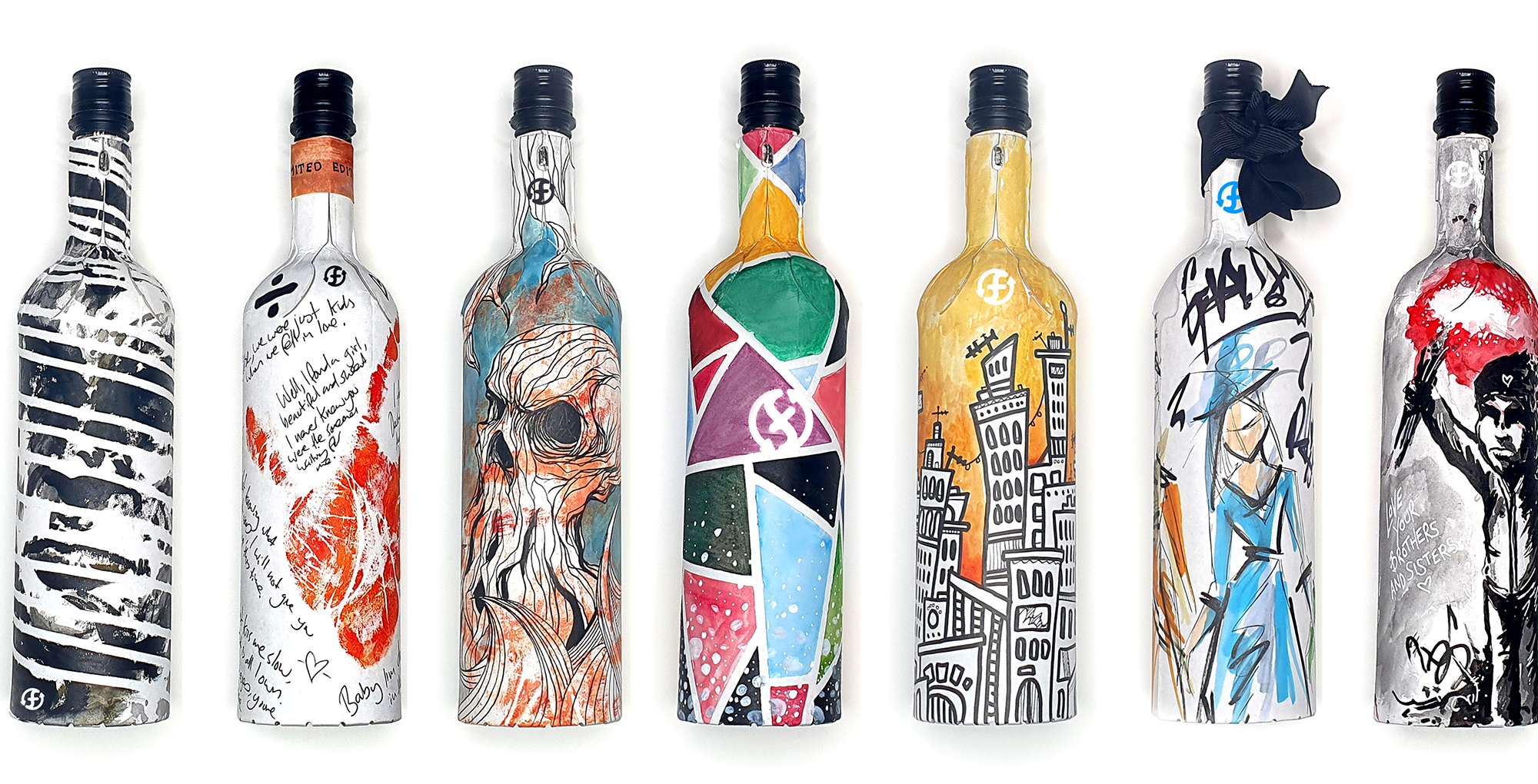
First Wine Bottle in Paper
Meet the Frugal Bottle – the biggest innovation for wine and spirits since the launch of the glass bottle.The 75cl Frugal Bottle is made from 94% recycled paperboard with a food-grade liner to hold the wine or spirit. It can be refrigerated and keeps the liquid cooler for longer.
The Frugal Bottle, which is comparable in cost to a labelled glass bottle, is the brainchild of British sustainable packaging firm Frugalpac, which creates and supplies recycled paper-based products with the lowest carbon footprint that are easily recycled again so they don’t need to go to landfill.
The Frugal Bottles are made at Frugalpac’s facility in Ipswich.


The first wine to go on sale in the Frugal Bottle is from the award-winning Italian vineyard Cantina Goccia. 3Q is an unwooded Sangiovese red with a hint of Merlot and Cabernet Sauvignon.
There are six reasons why the Frugal Bottle is unique.
It’s lighter. The Frugal Bottle weighs just 83g so it is up to five times lighter than a normal glass bottle, making it easier to carry and lighter to transport.
The Frugal Bottle’s water footprint is also at least four times lower than glass.
It’s easy to recycle again. Simply separate the plastic food-grade liner from the paper bottle and put them in your respective recycling bins. Or you can put the whole bottle in your paper recycling bin and the liner will be easily separated in the paper re-pulping process.
It uses less plastic than a plastic bottle. The Frugal Bottle uses up to 77% less plastic. Only 15g compared to a 64g bottle made from 100% recycled plastic.
It stands out. As the Frugal Bottle is made from recycled paperboard, it allows for 360-degree branding across the bottle. No other wine or spirits bottle looks or feels like it, so it stands out on shelf and table.
It’s better for wine producers.The Frugal Bottle can be produced in the heart of their bottling facility, offers complete freedom on design and print, is more cost effective to transport while reducing their carbon footprint.
The Cantina Goccia Frugal Bottle will initially be available to buy online from http://www.cantinagoccia.com and in Scotland from Woodwinters Wines & Whiskies retail stores and online.
The Frugal Bottle is also under active consideration by a number of leading UK supermarket chains and hospitality groups keen to promote sustainable packaging and will be available from other retail outlets across the UK, in Denmark, and Holland over the next few weeks.
The Frugal Bottle, which can also be used for sprits such as gin, vodka and rum, has already sparked a huge amount of interest in a drinks industry keen to cut their emissions and appeal to a new audience of consumers interested in sustainability.
For example, Spanish wine producer Torres has launched the International Wineries for Climate Action (IWCA) with members targeting an overall reduction of greenhouse gas emissions of 80% by 2045, with a shorter-term target of 50% by 2030.
Moving to the Frugal Bottle will allow wine producers to cut the carbon footprint of each bottle by up to 84% and reduce emissions from transporting bottles as the Frugal Bottles can be made and filled on site.
According to WRAP, the Waste and Resources Action Programme, the UK imports more than 1.6 billion bottles of wine a year.
Frugalpac also developed the Frugal Cup, the world’s first take-away coffee cup made from 96% recycled paper that has a carbon footprint up to 60% lower than conventional cups when sent to landfill and is easier to recycle again.
Frugalpac Chief Executive Malcolm Waugh said:
“Our mission is to design, develop and supply sustainable packaging. The Frugal Bottle is up to five times lighter than a glass bottle, has a carbon footprint up to six times lower and is easy to recycle again.
“We’ve had fantastic feedback from people who’ve trialled the Frugal Bottle. As well as the superior environmental benefits, it looks and feels like no other bottle you have ever seen.
“We want to deliver great wine and spirits in innovative packaging whilst helping our customers and consumers reduce their impact on the environment.
“The Frugal Bottle offers a major point of difference for the global wine and spirits sector through stand out design and positive sustainable benefits.
“Frugalpac’s business model is to supply Frugal Bottle machines for wine producers or packaging companies to manufacture the bottles on their site, cutting carbon emissions even further. Materials can be purchased locally through existing paperboard printers to give maximum freedom of design and the best commercial offering.”
Cantina Goccia owner Ceri Parke, the Frugal Bottle’s launch customer, said:
“We’re delighted to be making history with the most sustainable wine bottle in the world.
“For us, the Frugal Bottle is about achieving a considerably more sustainable form of packaging for an industry crying out for innovation. It will help us decarbonise the drinks industry.
“When some of our top hotel customers saw samples of our paper wine bottle, there was no hesitation in their minds that this type of bottle would be well received in their dining rooms. The launch of the Frugal Bottle is a big leap in sustainability without compromising wine quality.
“It’s much lighter than glass, easier to transport and friendlier to the planet. Just as important, our wine still tastes as wonderful in a paper bottle as it does in glass.
“We passionately believe this is a real game changer for the wine industry, allowing us to sell and transport our award-winning wines in a much more sustainable way whilst still providing a beautiful bottle.”
Douglas Wood, founder, Woodwinters Wines and Whiskies, the Cantina Goccia Frugal Bottle launch supplier, said:
“Woodwinters’ team and customers are huge fans of the delicious wines of Cantina Goccia. Innovation in sustainability at all stages of wine’s journey from vineyard to glass is something that we believe is hugely important.
“We are, therefore, obviously very excited to support the availability of one of our favourite wines in this new format with all its potentially great positive environmental impact.”
-

BASF Chemical Recycling of Mattresses
The materials from old mattresses are to be recycled in such a way that they can be used for the production of new mattresses.
“The target is to recover the raw materials with a quality comparable to that of non-recycled/virgin raw materials”, says Shankara Keelapandal, Business Management Isocyanates Europe.
In doing so, BASF is breaking new ground and responding to the raised expectations regarding sustainability of the foam and mattress industry as well as those of consumers.
It is an important step to possibly re-enter post-consumer waste back into product lifecycles.
BASF’s process breaks down the flexible polyurethane and delivers the initially used polyol.
From there BASF can produce new foam with a significantly lower carbon footprint, because fewer fossil resources are used.
“It makes projects of that nature quite attractive because, while mattresses are easy to collect and to sort out, at the end of their lifecycle they currently end up being either incinerated or in a landfill, explains technical project manager Arno Volkmann.
First volumes of the recycled material will be delivered to project partners later this year to develop pilot projects together.
“The project is technically complex, but the potential to reduce waste volumes and save resources makes it all worth it” comments Keelapandal.
With the new process, BASF steps up its efforts to increase sustainability and takes one step further toward a circular economy.
Aiming to decouple economic growth from the use of finite resources, BASF accelerates the adoption of the circular economy principle into its day-to-day operations.
“This is why we develop a solution to closing the loop for soft polyurethane foam with the chemical recycling of mattresses,” adds Keelapandal.
-

Germany Bans SUP Straws and Food Containers
Germany is banning the sale of single-use plastic straws, cotton buds and food containers, bringing it in line with a European Union directive intended to reduce the amount of plastic garbage that pollutes the environment.The Cabinet agreed Wednesday to end the sale of plastics including single-use cutlery, plates, stirring sticks and balloon holders, as well as polystyrene cups and boxes by July 3, 2021.
Environment Minister Svenja Schulze said the move was part of an effort to move away from “throw-away culture.” Up to 20% of garbage collected in parks and other public places consists of single-use plastic, mainly polystyrene containers.
Plastic takes decades to degrade and microscopic particles have been found inside the bodies of fish, birds and other animals.


