Рубрика: Uncategorized

  • How Did McDonalds Cope With the French Plastic Ban?

    How Did McDonalds Cope With the French Plastic Ban?

    Let’s have a look at how «McDo» dealed with the French plastic ban.

    I went to “McDo” located close to the Chateau de Versailles on the 4th of January 2020.

    Le Chateau was built by Louis XIV, the man who put France on the Map.

    Here’s what I saw:

    Plastic Straws

    McDo removed plastics straws and didn’t provide a (paper) substitute.

    They launched an information campaign on the cups to inform their customers.

    How smart!

    Well done !

    Plastic Lids

    They replaced the plastic cup lids with paper lids.

    Why not remove the lids all-together?

    McDo provided instructions on their cups on how to use the new paper lids.

    Well done!

    mcdonalds paper lid
    Mcdonald’s paper lid

    Paper Cups

    McDo kept the paper cups with plastic coating.

    The cups are single-use packaging, not recyclable and contaminated with food after use.

    In-Store Marketing

    McDo’s in-store marketing material contained plastic straws .. an illegal item since January 1, 2020. Let’s put it this way … plastic straws haven’t left McDo completely.

    Plastic Straws used for In-store Marketing
    Plastic Straws used for In-store Marketing

    Customer Information

    No in-store customer information to educate the customers about what changed since January 1 (besides info on the cups).

    I spoke to employees and their knowledge about the ban was a bit limited.

    I think they should have (1) educated their employees; (2) used their paper trays cover to provide more info.

    Waste Collection

    No separate collection of waste.

    “One bin fits all”; or shall we say “One bin fits none”?

    One Bin Fits All
    One Bin Fits All

    Clam Shells

    They kept the paper clam shells with plastic coating.

    The clam shells are single-use packaging, not recyclable  and contaminated with food after use.

    Do the clam shells fall under the SUP ban or should it be considered as “packaging”?

    The law makes an exception for “packaging”.

    Probably SUP!

    Why?

    It’s not hermetically sealed and besides McDo … most burgers are not sold in clam shells.

    What will happen to McDonald’s iconic clam shell?

    It will have to go.

    This is going to be the packaging move of the year 2020 … the disappearances of McDonald’s clam shell.

    How and by what will it be replaced with?

    This is going to be the end of an era … the end of a legend … the end of a marketing icon.


    RELATED ARTICLES

  • Ukrainian Startup Launches Bioplastics Straws

    Ukrainian Startup Launches Bioplastics Straws

    Ukrainian startup Yes Straws has launched biodegradable, single-use drinking straws made from cane stems.

    he stems are usually treated as waste in agriculture processes so using these by-products helps to save natural resources and provide farmers in poor regions with extra earnings, Yes Straws officials pointed out.

    They can be used with both cold and hot drinks and come in three sizes. Small straws can be used for any kind of drinks, medium straws suit fresh juices and smoothies, and large straws are well-suited for for bubble teas.

    The company says it currently produces two million drinking straw monthly for distributors, coffeehouses, hotels and restaurants in domestic markets and in Europe and the Americas.

    “Today people constantly face air, water, and land pollution.

    More and more animals die losing their natural habitat or being damaged by waste.

    And plastic is one of the biggest problems here due to its low ability to decompose,” said Yes Straws chief operating officer Olesya Vershigora.

    “Therefore, every company and individual must care about the produced and consumed products.

    We can see a positive tendency of opting for eco alternatives and moving to conscious consumption.”

    REFS

    Published on vendingtimes.com

    Biodegradable Cane Stem Straws Provide Alternative To Plastic

  • Kaneka Builds 5.000 tons PHBH Plant

    Kaneka Builds 5.000 tons PHBH Plant

    Kaneka has completed the capacity building of its Biodegradable Polymer PHBH at the Takasago Plant. The completion ceremony was held on December 17th.

    The investment was around 2.5 billion yen, the production capacity is approximately 5,000 tons / year, five times that of the previous model.

    In recent years, marine pollution caused by microplastics has become a global social problem as it affects ecosystems.

    However, PHBH ® , a 100% plant-derived biopolymer, is certified to biodegrade in seawater.

    It acquired “OK Biodegradable MARINE (1) certificate and is expected to contribute to reducing marine pollution.

    In addition, it has been added to the positive lists of the US Food and Drug Administration (FDA), the Sanitation Council for Polyolefins and the European Commission , and the countries and regions that can be used for food contact applications are expanding.

    In Europe, various regulations have been tightened to reduce disposable plastics.

    In France, regulations are tightened from January 2020, and PHBH ® sales are expected to expand rapidly.

    The PHBH ® straws were adopted in November by Seven-Eleven (10,000 stores in Japan) and we are also jointly developing cosmetic containers with Shiseido.

    In addition, many global brand holders are studying a wide range of applications such as straws, plastic bags, cutlery, and food containers and packaging materials, and the 5,000-ton / year plant is expected to become fully operational at an early stage.

    In addition to the expansion of production capacity, it is expected that construction of a full-scale mass production plant will be decided at an early stage in order to respond to the growing demand on a global scale in a timely manner.

    Based on the idea that Kaneka makes the world healthy, we will continue to provide value globally as a solution provider.

    In September, we issued a green bond (environmental bond) for the purpose of financing PHBH ® production facilities and R&D.

    (1) In seawater (30 ℃), biodegradability should be 90% or more within 6 months.


    REFS

    Kaneka Biodegradable Polymer PHBH® plant completed annual production of 5,000 tons

  • Nokian Tyres Goes Bioplastics

    Nokian Tyres Goes Bioplastics

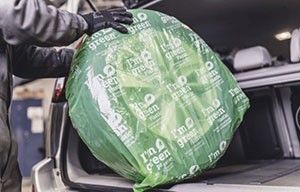
    Nokian Tyres changes the cases of its tires in favour of bioplastics ones.

    The enclosures – partly made with biomaterial – reduce carbon dioxide emissions by up to 75% compared to virgin or recycled plastic.

    In Finland and Norway, 40,000 kg of plastic were used per year for tire covers.

    The production of the new Green PE + LDPE enclosures introduced generates about 20.02 tons of carbon dioxide, compared to about 88 tons of virgin plastic cases and 44 tons of recycled plastic ones.

    The lower emissions generated by the production of the cases are due to the use of a greater proportion of bio raw materials based on sugar cane ethylene.

    The sugar cane has already absorbed carbon dioxide from the atmosphere during its growth phase, thus reducing the final emissions of the production of the cases.

    Tire cases have obtained the “I’m Green” label for their respect for the environment.

    Nokian Tires is the first manufacturer in the world to offer cases with this label.

    The  “I’m Green” label is owned by the petrochemical company Braskem and its use is strictly controlled and regulated.

    To obtain the label, over 50% of the raw materials in the product formulation must be Green PE.

    Of the tire cases that Nokian Tires uses, Green PE represents 55% of the raw materials.

    REFS

    Published on motorinolimits.com

    Nokian Tyres e le custodie I’m Green

  • First Lego Set Made From Bioplastics

    First Lego Set Made From Bioplastics

    LEGO Goes Green: The Toy Company Announces its First Steps Towards Sustainability with its New Toy.

    LEGO has been making interlocking bricks since 1949 for children and kids-at-heart.

    The only downside of Lego is that it is made of acrylonitrile butadiene styrene (ABS) that is manufactured from petroleum.

    Due to the world’s awakening about the climate crisis and how the world is being polluted by too much plastic, LEGO decided to decrease its carbon footprint as well proactively.

    WHAT WILL LEGO DO TO LESSEN ITS CARBON FOOTPRINT?

    LEGO announced in a statement back in 2015, a $1 billion initiative is released to make its products sustainable by 2030.

    According to Matt Whitby, Environmental Engagement Manager of the LEGO group, the main technical challenge is to develop a material that will have the same physical properties such as stiffness, friction, and shine as the one manufactured from petroleum.

    “Most importantly, the bricks need clutch power, the flexibility that enables bricks to be put together and taken apart by a child,” Whitby explained.

    He also explained that fulfilling these high technical requirements is a must for future LEGO bricks and that these bricks should continue to lead in safety standards, and should be produced from sustainable sources.

    This is not the first time the toy company made an effort to be environmentally-friendly.

    LEGO partnered with the World Wildlife Fund to promote global action on climate change and was able to reduce its carbon dioxide emissions in terms of manufacturing and supply chain operations.

    The toy company has also made significant investments in wind power to balance the company’s energy use with renewable energy.

    Another part of their plan to reduce their carbon footprint is to set a goal to make their packaging 100% sustainable by the year 2025.

    This year, LEGO was able to introduce a new treehouse kit that is made from a new polyethylene manufactured from sugar cane.

    “All sets with LEGO trees, leaves, and bushes in our LEGO sets — 80 different elements — are now made from plant-based plastic,” Whitby explained in an interview with Forbes.

    He also explained that the plastic used in this toy kit is made from polyethylene that was harvested from sugarcane with guidance from the WWF.

    According to Whitby, this small change is the company’s first important step on their journey towards sustainability in 2030.

    WHAT WILL LEGO DO WITH ITS EXISTING BRICKS?

    LEGO produces 19 million bricks every year made of the old ABS material.

    Since the bioplastic replacements are not yet available for the company’s remaining stock, the company is still in the process of solving the issue of ABS usage.

    In an article written by Forbes, with the help of Molly Morse, president and founder of Mango Materials, there are four ways that LEGO can do to reach its sustainability goal by 2030.

    First, is to replace the materials used in their packaging with biopolymers.

    This should be the easiest step since forest-friendly certified recycled cardboards are widely available in the market.

    The company could also use another sustainable packaging like Ecovative, which uses mycelium to manufacture its products.

    Second is to adopt a biological mindset to identify materials that can be substituted to ABS easily, and the company will have to think like a biologist and look for new ways to manufacture resins.

    The third way is to brew the plastic and use the technology used in brewing beer to manufacture resins efficiently.

    Lastly, LEGO should think about ditching the mold for its bricks. Instead, the company can start growing its bricks borrowing techniques from nature.


  • New Zealand Biobased Additive Manufacturing

    Additive manufacturing (AM), including 3D and 4D printing, encompasses some of the most promising technologies currently available. News stories regularly appear featuring exciting creations or innovations from houses to human hearts, all made possible with AM technologies.

    Additive manufacturing (AM), including 3D and 4D printing, encompasses some of the most promising technologies currently available.

    News stories regularly appear featuring exciting creations or innovations from houses to human hearts, all made possible with AM technologies.

    Scion anticipates that AM will continue to be one of the biggest and most influential technologies worldwide.

    As New Zealand transitions to a circular bioeconomy AM will be a core manufacturing technology going forward.

    New Zealand has particularly promising arguments for using AM in our journey to a circular bioeconomy.

    Our small nation is rich in renewable natural materials that can create the new polymers, composites and other performance filaments that are needed to replace the fossil-based products currently in use.

    Scion has 20 years of research and development experience in biomaterials and 10 years in AM; this is forming the basis of a new, innovative manufacturing sector for New Zealand.

    Field leading capability

    Scion has recently appointed its first Research Leader for Additive Manufacturing – Dr Marie Joo Le Guen.

    Marie Joo is recognised as one of New Zealand’s leading experts in the 3D printing of biobased materials and she has an impressive industry and national and international academic network.

    The role will see Marie Joo work with a wider team within Scion and our national and international partners to develop both 3D and 4D printing filaments incorporating renewable resources.

    Marie Joo has also been a key contributor in projects with significant additive manufacturing elements including the Science for Technological Innovation National Science Challenge’s (SfTI NSC) 3D/4D printing spearhead project.

    Scion’s Biopolymers and Chemicals Science Leader Dr Florian Graichen is a co-leader in this project with Dr Kim Pickering from the University of Waikato.

    Other partners of the multi partner and multidisciplinary collaboration include AgResearch, GNS, Auckland University of Technology, Victoria University of Wellington, Massey University and University of Auckland.

    The spearhead project aims to harness New Zealand’s natural resources, such as biopolymers, plants and wood fibres to create new, more environmentally friendly materials and products.

    Their work includes developing biopolymers for 4D printing, which adds a functionality (i.e. a new dimension) to the 3D printed object such as shape memory.

    Besides manufacturing the materials, the challenge will design printing processes that can cope with and preserve the natural functionalities of the renewable materials.

    These new properties could be used to make anything from buildings to furniture.

    New research projects

    This year, Scion has been successful in securing two new research projects supported by the SfTI NSC seed fund.

    Dr Angelique Greene is leading a programme to explore self-cleaning molecular sponges for chemical sequestration.

    Her work will develop a new method of chemical separation.

    She plans to create a molecular sponge that uses electrically controlled mechanical motions to selectively trap waste products in one environment and release them cleanly for further processing without saturating the sponge.

    Dr Kelly Wade will be leading a project with the AM team to delve into the field of biomedical AM by developing 3D printable polymers containing biologically-active antimicrobial enzymes.

    He will be working on 3D printable medical devices, such as catheters and orthopedic implants that contain anti-bacterial enzymes, reducing the need for antibiotics while maintaining sterile conditions on the devices.

    The research will combine recently identified enzymes that remain stable at elevated temperatures with lower temperature 3D printing techniques.

    Looking ahead

    Looking to the future, our vision for AM includes cross-disciplinary opportunities with other advanced related technologies such as robotics, virtual and augmented reality, and artificial intelligence.

    For example, the SfTI NSC spearhead teams for 4D printing and robotics are collaborating to identify innovation opportunities on the interface of these two futuristic research domains.

    Coupling this highly adaptive technology with the innovative kiwi-mindset, a small but young manufacturing sector, and easy production near supplies of biomass is a recipe for success.

    This technology will also bring new opportunities to decrease reliance on some imported materials, while increasing exportable products.

    These factors and more are the reasons to make AM the next big manufacturing direction in New Zealand.


    REFS

    Published on scionresearch.com

  • Blue Bottle Coffee Company Stops Using Plastic and Paper Cups

    Blue Bottle Coffee Company Stops Using Plastic and Paper Cups

    Blue Bottle is putting an end to its plastic and paper cups, the Oakland company announced Monday.

    Blue Bottle Coffee, Inc. is a coffee roaster and retailer headquartered in Oakland, California, United States. In 2017, a majority stake in the company was acquired by Nestlé. It is considered a major player in third wave coffee.

    The company focuses on single-origin beans.

    CEO Bryan Meehan issued a statement declaring all of their nearly 70 cafes in the United States could be zero waste by the end of 2020, following a pilot program of two zero-single-use-cup cafes at undisclosed locations in the Bay Area.

    Though Meehan admitted the change would “wreak havoc on every aspect” of his company’s operations, he acknowledged the staggering impact of their disposable cups: Each Blue Bottle location, Meehan estimates, goes through 15,000 single-use cups per month, or 12 million per year in total.

    “We’re not afraid to admit that we’re part of the problem,” he said.

    Customers will be given the option of bringing their own mugs, or paying a small deposit to use one provided by Blue Bottle.

    Additionally, the coffee shops will sell beans in bulk in lieu of single-use bags, and grab-and-go snacks will be served in reusable containers.

    The move by Blue Bottle coincides with the City of Berkeley’s Single Use Foodware and Litter Reduction Ordinance, which mandates a 25-cent charge for the use of disposable cups (which must be compostable) beginning Jan. 1 and the exclusive use of reusable cups by July 1, 2020.

    Blue Bottle has a location in downtown Berkeley.

    “We expect to lose some business. We might fail. We know some of our guests won’t like it – and we’re prepared for that. But the time has come to step up and do difficult things,” Meehan said.

    Meehan says Blue Bottle intends to set an example for its parent company, Nestlé, which has a set a much longer timeline for achieving similar goals.

    Last year, Nestlé pledged to make all of its packaging recyclable or reusable by 2025; the plan was followed by an adjacent objective to cut greenhouse gas emissions to net zero by 2050.

    Several coffee shops around the Bay Area have already made the change, utilizing a rental service framework in which customers pay a small deposit to borrow a cup. In Oakland, Perch doles out glass jars for 50 cents each.

    Editor’s note: An earlier version of this story’s headline implied all Blue Bottle locations in the U.S. would stop using single-use cups by the end of 2020.

    As stated in the story, Blue Bottle is first testing zero-single-use-cup cafés at undisclosed Bay Area locations as part of a pilot program.

    The company plans to be zero waste by the end of 2020.


    REFS

    Published on sfgate.com

    Bring your mug: Some Blue Bottles will no longer use plastic or paper cups

  • Carbios First to Bio-Recycle Plastic at Industrial Scale

    Carbios First to Bio-Recycle Plastic at Industrial Scale

    The company has developed a unique, sustainable technology using highly specific enzymes that can recycle PET plastics and polyester fibers feedstock.

    Companies across the globe are developing new ways to reduce plastic waste, which has become a growing problem of concern.

    Some are working to clean up recycling streams, some are using recycled plastic to create new products, and some are exploring new and innovative technologies.

    One company bringing its advanced technology to market is Carbios, a France-based biotech startup that has created a biological solution to fully recycle plastics.

    Carbios’ technology leverages enzymes that fully break down polyethylene terephthalate (PET) plastic waste and polyester fibers feedstock to successfully produce consumer-grade, 100 percent recycled plastic.

    Carbios is the first and only company to combine two sciences that are solutions for the end of life of plastics,” says Martin Stephan, deputy CEO of Carbios.

    “We make a circular plastics economy possible—it’s a circular economy to a point where large PET producers are viewing this [process] as the future of the industry.”

    The technology’s process consists of a few steps.

    First, the PET plastic waste is combined with water and Carbios’ proprietary enzymes, heated up at low temperature and churned.

    Then, within a few hours, the enzymes decompose the plastic, transforming it into the material’s “basic building blocks” called monomers.

    The monomers are then isolated, separated, purified and used to produce consumer-grade, 100 percent recycled plastic that’s similar in quality to virgin material.

    “At the pilot scale, we have demonstrated that it takes about 10 hours to depolymerize 90 percent of the feedstock made of PET waste,” explains Stephan.

    “We don’t think it’s necessary to go up to 90 percent on the industrial scale, however, so we only need a few hours for the depolymerization reaction before we send the material through the other steps.”

    The technology, which is expected to launch in 2021 through the operation of a large demonstration plant, took quite a few years to develop.

    In 2012, Carbios launched ambitious funding, partially by a European leading venture capital firm named Truffle Capital and partially by French grant subsidies, for the development and testing of its technology.

    About 60 scientists worked together on the technology, testing it and perfecting it over the course of a few years.

    Then, in 2017, Carbios and L’Oréal, a worldwide beauty industry leader, entered into a five-year agreement to jointly found a consortium for bio-recycling of plastic on an industrial scale.

    “L’Oréal has been committed to an ambitious sustainable packaging program for several years now,” said Philippe Thuvien, vice president of packaging and development for L’Oréal, in a statement. “We currently use up to 100 percent recycled plastic for several different products. We’ve decided to go even further: with this innovative Carbios technology, L’Oréal is helping to make bio-recycling available on an industrial scale. It’s a wonderful opportunity to protect the environment, and this consortium will also help boost the circular economy.”

    The consortium received additional support in April 2019, with the addition of Nestlé Waters, PepsiCo and Suntory Beverage & Food Europe.

    Under the terms of their agreement, the consortium partners’ ambition is to bring Carbios’ PET-enhanced recycling technology to the market and increase the availability of high-quality recycled plastics to fulfill their sustainability commitments.

    The collaboration includes technical milestones and support for the efficient supply of consumer-grade, 100 percent recycled PET plastics for global markets.

    Earlier this year, Carbios demonstrated that it could make 100 percent recycled plastic bottles using this technology, and it also secured a patent from the United States Patent and Trademark Office.

    This patent application recognizes Carbios for its invention of a proprietary method of recycling complex plastics, including colored, opaque and multilayer products containing a mix of PET and at least one additional component (e.g., polyolefins, vinyl polymers, rubber, cotton or nylon fibers, paper, aluminum, starch, wood, etc.).

    This patent is the second one in the U.S. that has been applied to Carbios’ recycling technology and protects Carbios’ innovation through 2033.

    In addition, Carbios owns 127 titles worldwide representing 32 patent families, six of which protect its proprietary method of recycling in full and seven of which are related to enzymes that degrade PET.

    “This patent confirms Carbios’ unique expertise and leadership in developing an infinite recycling solution for all kinds of PET waste, particularly types that are barely treatable using traditional recycling processes,” said Jean-Claude Lumaret, CEO of Carbios, in a statement.

    “Demand for technology that facilitates a circular economy is growing rapidly, and we are at the forefront of providing global players an efficient alternative that protects the environment.”

    The company plans to soon break ground on its first demonstration plant, which is expected to open in 2021. By 2022, the company hopes to grant licenses and have its technology operating on full scale PET production lines.

    “It’s important to understand that the new technologies coming out in the market have advantages,” says Stephan.

    “There’s a need in the world for improved collection efficiency, and we all need to work together to increase the rate of collection and sorting to make plastic waste available for new technologies like ours.

    Our concept has been proven, and we expect to scale up, but collection really needs to increase in order for us to do that. That’s our biggest challenge for the coming years.”


    REFS

    Published on waste360.com

    Carbios’ Technology Aims to Bio-recycle Plastic on an Industrial Scale

  • Sulzer PLAnet Bioplastic Technology Creates Market Opportunities for Sugar Producers

    Sulzer PLAnet Bioplastic Technology Creates Market Opportunities for Sugar Producers

    Alex Battù, Sales Manager at Sulzer, looks at how transforming sugars into PLA bioplastic can benefit farmers and sugar producers.

    A number of alternatives, non-traditional market opportunities can help agricultural businesses to add value to their products and maximize revenue.

    In particular, the produce from corn, sugar cane and sugar beet farmers can be used as a key feedstock for new, greener materials, such as PLA biopolymers for biodegradable plastics.

    These help to reduce our reliance on non-renewable and often non-recyclable fossil fuel-based products.

    A great future for bioplastics

    While the need for sustainable, recyclable and biodegradable alternatives to conventional plastic grows steadily, PLA offers an economical and versatile solution for a wide range of different applications.

    These include raw materials for 3D printing, textiles, electronic devices, automotive components and packaging for the food and beverage sectors. In addition, thanks to PLA’s biocompatibility, the material is suitable for medical use, e.g. suture yarns and implants.

    Getting a foothold in the PLA market is more easily achieved than entering other sectors that can be highly regulated and very competitive.

    Furthermore, while bioplastics are currently considered a niche area, the market is skyrocketing and is expected to at least triple its market size by 2025.

    Grow your PLA business

    Sugar producers and businesses involved in plastic processing can enter the emerging PLA market and seize the opportunities it presents by setting up processing facilities that address one or more aspects and stages of PLA-based bioplastic production.

    The conversion of plant resources into PLA involves different steps.

    First, it is necessary to ferment sugars from sugar-rich crops to obtain lactic acid (LA).

    The next step consists of converting LA into lactide monomers.

    These intermediate products subsequently need to be purified with distillation and crystallization equipment before undergoing ring opening polymerization that leads to PLA.

    In addition to these necessary process steps , manufacturers may want to mix coloring or additives with the polymer, depending on the final product application.

    Also, a downstream PLA pelletizer produces solid pellets, simplifying both transportation and storage.

    It is possible to use these PLA pellets in a variety of ways to suit their intended application.

    They can be extruded into a sheet or film, injection molded, cast into sheets, spun into fibers or even foamed.

    Due to the number of intermediate compounds in PLA-based bioplastic manufacturing, agricultural businesses can build their capabilities in stages and over time in order to grow their operations organically.

    For example, it is possible to start by setting up LA production plants, which can deliver the monomers to process industries in the LA downstream sector, or develop lactide to PLA skid mounted units.

    When the agri-business is ready to grow, it could then implement all the process sections for crop-to-PLA production plants.

    Integrated, customized PLA technology

    To successfully enter the PLA value chain, manufacturers need a reliable partner, able to provide integrated solutions that address all the aspects and stages of production.

    A successful framework is PLAnet™, an initiative developed by Sulzer, Futerro and TechnipFMC to offer a one-stop-shop where customers can benefit from direct access to a fully integrated solution for the production of PLA and its intermediates.

    Sulzer, the leader in separation and mixing technology, and its partners are market leaders in engineering solutions for the production, purification and polymerization of LA and lactides.

    They can design, deliver and implement high-quality, turnkey equipment for complete PLA manufacturing.

    As a result, PLAnet™ supports the construction of plants of any size, including PLA facilities with throughputs as high as 100’000 tons per year.

    In order to help agricultural businesses handle the different process stages of PLA-based bioplastic manufacturing, Sulzer can look at setting up the various facilities in different stages and over time, integrating different plants together, as well as building modular equipment.

    In this way, farmers and sugar producers can grow their operations organically.

    REFS

    Published on sulzer.com

    Sulzer’s PLAnet bioplastic technology creates market opportunities for sugar producers

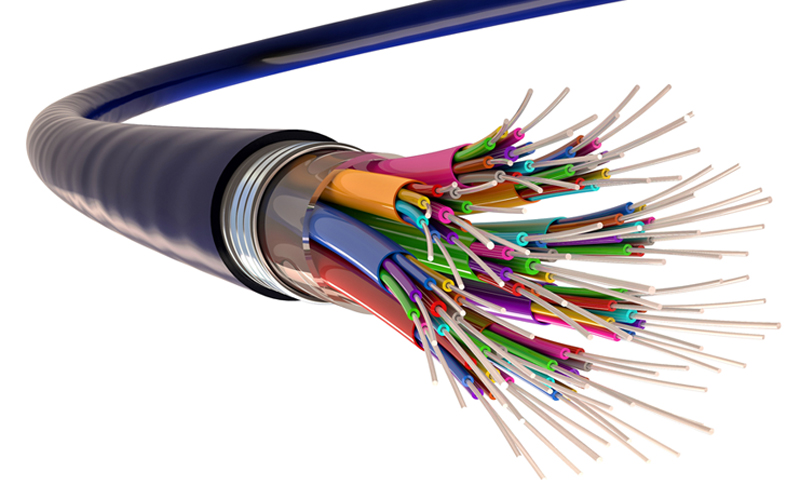
  • ELECTRONICS Biobased Optical Fibers

    ELECTRONICS Biobased Optical Fibers

    A research team at Finland’s VTT Technical Research Center has demonstrated optical fibers made of cellulose—in essence, waveguides from wood.

    While the resulting, rather lossy fibers are unlikely to find a home in mainstream fiber domains like telecom, the researchers believe that they could ultimately prove useful in moisture detection and other niche sensing applications.

    An environmentally reactive material

    Optical fiber hems in light through the phenomenon known as total internal reflection. A fiber core—typically ultrapure silica glass—with a relatively high refractive index is surrounded by a layer of cladding with a somewhat lower refractive index.

    Laser light fired into the end of the fiber core propagates down the fiber, bouncing off of the boundary between the high-index core and the low-index cladding.

    The VTT team, led by senior scientist Hannes Orelma, thought there might be space for cellulose, the organic polymer that forms a key structural component of wood and green plants, as an optical-fiber material.

    One reason is that the chemical processes involved in working with cellulose make it amenable to tweaking the refractive index.

    Cellulose also absorbs water and reacts actively (and often reversibly) with other substances, raising the possibility for sensor applications. And the material is biodegradable, which points to potential environmentally responsible use in disposable sensors.

    Spinning out cellulose fiber

    To make the cellulose fiber, Orelma’s team began with bleached softwood kraft pulp from a commercial mill in central Finland.

    After air-drying the pulp, the researchers popped it into a Waring blender to break it down, and then dissolved it in acetate to create a sort of cellulose slurry.

    They spun this into lengths of fiber core using a lab-scale wet-jet spinner, and, after air-drying the fibers, coated them in a cladding layer of lower-index, commercially purchased cellulose acetate.

    When they hooked up the cellulose fiber to a length of conventional fiber carrying an optical input, the team found that the fiber was able to guide light ranging from 500 to 1400 nm in wavelength.

    The cellulose fiber had some difficulty holding onto visible light, which could be seen leaking through the cladding (see image at top of story); its best performance seemed to lie in the infrared band from around 800 to 1300 nm.

    Even there, however, the fiber showed steep attenuation of light, with minimum attenuation of a whopping 5.9 dB/cm at 1130-nm wavelengths and 6.3 dB/cm at 1300 nm.

    Moisture-sensing possibilities

    The researchers used a simple experimental setup (left) to show that the fiber’s attenuation dramatically increased with exposure to water (right).

    This, the team believes, shows promise for its use in moisture-detection applications.

    Despite these lossy numbers, the researchers found evidence for possible use of cellulose fiber in sensing applications.

    They positioned a fiber length of around 76 mm (again tied to conventional optical fibers that provided an input signal) above a container of water.

    When around a 20-mm length of the cellulose fiber was submerged, it started to absorb water and swell, and its attenuation statistics immediately started to climb, with the attenuation rising by more than 30 dB in the space of 10 minutes.

    After 20 minutes of drying time, the attenuation returned to normal.

    The experiments, the team believes, suggest good potential for the material as a water sensor—for example, for picking up changes in moisture levels in buildings.

    And cellulose’s easy modification by other substances might, the researchers suggest, open other sensing possibilities as well.

    “The R&D is still in its initial phases,” team leader Orelma said in a press release accompanying the work, “so we do not yet know all the applications the new optical fiber could lend itself to.”

    REFS

    Published on osa-opn.org

    Optical Fiber from Wood

    Optical cellulose fiber made from regenerated cellulose and cellulose acetate for water sensor applications