Рубрика: Uncategorized

  • How Novoplast became one of the most innovative medium-sized companies in Germany

    How Novoplast became one of the most innovative medium-sized companies in Germany

    Kathrain Graubaum explains why the company were named one of the most innovative medium-sized companies in Germany for the second time since 2016.

    Plastic hoses are an indispensable part of medical technology. From injection tubes to intelligent catheters, the products are becoming increasingly sophisticated. Novoplast Schlauchtechnik, Halberstadt is a specialist in this field and a development partner for manufacturers of medical devices.

    “The tubes which pump an X-ray contrast medium into the blood vessels are under high pressure”, says Martin Oye, sales director for medical products, Novoplast, before telling us that the pressure can amount to 83 bars. After all, the medium has to be distributed to the finest capillaries. He compares this with the air pressure in a bicycle tyre, which averages just 25 to 30 bars. With hearing aids, on the other hand he explains that it is important that the plastic tubes are barely visible, but can transmit sounds exceptionally well.

    The plastic tubes manufactured by Novoplast have a diameter of 0.1 to 50 millimetres and offer a wide range of applications. Oye is responsible for the sales of the medical technology, 60 percent of which is sold in Germany and 40 percent are exported, mainly within Europe. “We work individually for our customers and develop products according to their requirements,” explains Oye, telling us why Novoplast doesn’t have a product catalogue in the conventional sense.

    In addition to the aforementioned application in hearing aids and for injections of X-ray contrast media, the tubes are also used in infusion and endoscopic devices as well as for enteral nutrition. The company’s customers include well-known manufacturers of medical end-products. Oye discusses their long-standing business relationships and the high level of trust afforded in Novoplast as a development partner: “The customers appreciate our flexibility, our certified production processes and the technical expertise of our employees.”

    Medical technology within the region

    As an example of the special developments, Oye demonstrates the multi-chamber tube for a venous catheter. It transports three different substances which should not mix, but which should be administered to the patient at the same time. The double lumen tube, which finds use in ophthalmology, for example, has a similar design. It can be used to suck out and flush in liquid simultaneously.

    These tubes are made in the cleanrooms of the Halberstadt company on extrusion lines or assembled with other components. “Precision and hygiene are the top priorities when it comes to the manufacturing of products that have medical approval,” says Oye, before offering an invitation to take a tour of the company. 120 employees work here including process mechanics for plastics and rubber technology, business economists and the production team.

    Novoplast belongs to the Masterflex Group, a  global specialist in the field of technical tubing and connections. The company first began to acquire expertise in the field of medical technology in the 1960s. With a wealth of technical experience and a certain degree of start-up enthusiasm, the then “Polyplast” experts were convinced to co-found Novoplast.

    A fusion between diagnosis and therapy

    As the website of Novoplast says, “we bestow every tube with its own very special character.” So, manufacturing tubes is about more than just colour, diameter and shape. The focus is on modified material properties. Consistently interested in the transfer of knowledge, Novoplast maintains contacts with the Otto-von-Guericke-University (OvGU) in Magdeburg, the Fraunhofer Institute for Microstructure of Materials and Systems IMWS in Halle (Saale) as well as with innovative companies in the regions around Halle and Magdeburg. Some 75 companies from the medical technology sector are located in Saxony-Anhalt.

    “The testing of materials and material combinations is a future-oriented topic”, says Oye, referring to the bio-compatibility of plastic components. Above all else, artificial intelligence is also an innovation driver in the field of medical technology. The Chair for Intelligent Catheters (INKA) at OvGU is the perfect place for a lively exchange of knowledge.

    Oye can see the ever closer fusion between diagnosis and therapy, and he can also see the demand for absorbent materials and ever smaller instruments. “It is frequently the case that tubing technology is also indirectly affected by these developments”, the expert knows and is already beginning to think about the possible paths to new ‘special markets’. He is happy to follow the futurologists and their visions on the ways in which medicine will develop over the next 10, 20 or 30 years. Oye considers Novoplast to be an active co-creator. “For the second time since 2016, we are one of the most innovative medium-sized companies in Germany,” he says, proudly announcing the result of this year’s top 100 innovation competition. The Masterflex Group convinced the jury in the category of “Innovative processes and organisation”.

  • Bioplastic Packaging at Pharmapack

    Bioplastic Packaging at Pharmapack

    Sanner, a packaging specialist has announced the organisation will exhibit its bio-based plastic packaging during Pharmapack 2020.

    During Pharmapack, it will be first time Sanner will exhibit its Sanner BioBase effervescent tablet packaging which is made of renewable raw materials and claims to be the first biopackaging of its kind.

    The effervescent tablet packaging consists of more than 90 percent bio-based material, and the biopolymers used consist of various renewable raw materials such as corn, sugar cane or cellulose, which are converted into “green” ethanol.

    A major advantage of bio-based plastic packaging is its essential independence from fossil raw material deposits and its reduced CO2 footprint.

    Bio-based plastic packaging claims to have the same properties as conventional packaging solutions and is able to be processed on existing filling lines.

    From a chemical point of view, Sanner BioBase is almost identical to polyethylene and polypropylene from fossil raw materials.

    Ursula Hahn, head of product management at Sanner commented: “Sanner BioBase can be recycled, increases resource efficiency and makes it easier for us to achieve our climate targets.” Additionally, as a result of higher H2O barrier properties the tablets have an extended shelf life. In terms of handling, Sanner BioBase offers consumers a high-quality feel and appearance and the tablet tube can be printed or provided with an In-Mould Labelling (IML) label.

    The packaging will be commercially available from the second quarter of 2020. The initial tablet tube will have a diameter of 27 millimetres and can be combined with the appropriate desiccant closure.

    Hahn explained how primarily the product was aimed at food supplement procedures, but now the company are turning their focus to the pharmaceutical industry. This is because of the stricter regulations within this sector.

    Peik-Christian Witte, director, research and development, Sanner explained how 60 years ago Sanner launched the first desiccant closure for moisture-sensitive tablets and the company are building on this success: “We are continuing this tradition with continuous development work and with the first bio-based effervescent tablet packaging.”

    The company has a real focus on innovation and sustainability. For example, the Bensheim site uses its own combined heat and power generation system, and in recent years, the company has been able to significantly reduce CO2 emissions and energy consumption for the production of plastic packaging.

    Witte will deliver a speech in the Pharmapack Learning Lab on 6th February at 14:30 titled, “Protecting Health versus Sustainable Packaging – Dream or Reality”.

    REFS

    Published on medicalplasticsnews.com

    Bio-based plastic packaging on display at Pharmapack

  • First Bioplastic Sneaker by Reebok

    First Bioplastic Sneaker by Reebok

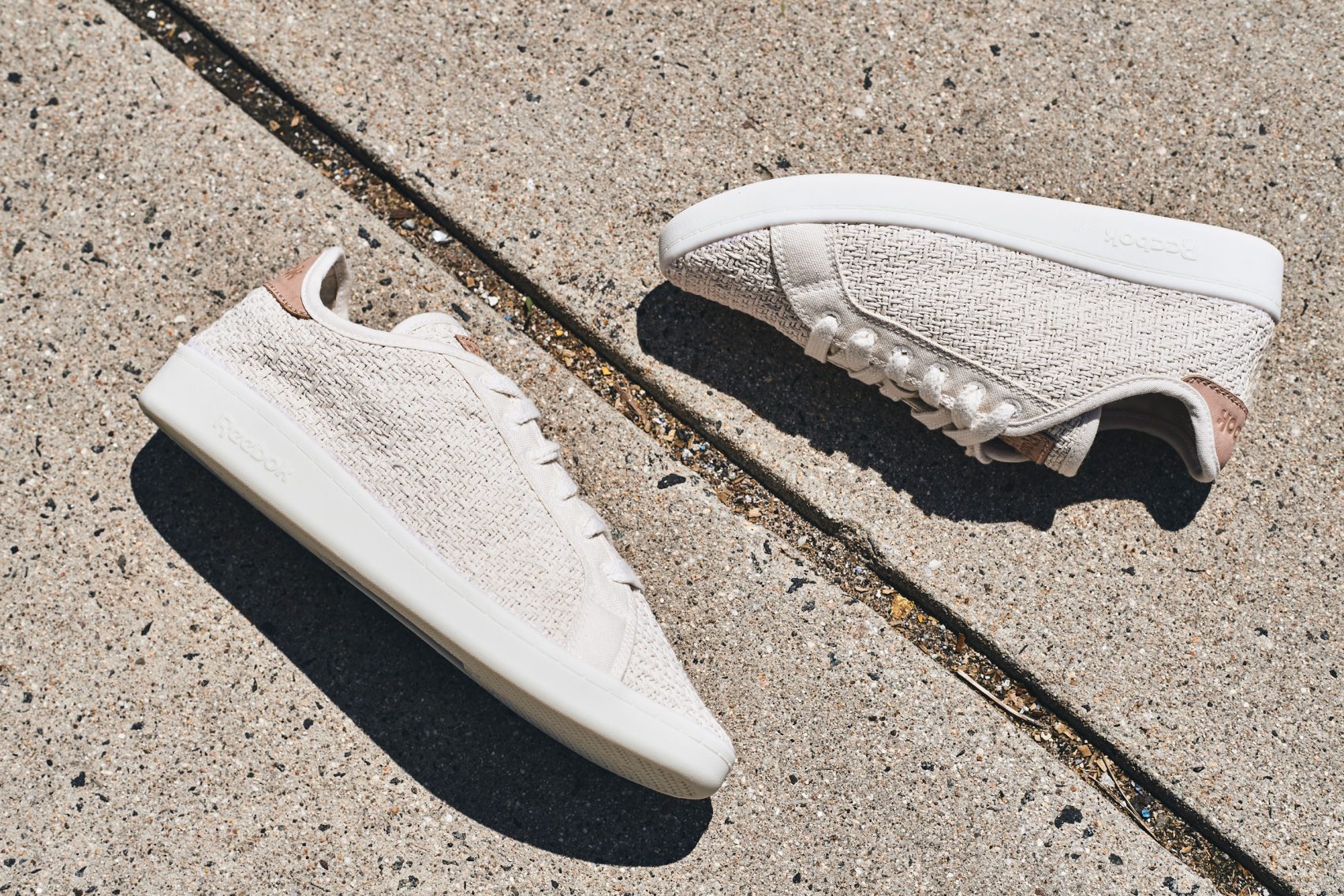
    It seems the world isn’t just obsessed with plant-based dining these days: Reebok has just taken the sustainability trend one step further, unveiling a plant-based running shoe made with castor beans, algae, eucalyptus trees and natural rubber.

    The sportswear giant’s new ‘Forever Floatride Grow’ model, which swaps petroleum-based plastics for natural materials in a bid to offer a more sustainable product, is set to launch in Fall 2020.

    The shoe, which is an updated version of Reebok’s Forever Floatride Energy sneaker, features a highly cushioned, responsive midsole made from sustainably-grown castor beans, a naturally biodegradable eucalyptus tree upper and a sockliner made from Bloom algae foam. Its natural rubber outsole has been sustainably sourced from real rubber trees.

    “The biggest challenge in making a shoe like this was developing plant-based materials that could meet the high performance needs of runners,” said Bill McInnis, Vice President, Reebok Future, in a statement. “During the three years we spent developing this product, we heard loud and clear that the idea of a plant-based running shoe resonates strongly with serious runners. But those same runners felt just as emphatically that they would never compromise on performance. The Forever Floatride Grow is the result.”

    The Forever Floatride Grow builds on Reebok’s Cotton + Corn lifestyle collection of bio-based footwear. “Our Cotton + Corn collection was the first step in making shoes from things that grow,” explained Matt O’Toole, Reebok Brand President. “Now, we have taken an award-winning running shoe, the Forever Floatride Energy, and reinvented it using natural materials to create what we feel is the most sustainable performance running shoe on the market.”

    The launch is the latest in a series of sustainability-focused moves by Reebok, which has pledged to eliminate virgin polyester from its material mix by 2025. The brand isn’t alone in its efforts to make running shoes more environmentally friendly — earlier this year, Adidas unveiled ‘Futurecraft.Loop,’ a 100% recyclable performance shoe whose raw materials can be repurposed again and again. The shoe is currently part of a global beta program.

    REFS

    Published on lifestyleasia.com

    Reebok unveils first renewable performance sneaker

    RELATED ARTICLES

  • KFC Canada Testing Bamboo Buckets

    KFC Canada Testing Bamboo Buckets

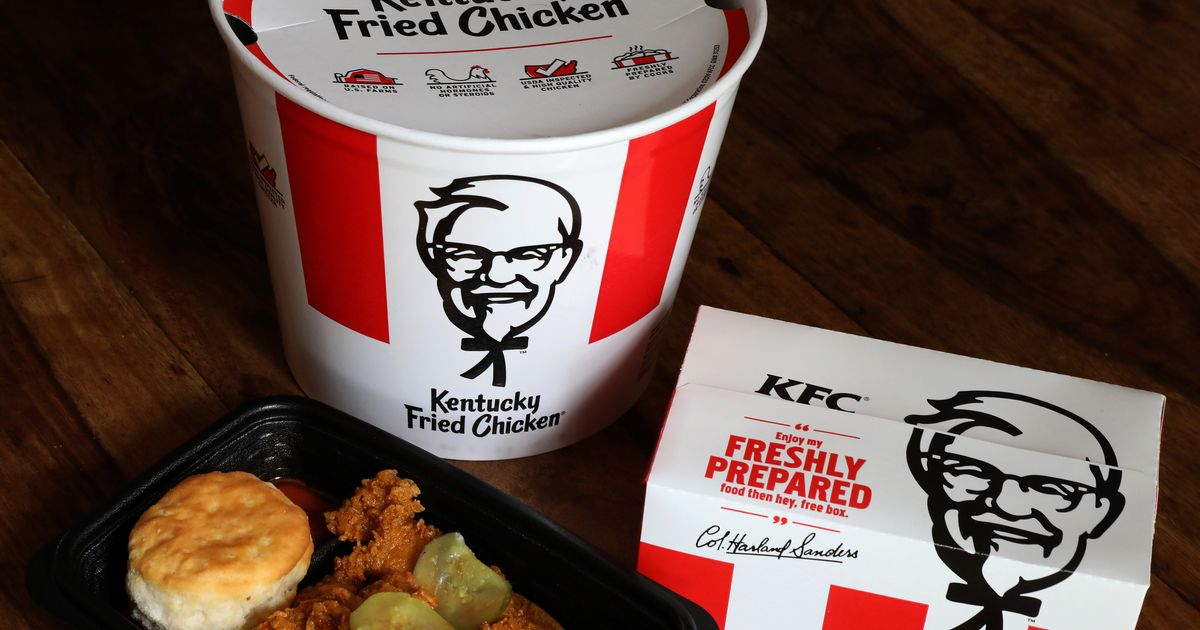
    KFC Canada announced today that they are exploring eco-friendly alternatives for their world-famous buckets. The sustainability commitment will have KFC testing new innovative materials that are both consumer-friendly and a win for the environment, starting with a bamboo fiber poutine bucket in early 2020.

    “The KFC bucket is one of the most iconic symbols around the world and has always been synonymous with our world-famous chicken,” said Armando Carrillo, Innovation Manager, KFC Canada. “We’re proud of our sustainability journey and we want our customers to feel that KFC is dedicated to, not only providing Finger Lickin’ Good chicken in every bucket, but also delivering it in a way that our guests can feel good about.”

    Although bamboo is a new innovation to packaging, it has been used throughout history for many applications, from food sources to building materials. Bamboo is one of the fastest growing plants in the world, growing on average 24 inches per day and reaching its adult size in 3-5 years (compared to 20-30 years for trees).

    Often referred to as one of the world’s most renewable and fastest growing materials, bamboo is naturally anti-bacterial and 100 per cent biodegradable, requires no pesticides, and regenerates itself very quickly when harvested.

    KFC Canada’s bamboo packaging initiative builds on the commitments already achieved by the brand in the sustainable packaging realm. Earlier this year, KFC Canada committed to sourcing 100 per cent of fiber-based packaging from certified or recycled sources by 2020.

    Additionally, as part of a global sustainability commitment by the brand, KFC Canada continues to pursue making all plastic-based, consumer-facing packaging recoverable or reusable by 2025, and announced in July that all plastic straws and bags would be removed from restaurants before the end of 2019.

    This action alone will eliminate more than 50 million plastic straws and 10 million plastic bags from the communities in which KFC Canada operates.

    KFC fans will have the opportunity to test out the new bamboo fiber poutine bucket in select restaurants across Canada in 2020.

    About KFC Canada

    Founded by Colonel Harland Sanders in 1952, KFC is now the world’s most popular chain of chicken restaurants. To this day the Colonel’s own blend of 11 herbs and spices is still used to season our Original Recipe® chicken and it still remains a very closely guarded secret.

    KFC’s specialty is our famous Original Recipe® chicken, but we also feature a variety of freshly prepared sandwiches and wraps, on the go snack items, home-style sides, desserts and beverages.

    Today KFC Corporation is a subsidiary of YUM! Brands Inc. and operates more than 23,000 restaurants in more than 140 countries and territories around the world including more than 600 locations right here in Canada.

    REFS

    KFC Canada Testing Bamboo Buckets

  • Bamboo Toothbrush Lies and The Plastic Industry Perverse Greenwashing

    Bamboo Toothbrush Lies and The Plastic Industry Perverse Greenwashing

    A bamboo toothbrush deconstructed: bamboo handle, paper packaging box, plant-based nylon bristles and plant-based wrapper. It also comes with disposal instructions.

    “Bamboo handle and paper box are compostable.” Easy.

    “Nylon bristles are not compostable but can be recycled…ask your local recycling facility about the best way to recycle the bristles.” More difficult, but still possible.

    “Plant-based wrapper is compostable in commercial facilities only (ASTM D6400). Appropriate facilities may not exist in your city.” Evidently, this might not be possible at all.

    Given labels advertising this brush’s sustainable and biodegradable qualities, as well as the seal of USDA biobased certification, this fine print on the packaging is jarring. Doesn’t “biobased” mean the toothbrush will eventually decompose on its own no matter its environment? This is the type of worry-free, bioplastic future we are moving towards, right?

    Bioplastics are more complicated than their public image suggests. “Bioplastic” is an umbrella term for a plastic material that is biobased, or made partially from biomass like corn or cellulose, biodegradable, or able to break down into organic components, or both.

    A caveat, however, is that biobased materials are not necessarily biodegradable, nor are all biodegradable materials guaranteed to biodegrade.

    Bioplastics that end up in anaerobic landfills, cold oceans, or even among recyclable plastics fail to degrade and may do the same harm, disrupting the same natural processes as do traditional plastics.

    In cases like the toothbrush’s plant-based wrapper, even materials listed as biodegradable require extremely specific conditions like those found in industrial composting facilities in order to break down properly, and this proper disposal may not be feasible for the common consumer.

    So that biobased plastic bag that is reassuringly printed green with images of leaves? It might be more for your psychological benefit than for the benefit of the environment.

    In fact, we are much farther from a green reality than we think we are. Even the United Nations has recognized that biodegradable plastics are not a viable alternative: their current production of 4 million tons per year amounts to only a fraction of a percent of the staggering 9.1 billion tons of plastic that have been produced in the past 70 years.

    Moreover, their complicated disposal requirements don’t inspire much confidence that even a respectable proportion of that tiny amount will degrade as expected. Instead, we must face the uncomfortable reality that virtually all of the plastic that we have created and used (used, by the way, for an average of 12 minutes) still exists, infiltrating our land, animals, and bodies. Seventy-nine percent of that plastic waste has been left to fester in landfills, while 12 percent has been burned.

    Incineration does eradicate plastic, but it also expels toxic fumes and carcinogens dangerous to public health and the environment. A measly 9 percent of global plastic has been recycled.

    It’s easy to blame the low rates of plastic recycling on consumer ignorance or apathy; it is harder to recognize that the complexities of plastic production by the plastic industry are larger contributors to the issue. Even for the most knowledgeable consumer, always getting it right is impossible.

    Polyethylene terephthalate, high-density polyethylene, polyvinyl chloride, low-density polyethylene, polypropylene, polystyrene, polycarbonate, polylactide, acrylic, acrylonitrile butadiene, styrene, fiberglass, and nylon: How can the average recycler be expected to know the difference between regular plastics, much less bioplastics?

    With the infeasibility of efficient bioplastic use and recycling, it is clear that the only effective solution to our plastic crisis is for companies to produce less plastic in the first place.

    This point is rarely present, however, in common conversations about waste, which tend to focus on consumer responsibilities to make individual lifestyle changes.

    The zero-waste lifestyle, which has gained traction in recent years and has bolstered demand for sustainable alternatives like metal straws and refillable shampoo bottles, is a powerful movement rethinking the individual’s responsibility to consume consciously.

    However, many leaders of the movement have been criticized for failing to acknowledge that having non-plastic options also relies on privilege, since access to bulk-food stores and fresh unpackaged produce is not equal.

    Most importantly, these individual actions have a minuscule impact on plastic production, which is only projected to increase by 40 percent in the next ten years.

    Bioplastics and the plastic industry

    Aware of the heightened public concern over the negative environmental effects of plastic production, the industry can no longer deny the externalities of its activity. In response to this backlash — labeled an “industry challenge” in a recent J.P. Morgan Chase report — the plastic industry has begun to portray recycling and bioplastics as key components in their “embracing [of] an expanded definition of product stewardship that includes dealing with plastics waste.”

    Industry leaders deceptively lobby on Capitol Hill for more recycling infrastructure funding, basking in their declared concern over the environment while they use recycling as justification for trying to integrate plastic into new infrastructure applications like pipes.

    They neglect to mention that unlike the endlessly recyclable metals traditional pipes are built with, recycling plastic only delays its ultimate fate as pollution, since plastic can only be recycled a few times before it is unusable.

    The Plastics Industry Association (PLASTICS), a trade association that represents some of the largest corporate plastic polluters like Coca-Cola, PepsiCo, and Nestlé, hosts misleading social media campaigns about the simple, bright future of bioplastics.

    Nowhere do they adequately acknowledge the complexities of sustainably disposing of them and the need for a certain amount of new petroleum-based plastic in many bioplastic products.

    Among all of the industry’s supposedly environmentally conscious declarations, the radical notion of producing less plastic cannot be found.

    This should come as no surprise. Since the first waves of opposition, the plastics industry has engaged in underhanded ways to protect its business and to convince the public that consumers are responsible for plastic pollution.

    In response to Vermont’s 1953 Beverage Container Law, which banned the new, more profitable single-use beverage bottles in favor of reusable containers that companies would be responsible for reusing or recycling, notorious companies like Phillip Morris and Coca-Cola formed the non-profit Keep America Beautiful (KAB).

    KAB has since released decades of greenwashing propaganda that have been nothing short of culture-defining. From coining the term “litter-bug” and releasing PSAs that blamed consumers for plastic pollution, to lobbying against any type of legislation that would increase producer accountability or threaten their profit margins, KAB has effectively written the popular discourse and regulatory laws to serve themselves.

    Today, KAB is still sponsored by some of the most notorious environmentally damaging corporations, like H&M, The Clorox Company, Dow, Northrop Grumman, McDonald’s, Coca-Cola, PepsiCo, and Nestlé.

    They have shifted their agenda from fighting bottle bills to fighting the burgeoning plastic bag ban movement, which has successfully decreased the demand for plastic bags by the tens of billions in the cities and states that have already passed such bans.

    Under various campaign and organization names like Save the Plastic Bag Coalition and the American Progressive Bag Alliance (the lobbying faction of PLASTICS), the plastics industry has filed lawsuits against local governments that have banned plastic bags and has spent millions of dollars to pass preemptive state-wide plastic ban laws that prevent local governments from banning plastic bags in their cities.

    In the face of such sinister manipulation by the plastics industry, it almost feels like a voluntary acceptance of their narrative to blame the consumer. Yet, when I dropped my bamboo toothbrush on the dirty dorm bathroom floor at 2 am, threw it away in disgust without a second thought, and only recalled the packaging’s specific instructions a few days later, the guilt was immense.

    I felt like a hypocrite for urging my family to transition to more sustainable options when I couldn’t even sustainably dispose of them myself. But let’s consider if I had remembered.

    As a current resident of NYC, I have more access to sustainable infrastructure and programs than most of the nation, but there is still no available information online for either recycling nylon bristles nor compostable bio-based wrappers in my immediate area. Even if I had wanted, proper disposal of my bamboo toothbrush—the most sustainable option on the current market—would have been next to impossible.

    It’s true that we all have a duty to reduce waste to the best of our ability and to push our society into a circular economy, but the guilt we are conditioned to feel when we fail is also deceptive and unfair.

    Consumers should not be expected to solve plastic pollution, especially considering that the crisis is only being perpetuated by the plastics industry. Most of our guilt is not our own but is manufactured and molded by the plastics industry in the same way that it manufactures its own products and molds public opinion to release it from any obligation over the remnants of its business.

    We must remember that bioplastics, while promising, are not at a stage for us to place blind faith in their ability to transform the plastic crisis and that recycling does nothing to prevent all produced plastic from eventually becoming useless trash.

    We cannot allow the plastics industry to continually greenwash and distract us from the truth: the only solution is for the plastic industry to take responsibility for the byproducts of its profit and to reduce its own production levels for the health of our plastic-choked planet.

    REFS

    Published on

    Lies of the Bamboo Toothbrush: The Plastic Industry’s Perverse Greenwashing

  • Plant-based Plastic Chip Used for Medicine Testing

    Plant-based Plastic Chip Used for Medicine Testing

    Researchers at Heriot-Watt University in Edinburgh have developed a technique that uses a sustainable plastic to eliminate waste when testing medicines.

    Organ-On-A-Chip is a new technology that uses plastic slides to simulate the workings of a human organ.

    Each chip is able to simulate how organs interact with drug treatments, cutting down on animal testing.

    The new research has developed a method of using biopolymer plastic, derived from plants, to produce the chips.

    The plastic, called Polylactic acid (PLA), is cheap and easy to use in mass production and already has a variety of applications.

    It is used to make medical implants designed to biodegrade over time such as pins to support healing bones. The implant slowly dissolves in the patient’s body as new bone grows in strength.

    It is also the hot, sticky stuff used in many 3D printers.

    A more everyday application is in some types of lid for your takeaway coffee.

    Alfredo Ongaro is holding one such lid. He is a materials scientist and PhD student at Heriot-Watt.

    “Polylactic acid is a material derived from starch,” he says.

    “It’s compostable in an industrial setting so it can be chemically recycled to obtain the virgin material again.”

    The research is producing something more significant than a compostable coffee cup lid: a human organ on a chip.

    These chips are tiny devices the size of a microscope slide which mimic how parts of human organs work.

    The organ on a chip concept is still in its infancy but already there are catalogues full of different kinds: brain, lung, kidney, skin and others can be simulated.

    Each is able to simulate how these organs interact with potential drug treatments.

    They mean pharmaceutical companies can develop new drugs faster but without animal testing.

    But there are drawbacks. One problem with current organs-on-chips is that the plastic they are made from can interact with some molecules, compromising the test.

    Another issue is that the plastic is derived from fossil fuel.

    This particularly concerns the woman who is leading the Heriot-Watt research, associate professor of microfluidic engineering Dr Maïwenn Kersaudy-Kerhoas.

    She said: “As an engineer you typically do not dispose of what you make. But when I started work in the biomedical field, my devices needed to be single use.

    “So I realised I was increasing the waste through the very devices I was designing.”

    Which is where PLA comes in, although when it comes it is as a container full of somewhat unprepossessing cloudy granules.

    That may be OK for your takeaway coffee but to observe the chemical interactions the organ on a chip must be see-through.

    So in an Edinburgh University laboratory, on the Edinburgh Royal Infirmary campus, the team set out to transform PLA into thin transparent sheets.

    Mr Ongaro explains that PLA starts out opaque because it is a crystalline polymer.

    His analogy? It’s like a dish of pasta with meatballs.

    The strands of pasta are the entangled polymers – chains of molecules – and the meatballs are the crystalline components.

    “So what I want to do to make the sheets of PLA transparent is to get rid of all the meatballs and have only the entangled pasta.”

    To do that they take the hot sheets of plant-based plastic and cool them down quickly.

    Hey presto: pasta without meatballs, PLA without cloudiness.

    The thin plastic sheets are cut with a carbon dioxide laser and heat embossed to create the microscopic channels and tiny chambers in which the cells and molecules will interact.

    Then they are stacked to make the finished chips.

    Although beauty is not a consideration they are nevertheless lovely to look at.

    More importantly, the prototypes work. Mass production is next.

    Dr Kersaudy-Kerhoas says the sustainable chips have already attracted industrial partners. They are not in a catalogue yet but it seems it is only a matter of time.

    Edinburgh University’s pathology research group have been among the first to express an interest. They are looking at the effects of paracetamol on liver and gut cells.

    Heriot-Watt’s work is a collaboration with colleagues from the University of Leeds and the University of Rome Tor Vergata, along with industry partners Microfluidic ChipShop and Micronit. It has been released in the open access biology resource BioRxiv.

    The project is funded by the UK’s Engineering and Physical Sciences Research Council and the Organ-On-A-Chip Technology network and has been published in Heriot-Watt’s “year of health”.

    Current regulations dictate that many organs on chips cannot merely be thrown away – they must be incinerated.

    With suitable safeguards and processing this new method could create chips that can be used then recycled back into virgin plastic and used again to improve and save lives.

    REFS

    Published on bbc.com

    Plant-based plastic chip used for medicine testing

    RELATED ARTICLES

  • Heineken Removes Plastic Rings and Wrap

    Heineken Removes Plastic Rings and Wrap

    Cardboard can ‘toppers’ to be rolled out as brewer joins other drinks giants trying to reduce plastic packaging.

    Heineken is ditching single-use plastic rings and shrink wrap from millions of multipack cans and replacing them with eco-friendly cardboard.

    The Dutch company has invested £22m in new technology and production facilities at its UK sites that will enable it to start rolling out the changes across its popular brands , which include Heineken and Foster’s, from April 2020.

    The can “toppers” are made from recyclable cardboard and are strong enough to carry the weight of a multipack. Their adoption by Heineken in the UK will lead to 517 tonnes of plastic being removed from the packaging of its brands by the end of 2021.

    The changes will be rolled out first across Heineken, Foster’s and Kronenbourg 1664, then all its other brands in multipack cans, such as Strongbow, Bulmer’s, Red Stripe and John Smith’s, by the end of 2021.

    Plastic pack rings, known in the industry as hi-cones or yokes, are used to hold together multipacks of canned drinks, particularly beer. A standard packaging device for more than 50 years, they have contributed to growing plastic pollution in the oceans and pose a major threat to marine life.

    The UK is the first of the brewer’s 190 world markets to introduce the new packaging. In the UK it produces 530m cans across all its brands every year, of which Foster’s accounts for 150m and Heineken 39.5m.

    Cindy Tervoort, the head of marketing at Heineken, said: “It’s what our customers want and expect, and we have been working on and testing this innovation for three years.”

    Manufacturers and supermarkets have been taking action amid a growing public backlash over plastic packaging after the BBC One’s Blue Planet II series highlighted marine litter.

    A spokeswoman for the Marine Conservation Society said: “This is an interesting development [from Heineken] and will help cut down the amount of plastic on our beaches and in our seas. These kinds of can yokes are regularly found on our beach cleans.”

    Last year, in a quest to find an alternative, Carlsberg announced plans to replace rings with recyclable glue. Diageo has started phasing out plastic packaging from multipacks of its Guinness, Harp, Rockshore and Smithwick’s beers and replacing it with cardboard packs.

    In September, Budweiser said it was removing single-use plastic pack rings from its entire range of UK-produced beer – which include the bestselling brands Stella Artois, Budweiser and Bud Light – by the end of 2020.

    Heineken said its introduction of eco-friendly materials will cut the carbon emissions associated with producing multipack cans by one third.

    REFS

    Published on theguardian.com

    Heineken ditches plastic rings and shrink wrap in eco makeover

    RELATED ARTICLES

  • Covestro Goes Recycling

    Covestro Goes Recycling

    Alliance of 100 organizations and companies / Target: 10 million tons of recycled plastics per year starting 2025.

    Covestro, together with numerous other organizations and companies, wants to promote the recycling of plastics in Europe. To this end, approximately 100 partners signed the founding act of the Circular Plastics Alliance in Brussels on Friday.

    The alliance, which was set up by the European Commission, covers all areas of the value chain – including manufacturers and processors of plastics, large retailers as well as disposal and recycling companies.

    The main objective of the alliance is to help ensure that by 2025, ten million tons of recycled plastics will be used each year in the European Union, in line with the EU Commission’s plastics strategy.

    The ceremony was attended by more than 350 participants, including Frans Timmermans as First Vice-President of the EU Commission and Elżbieta Bieńkowska , the Commissioner responsible, among other things, for the single market and industry.

    Promotion of the circular economy

    “High-quality plastics are practically indispensable in our age – for renewable energies, for example, in electronics and medical technology, for transport and construction. After they have been used, they must be recycled in the sense of closed-loop recycling and must thus be put to new uses,” explained Dr. Markus Steilemann, CEO of Covestro. “The transformation from linear to circular systems, however, can only be achieved with the support of many partners from different sectors. The foundation of the Circular Plastics Alliance is an important step in this direction. Europe can provide impetus here worldwide.”

    As one of the world’s leading materials manufacturers, Covestro wants to help in the new alliance, among other things, to design plastics from the outset in such a way that they are ultimately easily recyclable.

    In addition, the company can contribute its high level of research competence and innovative strength – for example to promote the development of chemical recycling, i.e. the conversion of used plastic into its molecules.

    Covestro also wants to give impetus to making the collection and sorting of waste as efficient as possible.

    The alliance is committed to ensuring that plastic waste no longer ends up in the environment and landfills, but is properly recovered and re-used.

    Covestro has already been an active member of the Alliance to End Plastic Waste, a worldwide network of companies dedicated to reducing waste in the aquatic environment, since early 2019. The initiative comprises nearly 40 companies from the chemical, plastics, consumer goods and waste management sectors. Over the next five years, these companies intend to provide around 1.5 billion dollars for the cleaning of rivers, the development of new recycling technologies and the sensitization of society to plastic waste.

    REFS

    More plastics recycling in Europe

    RELATED ARTICLES

  • Chilean Startup Creates Biodegradable Bag That Dissolves In Water

    Chilean Startup Creates Biodegradable Bag That Dissolves In Water

    Recently, Chile has proudly become the first Latin country to issue a complete ban on the usage of the plastic bags, as a fight against the threatening plastic pollution.

    The Chilean startup, called SoluBag, has created a shopping bag that looks and behaves like a traditional bag, however, there is one essential difference – it dissolves in warm water for about 3 minutes, without leaving any toxic residue behind.

    As a reference, the usual plastic bags take over 160 years to debase.

    The disturbing statistics about plastic pollution globally is what pushed the creators of this revolutionary product, Cristian Olivares and Roberto Astete, to empower consumers by giving them the choice when to destroy the plastic bags whenever they want to.

    Further, they have designed a formula that changed the formation of plastic from indestructible to soluble, by using a derivative of limestone instead of oil byproducts.

    Moreover, this formula allows to “make any plastic material” so they are currently manufacturing everyday things such as cutlery, plates or plastic boxes.

    The whole team behind I Love Chile wishes SoluBag the best of luck in their fight against the plastic pollution!

    [su_youtube_advanced url=»https://www.youtube.com/watch?v=TOwtDytclSY»]

    REFS

    Published on ilovechile.cl

    PERSONAL REMARKS

    • Novamont Bags are the best bioplastics bags available at this point-in-time.

    ADVERTISING

    RELATED ARTICLES

  • Brewer Molson Coors Goes Bioplastics

    Brewer Molson Coors Goes Bioplastics

    Molson Coors Brewing Company launched a set of new global packaging goals to reduce plastics in its packaging, aiming for 100% of its packaging to be reusable, recyclable, compostable or biodegradable by 2025.

    The Molson Coors Brewing Company is a multinational brewing company, formed in 2005 by the merger of Molson of Canada, and Coors of the United States. It is the world’s seventh largest brewer by volume.

    It is also strengthening its goals to drive down packaging emissions, use more recycled materials in its plastic packaging and improve recycling solutions in its key markets. The global brewer made the new packaging commitments as part of the release of its annual sustainability report, 2019 Our Beer Print Report.

    “As a global brewer with a strong family heritage, we have always taken seriously our responsibility to brew a more sustainable future,” Molson Coors CEO Mark Hunter said. “Plastic waste poses a clear environmental challenge, and as a consumer-packaged goods company, we play an important role in helping to solve the global waste crisis.”

    The report also details the company’s latest performance against its 2025 Our Beer Print sustainability goals and its recently approved science-based emission reduction target, which align with the Paris Climate Agreement and have been verified by the Science Based Targets initiative.

    Science-based targets offer a roadmap for companies to reduce their greenhouse gas (GHG) emissions to a level of decarbonization required to limit global temperature increase to well-below 2 degrees Celsius compared to pre-industrial temperatures. Molson Coors’ 2025 goal to lower absolute emissions by 50% within its direct operations was determined as ambitious enough to meet the requirements of the 1.5°C pathway – the latest and most aggressive recommendations set forth by the recent report by the Intergovernmental Panel on Climate Change (IPCC).

    “Congratulations to Molson Coors on having their emissions reduction targets validated by the Science Based Targets initiative,” said Cynthia Cummis, Director of Private Sector Climate Mitigation at World Resources Institute, one of the Science Based Targets initiative partners. “By setting a target for their operations that aims for the most ambitious goal of the Paris Agreement – to limit global warming to 1.5°C – Molson Coors are charting a path towards a sustainable and thriving future.”

    Promoting innovative packaging solutions

    The company’s new packaging strategy sets forth four clear goals:

    • Innovate: Make 100% of packaging reusable, recyclable, compostable or biodegradable. The strategy includes plans to move from a five-layer PET bottle to a three-layer bottle in the US to enhance its recyclability.

    Additionally, Colorado Native, one of the company’s craft brands, has become the first Molson Coors brand to test a new plastic-free, fiber-based six-pack ring for beverage cans. The eco-friendly rings are made from post-industrial recycled fiber and are 100% bio-based, recyclable and compostable in commercial composting facilities.

    • Accelerate: Incorporate at least 30% recycled content in plastics packaging.

    While plastics comprise less than 2% of global packaging mix by weight, the company seeks to achieve at least 30% recycled content in its PET bottles, plastic film wrap and plastic rings.

    In the UK, the business has set a goal of removing plastic rings from Carling and Coors Light cans by the end of March 2021, switching to 100% recyclable cardboard sleeves. The UK business also plans to remove the plastic film wrap from large multipacks by the end of March 2020, moving these packs into cardboard packaging.

    • Collaborate: Improve recycling infrastructure and support a better recycling system for communities, government and industries.

    To support this target, the company has joined The Recycling Partnership, a group of 45 leading brands promoting more jobs in the circular economy, more material recovery and stronger, more equitable communities within the US. As a multinational company, Molson Coors is also taking the commitment global. The company has signed on to the New Plastics Economy Global Commitment, which is a worldwide initiative led by the Ellen MacArthur Foundation in collaboration with UN Environment that addresses plastic pollution and waste at its source by applying circular economy principles.

    • Climate: Reduce carbon emissions from packaging by 26%.

    The brewer is also strengthening its goal to reduce carbon emissions from its packaging, which is the largest source of emissions across its value chain. As a component of its goal to reduce its value chain emissions by 50% by 2025, Molson Coors set a specific target to cut packaging emissions by 26%, based on a 2016 baseline.

    Molson Coors is working collaboratively with its packaging suppliers to achieve its emissions reduction goal. The effort involves making continuous improvements to packaging type and materials, in addition to working together to promote the use of more renewable energy sources where possible.

    Keeping a comprehensive approach

    A key element of the company’s overall sustainability strategy is working toward a circular economy. Actions such as capturing clean water for reuse, turning wastewater into biogas for onsite energy, sending spent grain to be used for animal feed and cutting down the waste sent to landfills are driving the company’s efforts.

    So far, the company has achieved zero waste to landfill at 17 of its brewing and manufacturing facilities, representing an improvement of three sites over the last year.

    Molson Coors has invested more than $20 million over the past 10 years to help its barley farmers manage climate-related risks. In addition, as part of a commitment to source 100% of its barley and hops from sustainable suppliers in key growing regions, the company provides financial incentives to encourage growers to adopt more sustainable practices and to collect and report their sustainability metrics to Molson Coors. As a result of these and other efforts, 99% of the company’s barley and hops growers in the US and the UK are aligned with sustainable growing practices.

    The company aims to continue to implement water stewardship programs and protect local water resources in partnership with others. Molson Coors has implemented long-standing water stewardship programs in collaboration with communities for its at-risk brewing sites to improve and maintain the health local watersheds.

    Taken collectively, the company believes that these initiatives will help the company raise the bar on beer. “More than securing our business, we want to secure our planet,” states Mark Hunter. “We want to ensure that every glass of beer we brew supports our communities and protects our environment for future generations.”

    Molson Coors Print Report

    REFS

    Molson Coors Commits to Reducing Plastics in Packaging and Announces Approval of Science-Based Targets with the Release of its 2019 Sustainability Report