Рубрика: Uncategorized

  • Hemp Bioplastic Could be an Alternative for LEGO Bricks

    Hemp Bioplastic Could be an Alternative for LEGO Bricks

    LEGO aim to make their bricks with an alternative material to plastic by 2030 and hemp bioplastic could offer a viable solution.

    LEGO aim to make their bricks with an alternative material to plastic by 2030 and hemp bioplasticcould offer a viable solution.

    In order to dramatically reduce its impact on the planet LEGO could potentially make their signature bricks out of hemp bioplastic instead of traditional plastic material.

    In 2015 the company established the LEGO Sustainable Materials Centre and invested £1.20m in order to meet its 2030 ambition of finding and implementing sustainable alternatives to current materials for both its products and packaging.

    Since, the company has launched its ‘botanical elements’ sustainable bioplastic product range, consisting of small trees and bushes, that are made from sugarcane.

    LEGO’s bricks as we know them will be a thing of the past

    LEGO makes a total of 19 billion bricks a year in 53 different colours. Since 1949 the company have been turning out their plastic bricks that are made from Acrylonitrile Butadiene Styrene (ABS), a thermoplastic and amorphous polymer made from three different monomers: acrylonitrile, 1,3-butadiene and styrene.

    Currently, the majority of LEGO packaging is cardboard or paper-based which is recyclable, sustainably sourced and certified by the Forest Stewardship Council. However, although some of their packaging is recyclable, not all of it is.

    The company is now looking to replace the brick and packaging material with more environmentally friendly ones that can produce the same high-quality products made today and hemp bioplasticcould offer a solution in a number of different regards.

    LEGO said:

    “We want to find sustainable sources to replace our current oil-based raw materials so the plastic we use can be made from sustainable or bio-based raw materials”.

    Could hemp bioplastic be an alternative?

    So, could LEGO be looking to use hemp as one of its sustainable materials in the future? Used for thousands of years to make all kinds of materials from paper and fibre to industrial materials, fuels and cosmetics, and even ‘hempcrete’, this versatile plant can offer a viable alternative to current plastics used in everyday products.

    The plant grows extremely quickly and prolifically and takes up much less land space than traditional crops.

    The cousin of the psychoactive cannabis plant, containing less than 0.3% THC – Hemp is biodegradable, non-toxic and can also be pesticide free, as well as being extremely durable when turned into bioplastic material. Infamous car manufacturer Henry Ford was a big advocate of the plant and made a prototype car in 1941 that had a body made from 70% hemp material.

    The benefits of the hemp plant and hemp bioplastic

    Not only is hemp bioplastic biodegradable, but it has many benefits for the environment when it is growing. Hemp can clean the soil it is planted in.

    Through phytoremediation hemp can remove toxins and contaminants, such as metals, solvents and polyaromatic hydrocarbons, from the soil, creating healthier and more fertile soil.

    Hemp also uses much less fertiliser and water than other crops meaning it is relatively low maintenance and much more environmentally friendly.

    Hemp stalks, which is what hemp bioplastics are made from, provide a very high cellulose count, around 70% – the element needed in order to produce plastic – and can be heated and put under pressure in order to produce nanocellulose, a gel like plastic product.

    Hemp also plays a huge role in carbon farming as it has a negative carbon footprint. Hemp locks in carbon meaning it will not be released back into the atmosphere and is scientifically proven to absorb more CO2 per hectare than woods, forests and other similar crops.

    Aside from this, the yield of hemp is much higher over small areas of land than other crops, so much more of it can be grown whilst using a lot less land.

    A sustainable future for LEGO

    The LEGO Group believes a new sustainable material must have an ever-lighter footprint than the material it replaces across key environmental and social impact areas such as fossil resource use, human rights and climate change.

    LEGO Group owner Kjeld Kirk Kristiansen said: “Our mission is to inspire and develop the builders of tomorrow. We believe that our main contribution to this is through the creative play experiences we provide to children.

    The investment announced is a testament to our continued ambition to leave a positive impact on the planet, which future generations will inherit. It is certainly in line with the mission of the LEGO Group and in line with the motto of my grandfather and founder of the LEGO Group, Ole Kirk Kristiansen: Only the best is good enough”.

    Tim Brooks, Vice President Environmental Responsibility at the LEGO Group said:

    “By 2025, our aim is that no LEGO packaging parts have to end up in a landfill. Packaging will be made from renewable or recycled materials and will be easy for consumers to recycle”.

    As manufacturing, commerce and retail moves towards lessening carbon footprints – could hemp bioplastic be a good solution to our plastic problems?

    ADVERTISING

    RELATED ARTICLES

  • Coca-Cola Goes Bioplastics

    Coca-Cola Goes Bioplastics

    Coca-Cola will use recycled PET and plant-derived plastic in a Dasani water bottle, creating a package known as the “HybridBottle.” The move is one of several recycling-related changes being rolled out.

    The beverage giant on Aug. 13 announced the packaging shifts for the Dasani brand, which is among the largest water brands in the U.S.

    PlantBottle, which incorporates up to 30% plant-derived PET, has been used in a number of Coca-Cola beverages since its introduction in 2009. The company describes PlantBottle as the “first-ever fully recyclable PET plastic beverage bottle made partially from plants.”

    Now, the company is mixing the plant-based plastic with recycled PET in a 1-to-1 ratio to create “HybridBottle.”

    The development is part of an effort to “increase the use of recycled and renewable materials in the United States while ensuring that all Dasani bottles continue to be fully recyclable,” the company wrote.

    This offering will be rolled out nationally in Dasani’s 20-ounce bottles in mid-2020.

    Other recent Dasani announcements include:

    • The company will continue its packaging lightweighting across all Dasani products, “to support overall efforts to reduce the amount of virgin PET plastic procured by the Coca-Cola system,” according to the release.
    • Coca-Cola will switch Dasani packaging from plastic to aluminum. This will begin in the Northeast in the coming months, and aluminum cans will be rolled out into other markets next year. Additionally, Dasani will begin using aluminum bottles in some products in mid-2020.
    • Coca-Cola will use the How2Recycle label on all its Dasani packaging beginning this fall.

    Coca-Cola framed the developments as part of its wider goal to make its bottles and cans with an average of 50% recycled material by 2030.

    PERSONAL REMARKS

    ADVERTISING

    RELATED ARTICLES

  • Mitsui Chemicals Enters Into Partnership Agreement With Plug and Play

    Mitsui Chemicals Enters Into Partnership Agreement With Plug and Play

    Mitsui Chemicals, Inc. today announced that it has entered into a materials sector-based partnership agreement with Plug and Play, LLC (Founder & CEO: Saeed Amidi), a Silicon Valley-based firm that supports the growth of startups with innovative technologies and ideas.

    Operating on a global scale, Plug and Play is a world-leading venture capital firm and startup accelerator, working alongside major companies to support startups that possess innovative technologies and ideas.

    Since its establishment in 2006, the company has supported more than 2,000 startups, providing more than $7 billion in financing and helping to turn out numerous unicorn companies*.

    Mitsui Chemicals is touting the pursuit of innovation as a basic strategy under its long-term business plan. This includes R&D and the development of new businesses, through which Mitsui Chemicals has been making efforts focused on the basic policies of promoting customer-driven innovations and strengthening its capabilities to provide solutions.

    By now forming a partnership agreement with Plug and Play, Mitsui Chemicals is set to gain more points of contact with both Japanese and overseas startups, bringing about more chances to share technologies, products and services with these startups.

    This is intended to support the early commercialization and growth of startups while also strengthening Mitsui Chemicals’ existing businesses and accelerating the company’s creation of new businesses.

    Going forward, Mitsui Chemicals intends to utilize Plug and Play’s network to its fullest potential as it pursues speedy innovation.

    Mitsui Chemicals aims through this to further strengthen its existing businesses, as well as develop new ones, in a continued effort to help resolve social issues.

    ADVERTISING

    RELATED ARTICLES

  • New Bio-Epoxy Resin for Flame-Retardant Coating Applications

    New Bio-Epoxy Resin for Flame-Retardant Coating Applications

    Novel phosphorus-containing epoxy resin from renewable resource for flame-retardant coating applications.

    A phosphorus-containing epoxy resin has been derived from a renewable resource, sebacic acid (SA), and formulated for flame-retardant applications.

    The synthesized epoxy resin was characterized by physicochemical and spectral analysis including Fourier-transform infrared (FTIR), 1H and 31P nuclear magnetic resonance spectroscopies.

    Curing of the epoxy resin mixture was carried out with polyamide hardener at 1:1 stoichiometry on equivalent weight basis.

    The developed coatings were characterized in terms of their mechanical, solvent, gel content, water absorption, chemical, thermal, and flame-retardant properties, while the glass-transition temperature and thermal stability of the coatings were analyzed by differential scanning calorimetry and thermogravimetric analysis, respectively.

    The results revealed that the coatings with added SA-based epoxy resin showed good mechanical, chemical, and solvent-resistance properties.

    The thermal profile of the coatings manifested that the char yield increased with the concentration of the SA-based epoxy resin.

    Limiting oxygen index (LOI) and UL-94 tests were performed to understand the flame-retardancy behavior of the synthesized coatings, revealing an enhancement as the concentration of phosphorus-containing epoxy resin was increased.

    ADVERTISING

    RELATED ARTICLES

  • Bioplastics Splint For Bone Fractures

    Bioplastics Splint For Bone Fractures

    A novel splint for immobilizing bone fractures has been developed that can be repeatedly reshaped during treatment, such as, for example, when the swelling subsides.

    This is made possible through the use of the biobased plastic PLA. After use, the splint can be composted. The bioplastic formulation was developed for the new product by the Fraunhofer Institute for Applied Polymer Research IAP (Potsdam, Germany). The innovative splint, called RECAST, was developed by injection molder Nölle Kunststofftechnik GmbH, based in Meschede, Germany.

    In Germany alone, up to 1.5 million fractures have to be immobilized every year. In addition, there are probably two to four times as many immobilizations for other reasons – such as infections, strains or sprains- which go unrecorded. Conventional immobilization methods are usually uncomfortable, heavy, prone to odours, complicated to apply or energy intensive. Their shape cannot be adapted as the healing process progresses, nor are they biodegradable. As a result, they are responsible for producing up to 150 tonnes of waste per year.

    The RECAST immobilisation concept

    Nölle Kunststofftechnik has therefore developed a new immobilisation concept, called RECAST, which makes use of variously sized preshaped splints made from biobased and biodegradable PLA. The splints are heated to between 55 and 65 °C. The temperature of the splints is then reduced to a minimum. The now formable plastic is molded to fit the corresponding part of the body. This process takes about five minutes. If corrections are necessary, the hardened splint can simply be reheated.

    “We wanted to find a way for users in medical practices and hospitals to care for their patients more quickly, cleanly and, above all, on a more individual basis. For patients, we wanted to create a splint that would be significantly more comfortable and lighter,” explains Anselm Gröning, Managing Director of Nölle Kunststofftechnik GmbH. “At the same time, it was important for us to use a plastic that avoids waste, is biodegradable, affordable and non-toxic,” says Gröning

    Material development with PLA – from disadvantage to advantage

    The plastics processor worked closely with the polymer developers at the Fraunhofer IAP in Potsdam-Golm on the development of the optimum material. “The requirements that the material had to meet were complex. For example, it had to remain formable for only a half to three minutes and then become hard and stable at body temperature. It also had to be possible to readjust the shape several times,” explained Helmut Remde, head of the Processing Technology Center at the Fraunhofer IAP.

    The research team decided to use PLA as a base polymer, a bioplastic that has a major disadvantage for most applications: It becomes soft at around 58 °C. “The low thermal softening point of PLA is a great advantage when used as an orthopaedic splint. This means that the product can be shaped repeatedly and quickly by heating,” says Remde. The Fraunhofer researchers combined PLA with suitable fillers and developed a formulation that met all the requirements. In addition, they ensured that the material could also be produced in industry-relevant quantities.

    Biodegradable PLA reduces plastic waste

    The use of PLA has another decisive benefit: it is biodegradable. While the majority of common immobilising solutions generate large amounts of plastic waste, which is incinerated and disposed of in landfills, RECAST splints can be biologically degraded in industrial composters. “In this way, around 80 percent of waste could be avoided. 20 percent of the plastic waste could also be saved through the possibility of reuse alone,” explains Gröning. At present, however, this composting would only work when used in doctors’ surgeries or privately via the organic waste bin. Hospitals have their own waste concepts that do not provide for composting.

    In order to make the splint even more comfortable for patients, RECAST products also feature a fleece padding made of PLA and viscose, which was developed jointly with the Saxon Textile Research Institute in Chemnitz. This, too, is biodegradable.

    bioplastics splint

    REMARKS
    • PLA has historically always been used for medical applications
    • Fraunhofer is one of the leading institute when it comes to bioplastics.
    • Why are Germans good when it comes to technical stuff? Germans appraised technical jobs while French and Brits made the mistake to look down at it. French and Brits sold out their technical industries while Germans kept them … in Germany! Resulting in  “Deutsche Gründlichkeit” (German technical efficiency and quality) while ze French mastered the art of “Fiasco”.
    • Jokes apart, just compare Audi, Mercedes and BMW with Renault and Citroën … No need to comment any further!
    ADVERTISING

    Discover what these companies are doing … It’s groundbreaking !!!

    RELATED ARTICLES

    [su_button url=»https://bioplasticsnews.com/2019/08/05/bioplastics-splint-for-bone-fractures/» target=»blank» size=»5″]Source[/su_button]

  • Ecovio

    Ecovio

    ecovio® – certified compostable polymer with biobased content

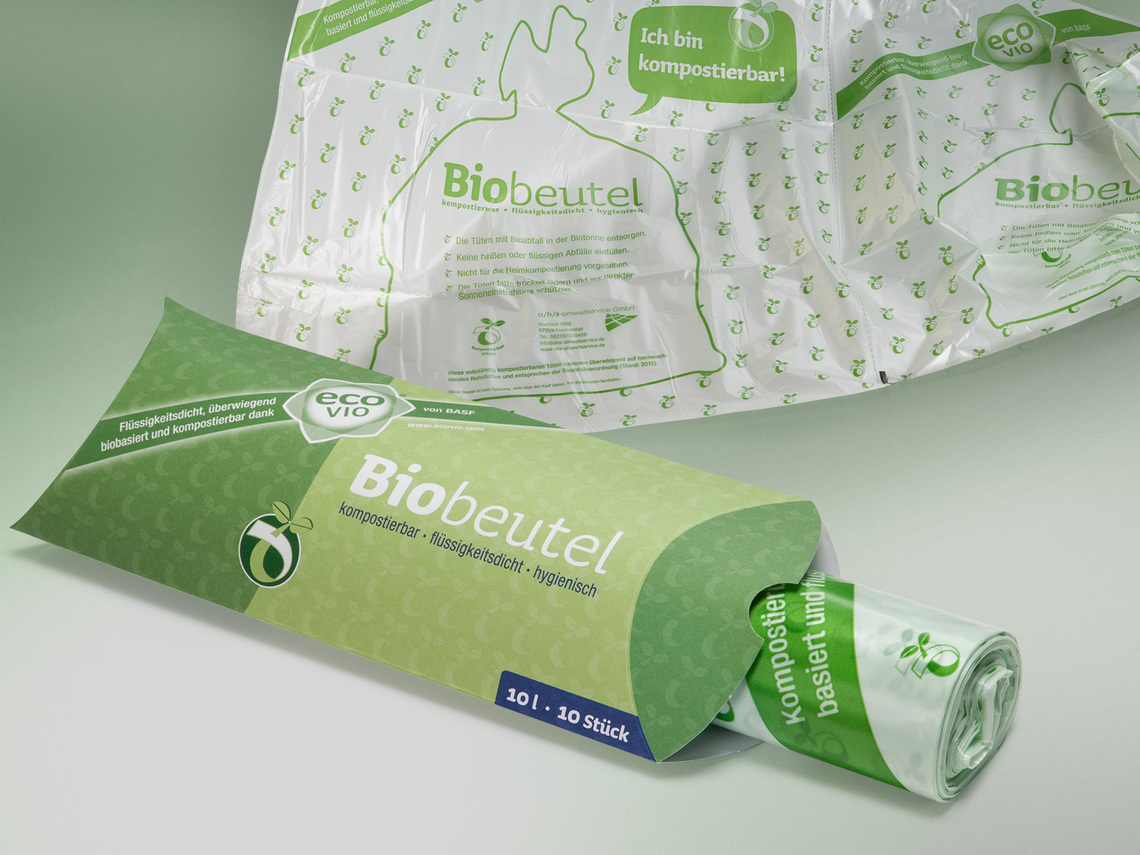
    ecovio® is a high-quality and versatile bioplastic from BASF. The primary advantages: It is certified compostable and biobased.

    The main areas of use for ecovio® are plastic films such as organic waste bags, fruit and vegetable bags, carrier bags with dual-use (first for shopping, then for organic waste) or agricultural films.

    Furthermore, compostable packaging solutions such as paper-coating, shrink and cling films, foam packaging as well as injection molding and thermoformed products can be produced with ecovio®.

    Certified Compostable

    Thanks to its special chemical structure, ecovio® can be biodegraded by microorganisms and their enzymes. Under the conditions of an industrial composting plant – respective temperature, high moisture, defined oxygen content – biodegradation only takes a few weeks. ecovio® offers various product grades that meet the following, international and national standards and regulations for industrial composting.

    Biobased content

    With ecovio®, BASF offers a certified compostable polymer which also contains variable biobased content. It consists of the compostable BASF polymer ecoflex®, polylactid acid (PLA) and other additives. In contrast to simple starch based bioplastics, ecovio® is more resistant to mechanical stress and moisture.

    High performance

    ecovio® products are just as high-performing and strong in use as conventional plastics. An ecovio® bag can take the same load as its polyethylene counterpart. The product properties were designed such that the products only fully biodegrade in compost after use.

    Applications

    • Organic Waste and Carrier Bags
    • Mulch Films
    • Injection Molding
    • Paper Coatings
    • Foam Packaging
    • Fruit and Vegetable Bags

    [su_button url=»https://bioplasticsnews.com/ecovio/» target=»blank» size=»5″]Source[/su_button]

  • Panama Becomes First Central American Nation to ban Plastic Bags

    Panama Becomes First Central American Nation to ban Plastic Bags

    Panama on Saturday became the first Central American nation to ban single-use plastic bags to try to curb pollution on its beaches and help tackle what the United Nations has identified as one of the world’s biggest environmental challenges.

    The isthmus nation of roughly 4 million people joined more than 60 other countries that have totally or partially banned single-use plastic bags, or introduced taxes to dissuade their use, including Chile and Colombia in the region.

    Supermarkets, pharmacies and retailers in Panama must stop using traditional polyethylene plastic bags immediately, while wholesale stores will have until 2020 to conform to the policy approved in 2018. Fines can be applied for non-compliance but there are exceptions for the use of plastic bags for sanitary reasons, such as with raw food.

    On the streets of Panama City, signs with the phrase “less bags, more life” reminded passersby that the measure had gone into effect.

    “This seems like a good measure because you avoid continuing to pollute the streets and the community,” said Victoria Gomez, a 42-year-old secretary in downtown Panama City.

    Birds, turtles, seals, whales and fish often become entangled or ingest the remnants of plastic bags in Latin America, one of the most biodiverse regions in the world. Along Panama’s coast, it is common to see plastic waste littering beaches, especially near populated areas.

    Given projected growth in consumption, without new anti-pollution policies oceans are expected by 2050 to contain more plastics than fish by weight, according to the New Plastics Economy report published by Ellen MacArthur Foundation in 2016. The report also found that the entire plastics industry will consume 20% of total oil production by then.

    ADVERTISING

    Discover what these companies are doing … It’s groundbreaking !!!

    [su_button url=»https://bioplasticsnews.com/2019/07/24/panama-becomes-first-central-american-nation-to-ban-plastic-bags/» target=»blank» size=»5″]Source[/su_button]

  • Edible Rice Bioplastics Straws

    Edible Rice Bioplastics Straws

    In efforts to solve the world’s plastic waste problem, a Malaysian company called Mistraws Manufacturing Sdn Bhd has created edible rice straws.

    Also known as Mistraws, these eco-friendly straws are made from 100% natural ingredients – organic rice and tapioca (without organic certification.).

    The company uses environmentally friendly manufacturing techniques to keep CO2 low during production, and the straws come in 3 sizes.

    The company states on its website:

    Here at Mistraws, we understand that the ban on the use of plastic straws would cause inconvenience to society as they have become a daily necessity for many of us.

    Hence, we are here to provide an environmentally friendly product to a diverse base of markets.

    You can use them as a regular straw, or you can cook them up and eat them. They are vegan, halal, and last up to 2 years on the shelf, or 3-6 hours in a drink.

    The best part is, they have no taste, meaning they will not alter the flavor of your beverage in any way.

    The way the company puts it: metal straws you have to lug around with you everywhere, paper straws can taste funny and get soggy, but Mistraws have none of these problems.

    They are fully biodegradable – decomposing within 100 days (while plastic takes up to 500 years). They stay in cold drinks for 4 to 6 hours, and in warm beverages for up to 3 hours, without losing their shape and strength.

    Together, we can make a difference. Even the slightest change, when multiplied by billions can make a huge impact. So why not start by changing our straw habit? Switch over to eco-friendly and economical edible rice straws! It’s time for a greener generation, and ideas like this are where it’s at.

    RELATED ARTICLES

  • Biofuel Company Secures $118 Mln To Produce Bioplastics

    Biofuel Company Secures $118 Mln To Produce Bioplastics

    Genera announced today it has secured more than $118 million in new investment for its first manufacturing facility to produce its Earthable® line of sustainable agricultural fiber products.

    Genera will use locally grown grasses and other agricultural crops to make compostable food service packaging products like plates, bowls, and takeout containers at its new manufacturing facility in Vonore, Tennessee.

    In addition to making products that are a sustainable alternative to plastics and polystyrene (Styrofoam-type products), Genera’s Earthable® fibers are also used to produce a wide array of towel, tissue, cupstock and other paper products.

    Earthable® will be the largest fully integrated, domestic solution for ag-based fiber and food-grade packaging in the United States, designed to meet the growing, consumer-driven demands for more eco-friendly products in the food and consumer industries.

    Kelly Tiller, president and CEO of Genera said

    “With this new investment, we can begin to answer the increasing demand for environmentally conscious solutions with a truly farm-to-table product made in America. We’re excited about the new revenue stream we can offer our local farmers. Our Earthable® plant-based paper and packaging products really resonate with consumers. We are passionate about delivering sustainability improvements to the marketplace while making positive impacts in rural economies.”

    The financing was anchored by an equity investment from WindSail Capital Group, a growth capital investor specializing in sustainability and energy innovation. WindSail partnered with investors Coppermine Capital and Stairway Capital in the Genera financing.

    Ian Bowles, managing director of WindSail Capital Group said

    “We and our partners are investing in Genera because they are pioneering a solution that will serve both our domestic rural economy and the rapidly growing demand for environmentally friendly packaging in the consumer market. The market opportunity for domestically sourced, non-wood fiber and packaging products is enormous. Genera is uniquely qualified to deliver this solution to the market, given their industry-leading experience managing agricultural biomass supply combined with the team’s experience in biomass processing and manufacturing.”

    The fibers are derived from locally grown high-yield, conservation crops like switchgrass and biomass sorghum. Genera has already begun to work with local East Tennessee farmers to produce the feedstock it will use in its new manufacturing facility and is actively seeking additional farm partners in the region.

    TennEra LLC, an affiliate of the University of Tennessee Research Foundation (UTRF), has leased its former biorefinery in Vonore, Tennessee, to Genera for the development of the new manufacturing facility.

    Stacey Patterson, president of UTRF and UT vice president for research, outreach and economic development said:

    “We are excited for the positive rural economic benefit of Genera’s fiber production facility in East Tennessee and beyond, furthering UT’s land grant mission.”

    Genera’s fiber production facility is expected to be ready to deliver Earthable® products to the marketplace in 2020, initially bringing 80 new jobs to Vonore.

    The company will begin hiring in early 2020, including skilled operators and maintenance positions. E

    ven before the Vonore facility begins operations, overwhelming customer demand for its products has the company looking at options to increase production capacity at the Vonore facility potentially increasing total employment by 50%.

    About Genera

    Genera, a Tennessee-based biomass solutions company, works to simplify supply chains with domestically sourced and produced ag-based pulp and molded fiber products.

    Partnering with regional farmers, Genera provides a sustainable farm-to-finished product solution for a wide array of applications including compostable food service tableware, to-go containers, packaging, paper, tissue and more.

    ADVERTISING

    You think it’s impressive? Then watch these companies are doing….

  • Company Receives Grant By Canadian Government to Develop Biodegradable Fishing Line

    Company Receives Grant By Canadian Government to Develop Biodegradable Fishing Line

    This past month, the Government of Canada announced local company Plantee Bioplastics Inc. will receive a grant of $138,000 to help further the development of their biodegradable fishing line.

    Company Awarded $138K Grant to Develop Biodegradable Fishing Line

    The announcement, which comes just two weeks after Kingston was named one of Canada’s top fishing towns for families, was made by Mark Gerretsen, Member of Parliament for Kingston and the Islands, on behalf of the Minister of Fisheries, Oceans and the Canadian Coast Guard, the Honourable Jonathan Wilkinson.

    According to Fisheries and Oceans Canada, millions of metric tons of plastic end up in the world’s oceans, lakes and rivers each year, including more than eight million metric tons of plastic in the oceans alone.

    A major contributor to marine debris is lost and abandoned fishing gear – one of the deadliest forms of plastic debris, with damaging impacts on marine animals like whales and turtles, the coastal and marine environment, and global fishing stocks. Fisheries and Oceans Canada also says that it is predicted there will be more plastic by weight in our oceans than fish by 2050.

    “Canada’s oceans, waterways and inland lakes are a vital economic and recreational resource for Canadians, and important habitats for many marine animals,” said Member of Parliament for Kingston and the Islands, Mark Gerretsen, at the funding announcement. “Ghost gear [lost and abandoned fishing gear] poses a threat to the protection of these marine environments. Plantee Bioplastics’ biodegradable fishing line will reduce the risks to marine animals while allowing Canadians to continue to enjoy recreational and commercial fishing.”

    The company will utilize this new funding to further the development of their biodegradable fishing line with reduced decomposition time. The material will biodegrade when underwater, leaving little to no waste while also having an increased lifetime in storage.

    In a joint statement, Plantee Bioplastics Inc. co-founders Richard Chen, Praphulla, and Prashant Agarwal said that fishing lines and nets made from fossil-fuel derived plastics are a detrimental toward marine life, adding: “Recycling and disposal of used fishing gear is also challenging in Canada, and strains our recycling facilities.

    Through the use of bioplastics, Plantee Bioplastics Inc. is developing sustainable, drop-in solutions for these issues which can be applied at the manufacturing stage. The grant from the Department of Oceans and Fisheries Canada will empower Plantee Bioplastics Inc. to reduce or eliminate the problem of ghost fishing gear and aquatic plastic pollution through our biodegradable fishing line. ”

    CLOSING REMARKS
    • That’s a subtle and humble move, but a wise one …
    • No more bear hunting …no more winter sleeping…. in Canada….
    • Canadians are awake and they’re good !
    • But are they as good as the Americans? That remains to be proven ….
    OTHER

    But you know what Canada doesn’t have …. company like these….

    [su_button url=»https://bioplasticsnews.com/2019/07/09/company-receives-grant-by-canadian-government-to-develop-biodegradable-fishing-line/» target=»blank» size=»5″]Source[/su_button]