Рубрика: Uncategorized

  • Grease Resistant Wrapping Papers Receive Compost Certification

    Grease Resistant Wrapping Papers Receive Compost Certification

    Ahlstrom-Munksjö has received the OK compost HOME and OK compost INDUSTRIAL certifications from TÜV® Austria for its entire range of Coralpack™ grease resistant wrapping papers.

    OK compost HOME and OK compost INDUSTRIAL certifications confirm that Coralpack™ grease resistant papers can be composted at home and in an industrial facility. Compostable food wrapping materials are an example of how sustainable solutions can contribute in reducing the environmental impact of packaging waste.

    This certification will facilitate the possibility for Ahlstrom-Munksjö customers, whether converters or brand owners, to obtain the OK compost Label for their final products. The OK compost Label is internationally recognized according to the EU standard EN13432. All tests have been carried out with a strict independent laboratory certified and accredited to ISO 17025.

    “We are extremely proud of this OK compost certification. Ahlstrom-Munksjö is one of the first companies to obtain this certification for its customers using grease resistant wrapping papers. This initiative is perfectly aligned with Ahlstrom-Munksjö’s ambition to develop solutions for a more sustainable everyday life.” comments Raphaël Bardet, Head of Business Line, Food, Specialties Business Area.

    CoralpackTMgrease resistant papers are used in everyday life to wrap grease-containing food products such as butter and margarine, fast food products or microwave popcorn, enabling food protection and reducing grease stains on the packaging. Made of virgin fibers, Coralpack™ wrapping papers are biodegradable and compostable. Ranging from 30 to 90 gsm, wet strength or not, Coralpack™ grades are available in white and unbleached versions.

    In addition to Coralpack™ papers, Ahlstrom-Munksjö manufactures many specialty papers dedicated to sustainable food packaging, baking and other industrial applications. End-uses include bakery, fast food, cheese, sweets, popcorn, fruits & vegetables, soap, pharmaceuticals, pet food, and more.

    OTHER

    Discover what these companies are doing … Groundbreaking !!!

    [su_button url=»https://bioplasticsnews.com/2019/07/05/grease-resistant-wrapping-papers-receive-compost-certification/» target=»blank» size=»5″]Source[/su_button]

  • Indonesia Government Supports Bioplastics

    Indonesia Government Supports Bioplastics

    Customs and Excise Director-General Heru Pambudi said that one of the benchmarks for success in the implementation of plastic bag tax is the drop in the production and use of plastic and the growth of eco-friendly packaging industry, such as those derived from papers or other natural materials.

    “We knew that there is plastic made from corn and cassava. This is what we expect,” said Heru in the Customs and Excise office, Jakarta, Wednesday, July 3. Thus, the public needs for packaging could be met and the environment could still be preserved.

    Heru explained bioplastic made from corn and cassava could be degraded naturally. On the other side, its function as a bag could be maintained.

    “Hopefully, we can encourage all industries to use this kind of bag,” he remarked.To support the eco-friendly bag industry, Heru said that the government pledged to grant incentives in the form of lower or free duties as well as for the production machine and raw materials.

    Previously, the government proposed a tax on a plastic bag at Rp30,000 per kilogram or Rp200 per piece. Heru deemed the price was moderate and was based on the international best practice.

    OTHER

    Discover what these companies are doing … Groundbreaking !!!

    RELATED ARTICLES

    [su_button url=»https://bioplasticsnews.com/2019/07/04/indonesia-government-supports-bioplastics/» target=»blank» size=»5″]Source[/su_button]

  • Developing Countries Turn Away From Plastic Waste Imports

    Developing Countries Turn Away From Plastic Waste Imports

    Will an amendment to the Basel Convention staunch the global flow of plastic waste?

    Plastic waste burns all night in the small Malaysian town of Jenjarom, causing locals to cough and lose sleep. Businesspeople came to the area promising to develop an “environmental protection industry”. Instead they brought piles of waste for incineration.

    Malaysia is the world’s biggest importer of plastic waste. It replaced China after the country announced a ban on the trade in 2017. But like nearby Thailand, Indonesia and Vietnam, Malaysia is now facing its own environmental pressures.

    A recent amendment to the Basel Convention may help end the practice of richer countries exporting their plastic waste to less developed nations where environmental regulations and waste management processes are unable to cope.

    The Basel Convention on the Control of Transboundary Movements of Hazardous Wastes and their Disposal came into effect in 1992. It established the principle that harmful waste should be dealt with domestically to prevent it flowing into regions with lax oversight. The amendment has added most types of plastic waste to the hazardous wastes already covered.

    What’s happened since the China waste ban?

    After China informed the World Trade Organisation that it would no longer accept plastic waste shipments, imports to Thailand, Vietnam, and Malaysia grew significantly.

    Malaysia’s monthly imports of plastic waste rocketed from 20,000 tonnes in 2016 to 110,000 tonnes in 2018, according to a Greenpeace East Asia report. Thailand was importing less than 10,000 tonnes per month but in April 2018 that figure reached 80,000. Vietnam imported up to 60,000 tonnes each month in 2018, twice as much as in 2016, until restrictions were put in place in 2018.

    The plastic waste that countries choose to export is usually more hazardous and of lower value. As nations struggle to deal with it, they have also started to restrict imports. Malaysia has announced a complete ban on plastic waste imports within three years.

    The restrictions are pressuring exporting countries to invest in domestic waste-handling capacity. But as such investments take time, they are also turning to emergency measures such as landfill and incineration. The UK is incineratingmore waste and has released its first waste strategy in a decade. Melbourne’s largest waste-handling site could not cope with demand this year, so recyclable plastic was landfilled.

    Greenpeace East Asia found that of the world’s 21 largest importers and exporters of plastic waste, exports dropped from 1.1 million tonnes a month to 500,000 tonnes over the course of 2017. Though China’s ban has had an impact, developed countries continue to export in large quantities.

    How has the Basel Convention changed?

    The amendment to the convention will severely limit the global flow of plastic waste by making transfer across borders more difficult. From 2021, companies will need pre-approval to export plastic waste to any of the 187 countries signed up to the convention, which includes China.

    The world’s largest exporter of plastic waste, the United States, has not signed up to the convention so from 2021 it will be unable to legally export any to developing nations. And with OECD nations it will only be able to trade a limited range of plastic waste.

    Wastepaper offers an interesting example of the effect that limiting imports can have. Before China banned plastic waste imports it was already refusing some types of solid waste such as wastepaper. This caused imports to plummet and prices to rocket, incentivising papermakers and consumers to use and improve paper-recycling facilities.

    Solving the plastic crisis

    The amendment was not proposed by plastic-choked developing nations but by Japan and Norway, two plastic waste exporters. However, the fact it received support from all developing nations, including China, shows just how troubled countries are by the plastic crisis.

    Academics estimate that since the invention of plastic the world has produced 6.3 billion metric tons of plastic waste. A mere 9 per cent of that has been recycled. Twelve percent has been incinerated and 79 per cent has ended up either in landfill or elsewhere in the natural environment. Once carried into the ocean by rain and rivers plastics degrade into microplastics, which marine life consumes, sending it through the food chain and into our bodies.

    A failure to stem the growth in plastics production would mean that by 2050 the ocean will contain more plastics than fish by weight, according to an Ellen MacArthur Foundation report.

    But relying on the Basel Convention to control the cross-border transfer of plastic waste will not solve the crisis. Instead, the culture of disposability that is a feature of modern lifestyles must be addressed. If we cannot stop the overuse of disposable plastic packaging and boost global sorting and recycling capacity, then all that will be achieved is a slight shift of the problem back from developing nations.

    Some countries are facing up to the end of the trade in plastic waste and working towards reducing production at the source. The EU will ban single-use plastic straws and cutlery from 2021, and require 90 per cent of plastic drinks bottles to be recycled by 2029.

    China, the first to decline imports of plastic waste, is also trying to restructure its plastics economy. In 2017, the State Council published plans for an “extended producer responsibility” system to cover the entire product lifecycle, from design to recycling. Some parts of China are going even further. The island province of Hainan will ban the production, sale and use of all single-use non-biodegradable plastics by 2025.

    The amendment to the Basel Convention has dispelled the notion that plastic waste can simply be exported away. When it comes into force in 18 month’s time some countries may be forced to reckon with their own inability to manage their plastic waste. It may also force a revolution in how plastics are used.

    CLOSING REMARKS

    Check out what following companies do ….

    REFS

    This article was published on eco-business.com

  • Baby Bottles Made of Plant Material a Reality with New Bioplastics

    Baby Bottles Made of Plant Material a Reality with New Bioplastics

    A research team at the Korea Research Institute of Chemical Technology has developed high-strength and thermal resisting super bioplastics that do not contain any harmful chemicals.

    Thanks to its unrivaled convenience, plastic, which is widely used in our society, has recently been cited as the main culprit for environmental damage.

    Petroleum-based plastics with Bisphenol-A (BPA) have become a major culprit, especially as it is classified as a chemical that disrupts the endocrine system.

    The research team developed plastic resin that can replace BPA by utilizing a plant-based monomer called isosorbide.

    With the moisture in the air, plant-based monomers can easily end chemical reactions. This means that the intensity is lower than that of similar petroleum-based products.

    The researchers solved this problem by using a phase transition catalyst.

    Through chemical reactions, the monomer isosorbide was turned into one long chemical material. When the process is complete, phase transition catalysts played a role in maximizing reactivity of isosorbide.

    The specific strength of the bioplastic and intensity per unit weight using this process was stronger than steel when it weighed the same amount.

    The researchers explained that it is the strongest bioplastic ever released in the academic world. The tensile strength was 80 MPa, which is higher than most petroleum-based plastics.

    In particular, the researchers expected that the technology will be applied to children’s products such as baby bottles, strollers and toys.

    Dr. Oh Dong-yup, a researcher at the institute, said, “The materials that babies put their mouths in should be trustworthy. I developed the new bioplastic with the thought that my baby could touch the plastic.”

    Meanwhile, the results of the study were published in the online edition of Nature Communications on June 13.

    OTHER

    Check out what these companies are doing!!

    RELATED ARTICLES
    REFS & SIMILAR

    This message was published on koreabizwire.com

    Baby Bottles Made of Plant Material a Reality with New Bioplastics

  • Yield10 Bioscience Files Patent For New PHA Biomaterials Technology

    Yield10 Bioscience Files Patent For New PHA Biomaterials Technology

    Yield10 Bioscience, an agricultural bioscience company that uses its “Trait Factory” to develop high value seed traits for the agriculture and food industries, today announced that the Company has filed a U.S. Patent application for new technology enabling low-cost production of PHA-based biomaterials in Camelina sativa, an oilseed crop.

    PHA-based biomaterials are of significant interest for their use in water treatment to remove nitrogen and phosphates, and as a biodegradable replacement for petroleum plastics in a range of applications.

    The new Yield10 patent application describes a discovery around maintaining the viability and vigor of Camelina seed containing high levels of PHA biopolymer.

    This is an important step toward realizing a cost-effective, seed-based production platform for the simplest member of the PHA family, PHB, using Camelina. With this new patent-pending technology, Yield10 plans to develop and commercialize products for water treatment applications using the Camelina PHB platform.

    Yield10 is also seeking partners interested in developing commercial opportunities for crop PHA biomaterials in plastics replacements markets, where Yield10 would expect to serve as a technology provider.

    “While we maintain our focus on the development of novel yield traits for commercial crops based on a licensing model, we are working to develop independent market opportunities for Yield10 in the specialty oils and niche crop space as part of our business development activities,” said Oliver Peoples, Ph.D., president and chief executive officer of Yield10 Bioscience. “We believe that by developing the PHA Camelina platform as a cash cover crop, we can create new sources of revenue for farmers, independent of export markets, reduce run-off from fertilizer, and produce a natural biodegradable product that can be used to reduce nitrate pollution from aquaculture and septic systems. By focusing on the North American market, we believe we can avoid the typical high costs and long timelines associated with global deregulation of a biotech crop, and potentially benefit from the ongoing modernization of the USDA-APHIS regulatory process.”

    Yield10 is a pioneer in the development of technology for producing PHA/PHB biomaterials in crops. Seed-based PHA/PHB production provides an opportunity to sustainably produce these natural biodegradable materials at low-cost to disrupt the cost advantage of the petroleum plastics they functionally replace.

    Based on the Company’s internal engineering projections, the costs achievable may also enable broad use of this material for water treatment applications where it acts as a maintenance-free growth substrate for bacteria that converts nitrate to nitrogen gas reducing pollution and algal growth.

    Over the last several years, Yield10 has developed Camelina as a platform crop using it to identify, develop and evaluate the Company’s pipeline of novel traits to enhance yield in commercially important row crops such as canola, soybean and corn.

    Recent discoveries by Yield10 for producing PHB in an economically viable manner may also benefit from Yield10’s work to boost yield in oilseed crops. Yield10 plans to begin testing PHB producing Camelina plants in small field tests as early as the 2020 growing season.

    Background on PHA for Water Treatment

    Scientific data has clearly shown that fertilizer (NPK) is essential for global food security, however its use is also a major source of nutrient pollution in our waterways.

    There is global demand for development of sustainable, economically attractive ways to reduce fertilizer run-off via simple and cost-effective methods to remove it from water where it comes from multiple sources, including septic systems.

    PHA has been successfully used to manage algal growth in aquariums and ponds where denitrifying bacteria present in the water feed on PHA pellets and use the energy to convert the nitrate to nitrogen gas (78% of air is nitrogen). Once the nitrate is removed, the algae will disappear.

    This market application has been known since the 1980s, but its adoption has been constrained by the high cost of producing material through fermentation. There is significant potential to use Yield10’s PHA Camelina platform as a sustainable, low-cost source of PHA biopolymer to improve the overall sustainability of food production and reduce nutrient pollution of our waterway.

    About Yield10 Bioscience

    Yield10 Bioscience, Inc. is an agricultural bioscience company which uses its “Trait Factory” to develop high value seed traits for the agriculture and food industries to achieve step-change improvements in crop yield to enhance global food security. Yield10 has an extensive track record of innovation based around optimizing the flow of carbon in living systems.

    The “Trait Factory” has two components: the “GRAIN” computational modeling platform, which is used to identify specific gene changes designed to improve crop performance, and the deployment of those changes into crops using genome-editing or traditional agricultural biotechnology approaches. The purpose of the “Trait Factory” is to engineer precise alterations to gene activity and the flow of carbon in plants to produce higher yields with lower inputs of land, water or fertilizer. Yield10 is advancing several yield traits it has developed in crops such as canola, soybean, rice, wheat and corn. Yield10 is headquartered in Woburn, MA and has an Oilseeds Center of Excellence in Saskatoon, Canada.

    CLOSING REMARKS
    • Yield10 Bioscience used to be called ‘Metabolix‘ before. Metabolix has a brand value and is a relatively famous brand compared to Yield10. Yield10 Bioscience was bought by South Korean CJ.
    • CJ bought Yield10 Bioscience to have access to patents, technology and knowhow but CJ wasn’t sure whether it was worth making an industrial investment in PHA. Today, it seems as if they’re switching on the engine.
    • South Koreans have a big potential but their English is not always good meaning they may have problems communicating with the rest of the world.
    OTHER

    When it comes to PHA, Bio-On Is the leader:

    REFS

    This article was published on www.globenewswire.com

    Yield10 Bioscience Files U.S. Patent Application Covering New Technology Enabling Low-cost Production of PHA-based Biomaterials in Camelina

  • DuPont Debuts as an Independent Company; Completes Corteva Spin-off

    DuPont Debuts as an Independent Company; Completes Corteva Spin-off

    DuPont Becomes Independent Company

    “The new DuPont launches today with leading market positions in four core markets and strong geographic, customer and end-market diversification,” said Ed Breen, Executive Chairman of DuPont. “The company expects to drive above GDP growth through disciplined innovation, a relentless focus on ROIC, and a best-in-class cost structure. With these priorities, combined with active portfolio management and a commitment to capital returns, DuPont will remain intently focused on delivering value for our shareholders.

    Innovation-Led Growth and Shareholder Value

    Marc Doyle, Chief Executive Officer of DuPont, added, “DuPont is uniquely positioned to leverage its balanced portfolio, deep customer relationships, R&D expertise, and competitive operating model to win in the marketplace and drive value for all its stakeholders. The company is differentiated by its materials, ingredients and solutions expertise aligned with attractive, high-growth market trends – particularly health and wellness, advanced mobility, connectivity and sustainability – where our customer-driven innovation and value-added solutions play a transformational role.”

    DuPont has a presence in over 70 countries, with headquarters in Wilmington, Delaware, and operates approximately 170 manufacturing sites, over 10 global R&D centers and 10 global innovation centers.

    Immediately following the distribution of Corteva common stock on June 1, 2019, DuPont completed a 1-for-3 reverse stock split and as a result DuPont common stockholders now hold one share of common stock of DuPont for every three shares of DowDuPont common stock held prior to the reverse stock split.

    [su_button url=»https://polymer-additives.specialchem.com/news/industry-news/dupont-completes-spin-off-corteva-independent-000218602?lr=ipa1906504&li=70111412&utm_source=NL&utm_medium=EML&utm_campaign=ipa1906504&m_i=aZV10SrY33Z6I0QHPQfx2Z%2BnCIqQWVuGQZHXsEu_9PcPpiJM%2B2yc7IX9YPP55BFxD6TuF5n_KvqEEo5z9vXl2MYtD3VMas» target=»blank» size=»5″]Source[/su_button]

  • P&G to Trial Olay Refillable Packaging in the UK and USA

    P&G to Trial Olay Refillable Packaging in the UK and USA

    Procter & Gamble (P&G) is to pilot refillable packaging for its Olay skincare brand in the UK and USA.

    The move is the first mass retail skincare brand to adopt such an initiative.

    Beginning in October 2019 and running for three months, Olay Regenerist Whip moisturizer will be available in a refill pod that fits in the original jar.

    If adopted, and the brand moved a significant portion of Olay Regenerist moisturizer jars to refillable pods – five million jars’ worth.

    Consumers will be able to purchase the refillable Olay Regenerist Whip package that contains one full jar of Olay Regenerist Whip and one refill pod of moisturizer that can be placed inside the jar once it’s emptied.

    The package will be sold and shipped in a container made of 100% recycled paper and will not contain an outer carton in order to reduce the use of paperboard. The pods themselves are also recyclable.

    Anitra Marsh, Associate Director of Sustainability and Brand Communications for Skin and Personal Care, said: “The ultimate goal is to find and adopt many more sustainable packaging solutions, and the refillable Olay Regenerist Whip package is the first step of that journey. It’s really important for us to get it right because only then can we bring this concept to market at scale.”

    [su_button url=»https://bioplasticsnews.com/2019/06/12/pg-to-trial-olay-refillable-packaging-in-the-uk-and-usa/» target=»blank» size=»5″]Source[/su_button]

  • Canada to Announce Ban on Single-Use Plastics

    Canada to Announce Ban on Single-Use Plastics

    The Canadian government plans to announce it is moving to ban single-use plastics as early as 2021, a senior government official said late Sunday

    The official said Prime Minister Justin Trudeau would make the announcement Monday. The official spoke on condition of anonymity because they were not authorized to speak publicly ahead of Monday’s news conference.

    The official said specific items to be banned will be determined based on a science-based review, but they are considering items such as water bottles, plastic bags and straws.

    The official said Trudeau’s government is looking at what the European Union did and drawing inspiration from their model.

    The European Union parliament overwhelmingly voted in March to impose a wide-ranging ban on single-use plastics to counter pollution from discarded items that end up in waterways and fields. EU member states have given their support but need to vote on the measure for it to go into effect.

    The EU’s measure would affect a range of plastic products for which reasonable alternatives exist, from straws to earbuds, starting in 2021.

    Disposable utensils would not be completely off-limits, but the EU measure calls for them to be made of sustainable materials when possible. The approved EU legislation also sets a goal of having plastic bottles 90 percent recycled by 2025 and to cut litter from the 10 items that turn up in oceans most often in half.

    The EU estimated the changes will cost the bloc’s economy 259 million euros to 695 million euros a year ($291 million to $781 million).

    The European Parliament has said that plastics production is 20 times higher now than during the 1960s. China’s decision to no longer import some of the EU’s waste helped spur the plastics ban.

    China banned the import of plastic waste last year, causing other Southeast Asian nations to become new destinations. The Philippines, one of two Southeast Asian countries that protested being treated like dumpsites by wealthier nations, shipped 69 containers of what its officials called illegally transported garbage back to Canada in May.

    [su_button url=»https://bioplasticsnews.com/2019/06/11/canada-to-announce-ban-on-single-use-plastics/» target=»blank» size=»5″]Source[/su_button]

  • Solon Is A New Bioplastics Brand

    Solon Is A New Bioplastics Brand

    PRESS RELEASE — RWDC Industries Ltd., the winner of The Liveability Challenge 2018, presented by Temasek Foundation, launches its Solon brand at Ecosperity Week 2019 in Singapore in June.

    This revolutionary, sustainable material solution has hundreds of possible applications for everyday life. Solon is an ideal material for replacing petrol-based single-use plastic articles, including cutlery, cups, bags, plates, and bowls. Solon will be introduced in Singapore, as a drinking straw product first.

    Solon drinking straws will be available at Ecosperity Week 2019 at the RDWC/Solon booth, next to the Bettr Barista coffee stand. The straws will also be available from a number of leading food and beverage partners in Singapore, who are supporting the launch.

    Solon is a type of PHA (or polyhydroxylalkanoate) — a biopolymer naturally produced and optimised by RWDC Industries to enable a global solution to today’s plastic waste management challenge.

    Since winning The Liveability Challenge 2018, RWDC has had an exciting year, which included not only some highly promising product trials in a number of applications with its clients and this exciting product launch, but also US$22 million of new funding in April and its first US-based institutional investor.

    “We believe that it is our duty as stewards of the planet to use our talents, energy and time to leave a legacy of a sustainable future,” said Dr Daniel Carraway, RWDC’s Co-founder and Chief Executive Officer.

    “There are a number of ‘compostable’ single-use plastic alternatives on the market; however, these materials can only be composted in well managed, commercial composting facilities that are equipped to operate with precise control systems,” he added.

    “We would like to congratulate RWDC for the successful launch of its first PHA product within a short span after winning The Liveability Challenge in 2018. Temasek Foundation champions liveability and sustainability, and hopes to reduce the damaging impact from plastic waste. We look forward to RWDC developing and commercialising many more Solon products.

    This will benefit end-users who will be able to make ecologically responsible choices, and collectively make a big difference to our living environment,” said Mr Lim Hock Chuan, Chief Executive of Temasek Foundation Ecosperity.

    Governments around the world are beginning to legislate aggressively on plastic waste. RWDC supports the initiatives of ‘Reduce, Reuse and Recycle’ but notes these steps are not enough to alter the growth trajectory of plastic waste, risking serious consequences.

    RWDC believes a better solution is to ‘replace’ single-use plastics with the right material, PHA – an unmodified, naturally occurring polymer that offers many of the benefits, versatility and functionality of petroleum plastic materials, while enabling a safe outcome in all potential post-consumer end of life scenarios.

    Solon is certified by European certification authority TUV Austria to safely biodegrade in natural environments, leaving absolutely no harmful remains or by-products. It is made from sustainably produced, renewable feedstock, is incredibly versatile, and available at a commercially viable price.

    [su_button url=»https://bioplasticsnews.com/2019/06/08/solon-is-a-new-bioplastics-brand/» target=»blank» size=»5″]Source[/su_button]


  • PolyOne Launches Translucent Color Series for PET Bottles

    PolyOne Launches Translucent Color Series for PET Bottles

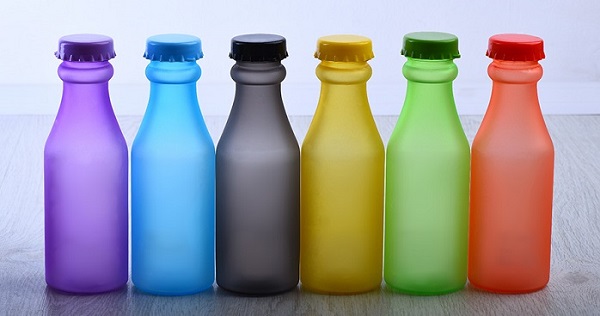
    PolyOne has announced the launch of its new Smartbatch™ Frost Collection, a translucent color series for PET bottle. Developed in response to increasing demand from regional brands in China for greater product differentiation, this collection of color and additive formulations also offers to streamline production and reduce manufacturing cost.

    Smartbatch™ Frost Collection


    Frost-Collection

    “Brand owners in Asia continually seek to increase consumer engagement by visually differentiating their PET packaging,” said Say Eng Lee, general manager, Color & Additives Asia at PolyOne. “We’ve developed the Frost Collection to enable brands to create high-end, sophisticated, and engaging bottles in a wide range of color options that also expand design freedom and cost effectiveness.”

    Better Slip-Resistant Performance

    When added to PET resins during the injection stretch-blow molding (ISBM) process, Smartbatch Frost Collection provides a soft, cool, and icy look with better slip-resistant performance than typical PET bottles. The new masterbatch can be used in all PET bottles, including those for water, beverage and personal care packaging.

    [su_button url=»https://polymer-additives.specialchem.com/news/product-news/polyone-new-translucent-color-series-pet-bottles-000218513?lr=ppa1906490&li=70111412&utm_source=NL&utm_medium=EML&utm_campaign=ppa1906490&m_i=9%2BDj7VVW%2BVvkdVx40ngyXc2OivhjAXXwsfu0qiLzu05fs_NcOC21CTheK1BPiRXCGAijzlMsKHiFGeY4DdF3aNCajgDr9D» target=»blank» size=»5″]Source[/su_button]