Global petrochemical markets are being shaken and redefined by significant developments, including the volatile crude oil situation and outlook, and changes in other upstream feedstock markets. Meanwhile, China’s economic slowdown and growing self-sufficiency pose a challenge to international players.
ICIS Petrochemicals Training offers essential insights into the commercial and technical aspects of petrochemicals, including feedstocks and derivatives, in light of recent events. Designed to equip delegates with the skills and understanding they need to navigate these markets successfully, the courses include:
This two-day course offers a comprehensive overview of petrochemical markets, looking at trade flows, regional dynamics, pricing, and factors driving the industry. It also offers expert insights into the outlook for petrochemicals.
Get to grips with pricing and profitability in petrochemicals markets, exploring cost structures, value chains, margins, price drivers and more. This one-day course also covers the fundamentals of forecasting and price negotiations.
Enhance your understanding of petrochemicals manufacturing with this in-depth one-day course. Exploring refinery processes, feedstocks and challenges facing the industry, it’s an essential introduction to the technical side of petrochemicals.
All of our Petrochemicals Training Courses can be offered as an in-house option.
Alternatively our courses can be tailor-made to suit the individual needs of your company. Click here to find out more or contact us if you have a question about corporate training.
The Additives business unit of specialty chemicals company LANXESS globally increases the prices for its polydibromostyrene products (PDBS) and its branded decadibromophenyl ethane (DPDPE) flame retardant, Firemaster 2100R, up to 15 percent for each product effective November 1, 2017.
The PDBS brominated flame retardant is mainly used in electronics products and electrical plug connectors, the housings of which are made of polyamide plastic. Firemaster 2100R is a versatile brominated flame retardant used in a variety of applications, plastics and resins like wire/cable insulation and specialty fabric coatings.
Estane® TPU – High Performance Solutions for Surface Protection and Graphics
Estane TPU provides exceptional performance for surface protection applications, backed by more than 30 years of experience in the harshest environments. Road salt, flying stones, acid rain, and extreme hot and cold to name a few!
More recently, Estane TPU (thermoplastic polyurethane) has been introduced for use in demanding graphics applications, such as transportation wraps, building signage, and durable labels.
Whether you’re an OEM or polymer processor, Lubrizol’s Estane® TPU solutions for surface protection and graphics applications are there for you.
Applications:
Paint Protection (PPF)
Automotive Interiors
Graphics Media and Laminates
Signage and Labels
Consumer Products
Flooring
Architectural
Benefits:
Protecting surfaces from damage by impact and abrasion
Resistant to the effects of environmental exposure – color stability when exposed to UV
Low-temperature flexibility for wider range of installation conditions
Plasticizer-free – won’t embrittle over time
Join Peter Kirk, Marketing Manager, and Mark Cox, Applications Development Scientist, of Lubrizol’s Engineered Polymers business to learn more about Estane TPUs high performance solutions for graphics and surface protection applications.
About Lubrizol Engineered Polymers
Lubrizol Engineered Polymers offers one of the broadest portfolios of engineered polymers available today including resins that are bio-based*, recyclable**, light stable, flame retardant, adhesive, chemically resistant, optically clear and fast cycling. Our technology crosses many industries and applications, including surface protection, power and fluid systems, sports and recreation, wearable devices, electronics and automotive. For more information, visit www.lubrizol.com/engineeredpolymers or contact engineeredpolymers@lubrizol.com.
Europe petchem players upbeat at EPCA 2017, face digital challenges
The 51st European Petrochemical Association (EPCA) in Berlin was bursting with optimism. Petrochemical producers in Europe are facing continuing pressures within the modern economy to keep up with demand but, given the economic backdrop, competitiveness has improved.
Our insight editor Nigel Davis reports on the event in this comprehensive summary.
Pricing information
ICIS is the benchmark for independent and reliable price assessments for Asia, Middle East, Europe and the Americas. Our reports also provide price histories and expert commentary to help you understand the key price drivers and market conditions and settle your contract prices confidently with access to time-sensitive offers, bids and price movements.
Aromatics and refining investments: are they aligned with the developing oil and petrochemical demand scenario?
Following the success of the ICIS networking discussion during EPCA, we would like to give you the opportunity to download the presentation given by ICIS consultants.
The presentation will give you an overview of the most important and engaging global developments affecting the petrochemicals industry including:
Global refining developments, what they mean for petrochemical feedstocks?
What are the effects of electric vehicles on refined products?
What are the implications of expected surge in integrated paraxylene investment in China
What are the potential changes to global aromatics trade flows?
UPCOMING WEBINAR: New Dow Corning Masterbatch for BOPP Film
Eliminating migration enables higher productivity, superior printing and more
A new, non-migrating silicone masterbatch for processing bi-axially oriented polypropylene (BOPP) film delivers stable, long-term slip performance without the drawbacks of standard slip agents such as organic waxes and silicone oil.
Controlling the COF
Coefficient of friction (COF) is a recurrent problem in BOPP film packaging production because it can negatively affect the film’s appearance, cause deformations and even rupture, which interrupts throughput. Traditional slip agents cannot guarantee a constant COF.
Also, standard COF reduction agents continuously migrate to the film surface. Migration is a big problem that can:
• Increase the haze level of clear film
• Negatively affect downstream printing, lamination and metallization
To solve these issues, Dow Corning has developed a patent-pending, silicone-based masterbatch for BOPP and cast films used mainly in food bags, wrappers, packages and pouches.
New masterbatch offers major benefits:
• Immediately lowers the COF for BOPP films
• Prevents transfer to the corona-treated face to preserve printability and lamination and metallization capability
• Remains stable over time and temperature for permanent slip performance
• Will not significantly affect optical qualities of the film
The Dow Corning webinar will describe the challenges of optimizing slip performance in BOPP film production – using both sequential and simultaneous stretching lines – and showcase the advantages of new-generation silicone technology. Topics will include:
• Common challenges faced by film processors
• Product test data on COF and haze performance, and effect on surface tension of corona-treated film
• Technical guidance on using the new masterbatch
San Francisco could soon become the first U.S. city to prohibit chemical flame retardants in all new upholstered furniture and children’s products sold in the city, including online sales.
Regulation to Ban FRs from Kids’ Products
A proposed ordinance under consideration by the Board of Supervisors would ban added flame retardants from kids’ products including play and nap mats, nursing pads, changing pads, infant seats, highchair pads and strollers. The proposal, expected to come up for a vote Oct. 17, would also require flame retardant-free foam to be used when furniture is reupholstered.
Board of Supervisors would ban added flame retardants from kids’ products
Flame retardants have been linked to cancer, endocrine disruption and developmental problems in kids. Scientists have gathered reams of evidence that these chemicals migrate out of furniture foam and end up in people’s bodies. Biomonitoring studies have found flame retardants in the bodies of Americans nationwide, and children often have higher levels than adults.
Flame retardants have been intentionally added to foam products for more than 40 years. In 2013, California concluded that adding flame retardants to furniture was not actually making products safer, resulting in enacting a major overhaul of the state’s fire retardant rules.
Children Especially at Risk
During critical stages of development, children are especially vulnerable to the health hazards of flame retardants. In 2013, a study by University of California at Berkeley researchers showed that prenatal and childhood exposures to one class of flame retardants, bromine-based chemicals known as PDBEs, are linked to attention, coordination and learning problems.
A 2017 study led by researchers at the University of California at San Francisco found that exposure to PBDEs was associated with lowered IQ in children.
EWG researchers have found high levels of PBDEs and other flame retardants in utero, in mothers’ milk, and in 3-to-5 year olds’ bodies. In a 2008 study of 20 families in 11 states, we found that children’s PBDE levels were three times higher than those of their mothers.
In 2016, a joint study by EWG and Duke University researchers demonstrated that California children had average levels of a flame retardant in their bodies that were 15 times higher than those of their mothers, as well as higher than those of children in New Jersey.
Consumers Turning to Flame Retardant-free Products
Concerned about health effects, consumers are causing a market shift away from added flame retardants. Although many major manufactures have phased out the use of flame retardants in their products, recent monitoring by the U.S. Consumer Product Safety Commission found that harmful bromine- and chlorine-containing flame retardants are still found in more than one-fifth of children’s products.
The San Francisco Department of Environment has been working with retailers in the city to educate them on the new law and has been encouraging sales of flame-retardant free furniture. Over 50 retailers in the city currently sell flame retardant-free furniture.
In July, Maine passed a similar law banning the sale of furniture containing flame retardants beginning in 2019. San Francisco’s ordinance would extend this ban by including a broad range of children’s products that contain foam ingredients, such as bassinets, booster seats, changing pads, floor play mats and nap mats, nursing pads and pillows, and many other products. Rhode Island recently passed a ban on organohalogen flame retardants in bedding and furniture that will also take effect in 2019.
EWG continues to push for strong federal action on flame retardants. EWG has called on the Consumer Product Safety Commission to get flame retardants out of products sold in stores nationwide.
If you live in places where state and local governments have not yet taken action to protect citizens from flame retardants, check out this EWG infographic to learn more about how to avoid these chemicals in consumer products.
Presented by Lubrizol
Join us live Tuesday, October 24, 2017 at 11AM EDT (New York)
Estane TPU provides exceptional performance for surface protection applications, backed by more than 30 years of experience in the harshest environments. Road salt, flying stones, acid rain, and extreme hot and cold to name a few!
More recently, Estane TPU (thermoplastic polyurethane) has been introduced for use in demanding graphics applications, such as transportation wraps, building signage, and durable labels.
Whether you’re an OEM or polymer processor, Lubrizol’s Estane® TPU solutions for surface protection and graphics applications are there for you.
Applications:
Paint Protection (PPF)
Automotive Interiors
Graphics Media and Laminates
Signage and Labels
Consumer Products
Flooring
Architectural
Benefits:
Protecting surfaces from damage by impact and abrasion
Resistant to the effects of environmental exposure – color stability when exposed to UV
Low-temperature flexibility for wider range of installation conditions
Plasticizer-free – won’t embrittle over time
Join Peter Kirk, Marketing Manager, and Mark Cox, Applications Development Scientist, of Lubrizol’s Engineered Polymers business to learn more about Estane TPUs high performance solutions for graphics and surface protection applications.
About Lubrizol Engineered Polymers
Lubrizol Engineered Polymers offers one of the broadest portfolios of engineered polymers available today including resins that are bio-based*, recyclable**, light stable, flame retardant, adhesive, chemically resistant, optically clear and fast cycling. Our technology crosses many industries and applications, including surface protection, power and fluid systems, sports and recreation, wearable devices, electronics and automotive. For more information, visit www.lubrizol.com/engineeredpolymers or contact engineeredpolymers@lubrizol.com.
Opportunities for Process Optimizations with New Silicone Adhesives
Presented by Dow Advanced Assembly Solutions Join us live Thursday, October 19, 2017 at 3PM CEST (Paris) 9AM EDT
When assembling electronics modules, manufacturers can optimize processes to reduce costs. The choice of adhesive can greatly impact those costs, through the energy use, process time and other factors. Learn about the less-obvious ways that your choice of adhesives can make your process more efficient.
This webinar looks at the newest silicone adhesive technologies and how they are providing more options to optimize your assembly processes. These innovations include Quick-in-Connect (QiC) adhesives, high “green strength” adhesives, Thermal Radical Cure™ adhesives, and the new fast low-temperature cure adhesive (Dow Corning® EA-6060 Adhesive).
The webinar will compare the new silicone adhesives with more-traditional options, discussing cure times, energy needed for curing (if any), adhesion profiles (robustness), pricing, “green strength,” and applications.
Learn more about:
• Quick-in-Connect Adhesives — reactive, hot-melt thermoplastic adhesives that react with moisture to become thermosetting polymers with enhanced physical properties
• Thermal Radical Cure™ Adhesives — a revolutionary “inside out” cure technology provides a rapid, low-temperature cure in just a few minutes, with less sensitivity to oil and contaminants, low/no voiding, and durable adhesion to a wider variety of substrates
• Fast Low-Temperature Cure Adhesives — silicone adhesives that develop robust adhesion at temperatures as low as 80 °C in minutes
This webinar is for manufacturers and designers of a broad range of electronic assembly applications — from automotive electronics to battery packs, communication devices, lamps and luminaires and more. The webinar features Dow’s Florian Damrath, Technical Service & Development Expert, Advanced Assembly Solutions Europe.
While more and more cars are becoming electric, they are still essentially made from metal and conventional engineering plastics. Carbon and aluminium are lightweight, but use six times more energy to produce than steel, which goes some way to cancel out the energy they save in use after production. But researchers are driving innovation to biocomposite cars.
The idea of manufacturing a car from plants broke the headlines earlier this year when students from Eindhoven University in the Netherlands came up with a novel design and have begun to display it round the globe at a handful of high-profile events, including Dutch Technology Week and the Shell Eco marathon in London.
Flax is an interesting alternative. It grows everywhere and costs less energy to produce than aluminium and carbon, and it is a renewable material. What’s more, it is lightweight and can be recycled.
Flax has a very strong structure: when the fibres are stacked crosswise and compressed, panels made from it have a similar strength to carbon and aluminium, which are materials widely used in the car industry.
Meet Lina, the world’s first biocomposite car
Lina, a biocomposite car, and the honeycomb structure bioplastic that forms its foundation
Lina, the biocomposite car, features a complete chassis, the body of the car and the interior are all made of bio-based materials. The chassis is made of a combination of biocomposite and bioplastic. The honeycomb structure bioplastic, or PLA (polylactic acid), is a 100 percent biodegradable resin derived from sugar beet and supplied by a company called NatureWorks. It is enveloped in biocomposite sheets with a flax foundation. In terms of its strength-weight ratio, the biocomposite is comparable with familiar fibreglass composites but manufactured in a sustainable way. The bodywork is also flax-based.
EconCore’s ThermHex technology for cost-effective, continuous production of thermoplastic honeycomb core materials was used to manufacture the honeycomb based on PLA from NatureWorks.
ThermHex is a continuous process for the production of thermoplastic honeycombs integrated with in-line lamination of skin layers, by successive in-line operations, either directly from the extruder or from a roll of material. The versatile technology allows direct lamination of thermoplastic skins, as well as other facing layers (including, for instance, composites and metal) onto the thermoplastic honeycomb core to offer lightweight sandwich panels suitable for different applications.
The core is produced from a single sheet by a thermoforming, a folding and a bonding operation. ThermHex honeycombs have closed skin strips, allowing perfect bonding of skins onto the core. The process enables the cost-efficient production of honeycomb cores from a wide range of thermoplastic polymers with a large variation in cell size, density and thickness. In-line post-processing to panels and parts leads to further cost reductions.
The Lina is electric-powered and has a total weight of 300kg. Lina is certified by the Netherlands Vehicle Authority as roadworthy and can carry four people. It is a city car, reaching speeds up to 85km/hr. It only needs a licence plate before it can drive on public roads.
Prius lightens its load with biocomposite parts
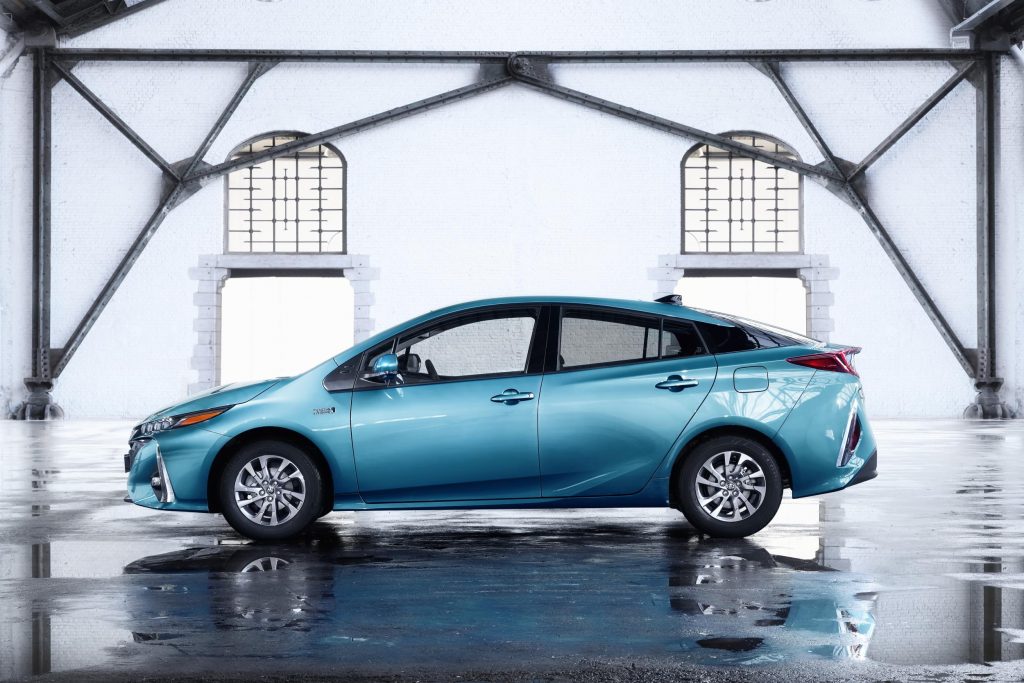
While the students have shown that it is possible to build a car from bio-based materials, it is unlikely the car industry will pick up the idea immediately. However, more conventional honeycomb materials are very much in the thinking of Japanese automotive OEM Toyota, which has adopted an interior part using honeycomb material for its new hybrid model Prius PHV launched earlier this year.
Toyota’s hybrid Prius PHV
The part is the boot (trunk) cover of the car. It was again achieved using ThermHex technology licensed from EconCore by Gifu Plastic Industry of Japan. Due to its combination of strength, rigidity and ultra-low weight, the honeycomb delivers weight savings of 50 percent compared to previous conventional material set-ups based on metal.
Prius boot/trunk with biocomposite materials
Gifu Plastic started to use the ThermHex process to make thermoplastic honeycomb products for packaging and logistics applications. Recently the company has extended to automotive interiors, where light, rigid and easy-to-thermoform honeycomb core materials have attracted interest in Europe and North America.
Folded honeycomb
The range of conventional engineering polymers suitable for use with ThermHex includes:
PP (Polypropylene)
PE (Polyethylene)
PS (Polystyrene)
PET (Polyethylene terephthalate)
PA (Polyamide)
PC (Polycarbonate)
ABS (Acrylonitrile-butadiene-styrene)
PPS (Polyphenylene sulfide)
PEI (Polyetherimide)
Due to the efficient process, the resulting sandwich panels are not only exceptionally strong and lightweight but also very cost-effective. EconCore has licensed the technology to several companies operating within packaging, automotive, furniture, building and transportation markets.
Boards are especially applicable to reusable plastic transportation boxes and solutions in the logistics sector, such as for durable and hygienic plastic pallets, and layer pads, dividers and protection panels, outperforming conventional corrugated plastic boards and PP cup shaped (bubble) panels.
Jochen Pflug, CEO of EconCore and inventor of the ThermHex technology says the efficiency of the patented continuous ThermHex process enables the naturally optimised honeycomb structure to be brought to more cost-sensitive applications, ultimately replacing heavier sub-optimal designs.
In combination with different skin materials, EconCore honeycombs offer a wide range of application possibilities. Low production costs enable other honeycomb cores and homogeneous panel materials to be substituted.
Sandwich panels with ThermHex honeycomb cores are especially suitable for automotive interior components, including:
luggage compartment floor and spare wheel covers
door panels / door inserts
seat back stiffeners and compartment dividers
cabin floor and underfloor systems
overhead systems (enhanced sound absorption with an open-cell honeycomb structure)
Continuously produced honeycomb sandwich panels offer opportunities in the transportation segment. Higher temperature resistant thermoplastic materials meet the needs of exterior applications, while fire-resistant materials are suited for mass transportation. Applications include:
delivery truck boxes
pick-up truck boxes
trailers
cladding panels in trucks
vans
trains
PET non-wovens may also be laminated onto the ThermHex core to enable processing with thermoset materials.